
OsCUL3a Negatively Regulates Cell Death and Immunity by Degrading OsNPR1 in Rice
Cullin3-based RING E3 ubiquitin ligases (CRL3), composed of Cullin3 (CUL3), RBX1, and BTB proteins, are involved in plant immunity, but the function of CUL3 in the process is largely unknown. Recently, researchers at State Key Laboratory of Rice Biology, China National Rice Research Institute and State Key Laboratory for Biology of Plant Diseases and Insect Pests, Institute of Plant Protection, Chinese Academy of Agricultural Sciences, have collaboratively published a research paper about the negative regulation of immunity by OsCUL3a in rice.
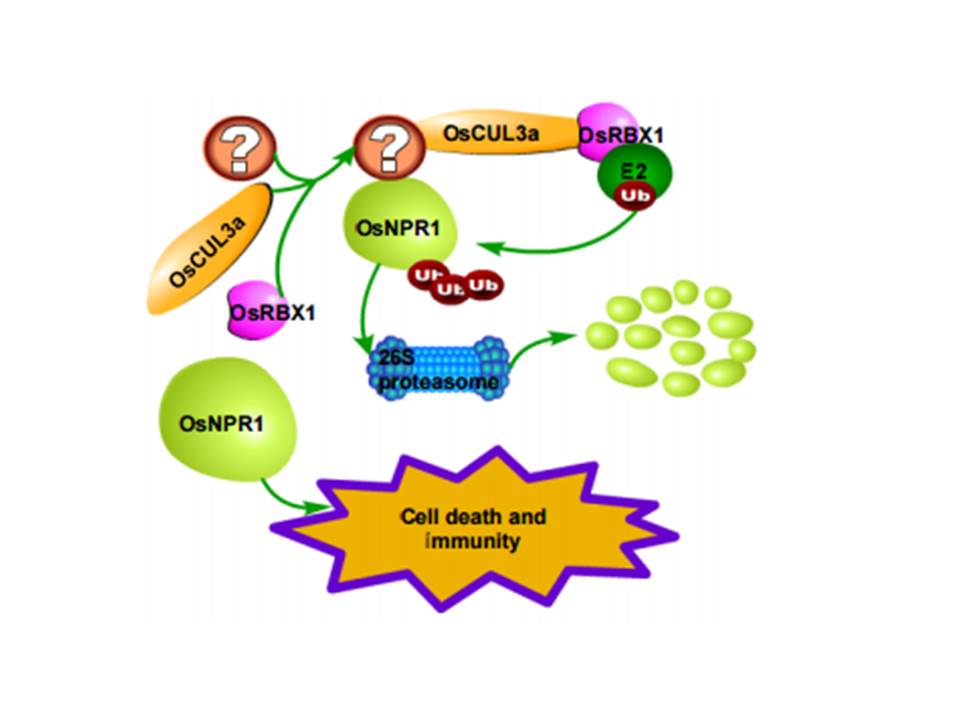
A proposed model of OsCUL3a action
In the paper, they showed that the rice lesion mimic mutant oscul3a displays a significant increase in the accumulation of flg22- and chitin-induced reactive oxygen species, and in pathogenesis-related gene expression as well as resistance to Magnaporthe oryzae and Xanthomonas oryzae pv oryzae. They cloned the OsCUL3a gene via a map-based strategy and found that the lesion mimic phenotype of oscul3a is associated with the early termination of OsCUL3a protein. Interaction assays showed that OsCUL3a interacts with both OsRBX1a and OsRBX1b to form a multisubunit CRL in rice. Strikingly, OsCUL3a interacts with and degrades OsNPR1, which acts as a positive regulator of cell death in rice. Accumulation of OsNPR1 protein is greater in the oscul3a mutant than in the wild type. Furthermore, the oscul3a osnpr1 double mutant does not exhibit the lesion mimic phenotype of the oscul3a mutant. Taken together, these results demonstrate that OsCUL3a negatively regulates cell death and immunity by degrading OsNPR1 in rice.
More details are available on the bellow links:
http://www.plantcell.org/content/early/2017/01/18/tpc.16.00650.abstract?papetoc
By Yuese Ning
ysning@ippcaas.cn
-
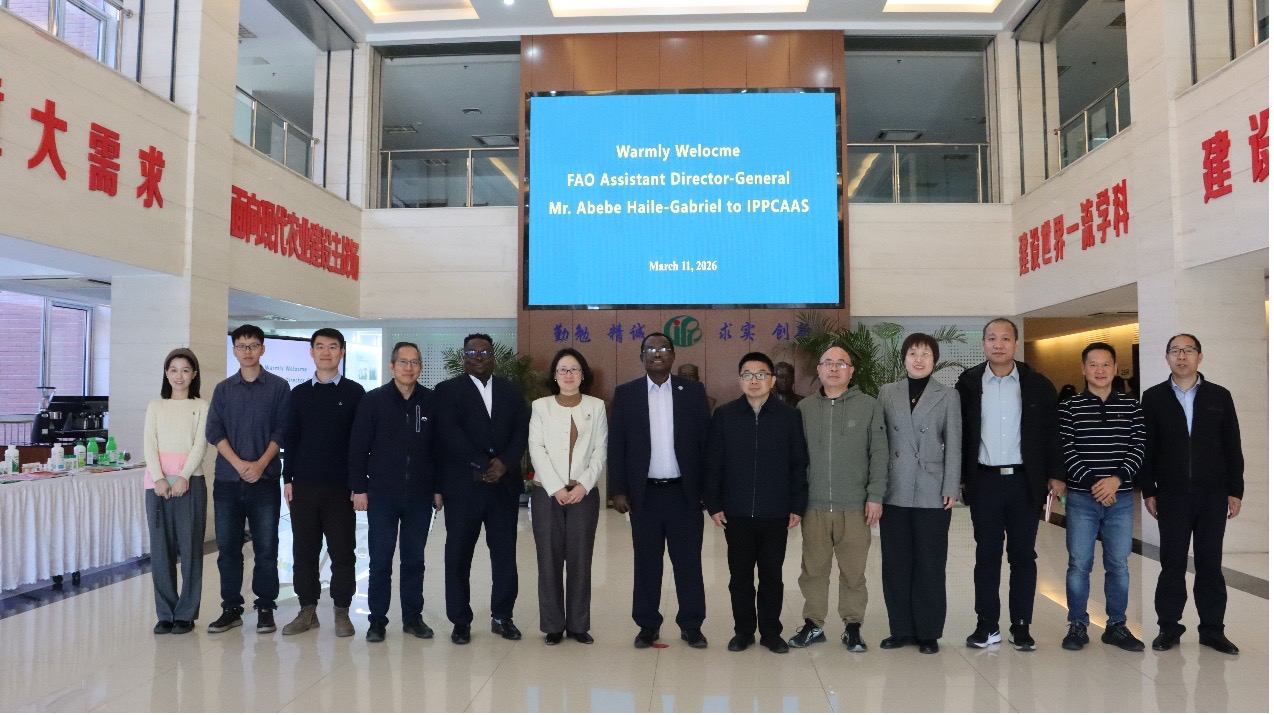 Assistant Director-General of the UN Food and Agriculture Organization Leads Delegation to Visit IPPCAAS
 -
 International Symposium on Plant Biosafety (ISPB 2025) Convenes in Guangzhou — Science-led plant health governance to secure food systems and advance the SDGs
 -
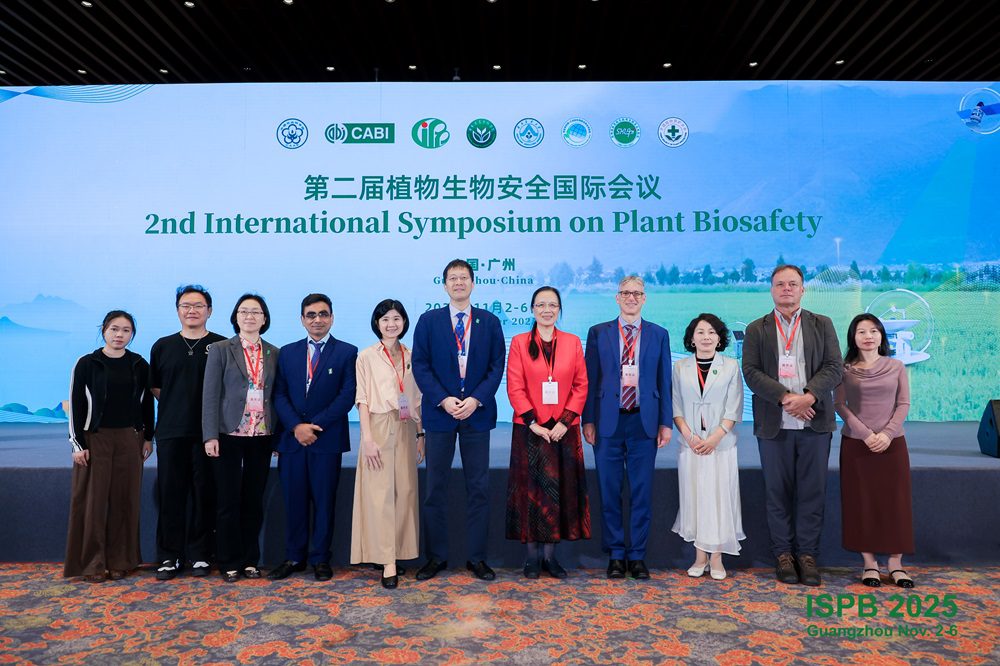 Three decades of China's membership of CABI celebrated at 2nd International Symposium on Plant Biosafety
 -
 CABI receives recognition from FAO for its work to support sustainable plant production and protection