

Immunity to Rice Blast Disease by Suppression of Effector-Triggered Necrosis
Hemibiotrophic pathogens are some of the most destructive plant pathogens, causing huge economic losses and threatening global food security. However, how hemibiotrophic pathogens trigger host necrosis and how plants inhibit the transition from the biotrophic stage to the necrotrophic stage in disease symptom expression are mainly unknown. Recently, researchers at State Key Laboratory for Biology of Plant Diseases and Insect Pests, Institute of Plant Protection (IPP), Chinese Academy of Agricultural Sciences (CAAS) have published a research paper about mechanism for effector-triggered necrosis (ETN) in hemibiotrophic pathogens by characterizing the target of Magnaporthe oryzae effector.
The rice blast fungus M. oryzae spreads in rice biotrophically early during infection, but this biotrophic stage is followed by a pronounced switch to cell death and lesion formation. In this paper, they showed that the M. oryzae effector AvrPiz-t interacts with the bZIP-type transcription factor APIP5 in the cytoplasm and suppresses its transcriptional activity and protein accumulation at the necrotrophic stage. Silencing of APIP5 in transgenic rice leads to cell death, and the phenotype is enhanced by the expression of AvrPiz-t. Conversely, Piz-t interacts with and stabilizes APIP5 to prevent necrosis at the necrotrophic stage. At the same time, APIP5 is essential for Piz-t stability. Taken together, these results demonstrate a novel mechanism for the suppression of ETN at the necrotrophic stage by an NLR receptor in plants.
This is an interesting study that is potentially of very high impact to host-pathogens interaction research. Current Biology journal invited a Dispatch paper to emphatically introduce this paper.
More details are available on the bellow links:
http://www.cell.com/current-biology/fulltext/S0960-9822(16)30751-5
-
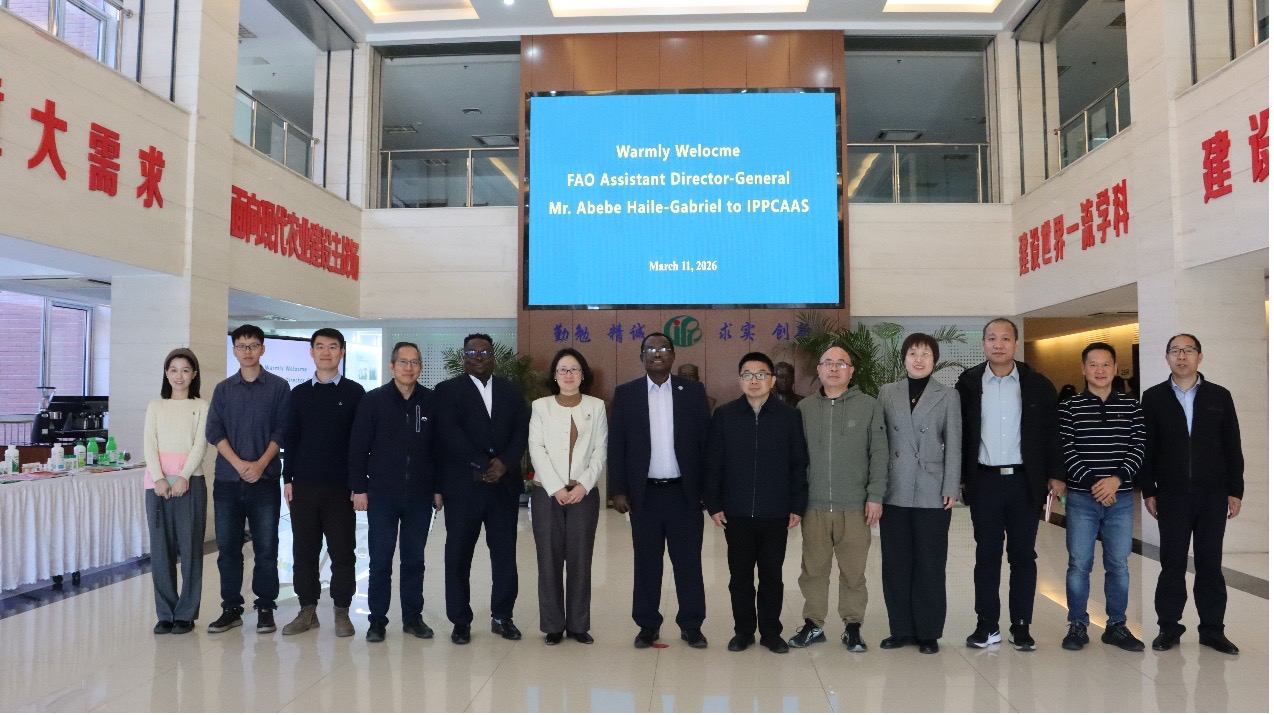 Assistant Director-General of the UN Food and Agriculture Organization Leads Delegation to Visit IPPCAAS
 -
 International Symposium on Plant Biosafety (ISPB 2025) Convenes in Guangzhou — Science-led plant health governance to secure food systems and advance the SDGs
 -
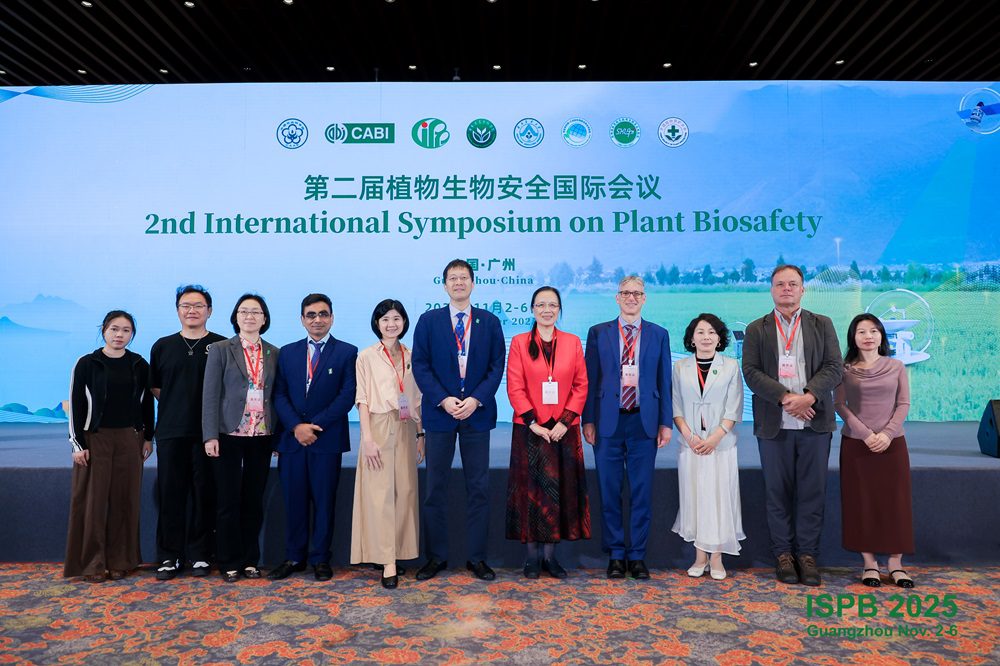 Three decades of China's membership of CABI celebrated at 2nd International Symposium on Plant Biosafety
 -
 CABI receives recognition from FAO for its work to support sustainable plant production and protection