

IPP Reveals Dual Functions of CDA8 in Tuta absoluta and Synergistic Lethal Effect with Bt Combination
Recently, the Innovation Team for Prevention and Monitoring of Invasive Alien Species from the Institute of Plant Protection (IPP), Chinese Academy of Agricultural Sciences (CAAS), in collaboration with Yangtze University, published a research paper titled "Chitin Deacetylase 8 Affects Epidermal and Peritrophic Membrane Metabolism in Tuta absoluta, and dsRNA Accelerates Larval Death with Bacillus thuringiensis" in the CAS Tier 1 Top Journal Journal of Agricultural and Food Chemistry. The study uncovers the critical role of chitin deacetylase 8 (CDA8) in the major invasive pest Tuta absoluta (tomato leafminer) in regulating insect growth and enhancing the efficacy of Bacillus thuringiensis (Bt).
Native to South America, Tuta absoluta is an invasive pest that primarily infests Solanaceous crops such as tomatoes. Boasting high fecundity, a short generation cycle, and a strong tendency to develop resistance to conventional insecticides, this pest has posed a severe threat to the global tomato industry, making the development of novel green pest control technologies an urgent necessity. As a key structural component of insect cuticles, tracheae, and peritrophic membranes, chitin and its metabolism-related enzymes have emerged as important targets for biopesticide research and development. Among these enzymes, chitin deacetylase (CDA) catalyzes the deacetylation of chitin into chitosan, thereby influencing the hardness of insect cuticles and the functionality of peritrophic membranes. Currently, research on the functions of Group V CDAs (including CDA6-9) remains insufficient, and their roles in Tuta absoluta urgently require clarification.
In this study, the CDA8 gene was identified in Tuta absoluta, revealing its dual functions in regulating larval development and maintaining peritrophic membrane integrity—breaking through the previous single-dimensional understanding of this gene’s function. RNA interference (RNAi)-mediated silencing of CDA8 not only induced larval molting disorders and death but also disrupted the peritrophic membrane structure. When combined with Bacillus thuringiensis (Bt), it synergistically accelerated pest mortality, reaching 100% on the 6th day. The research elucidates the dual mechanism by which CDA8 participates in chitin metabolism of both cuticles and peritrophic membranes, confirming that RNAi targeting this gene can significantly enhance Bt infection efficiency by destroying the peritrophic membrane barrier, achieving an "internal-external synergistic" potentiation effect. This provides a new target gene and technical pathway for the "RNAi-Bt" green pest control strategy.
This achievement is the latest research progress of the team led by Researcher Liu Wanxue from IPP, CAAS, in investigating the invasion mechanisms and RNAi-based green control of Tuta absoluta. Master’s student Zhao Zihan is the first author of the paper, while Associate Professor Guo Jianyang and Professor Lü Zhichuang are the co-corresponding authors. Researcher Wan Fanghao, Researcher Yang Nianwan, as well as Professor Ma Dongfang and Associate Professor Wang Ping from Yangtze University, provided guidance for this research. The study was supported by projects including the National Key Research and Development Program of China (Grant No. 2024YFC2607600).
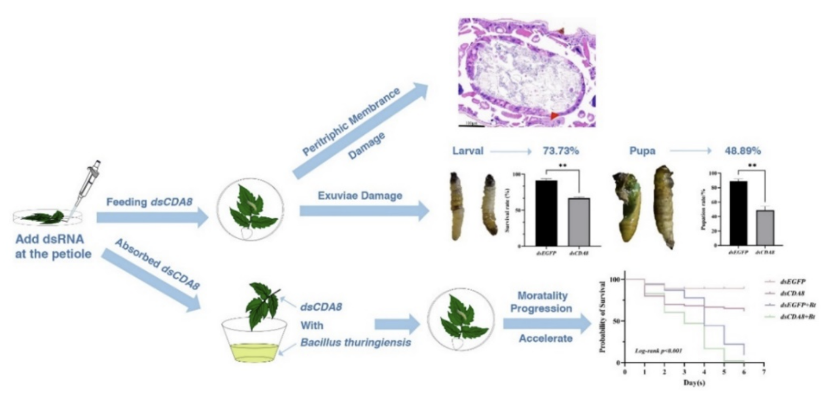
Figure. Dual Roles of CDA8 in Tuta absoluta and Accelerated Larval Death via Combination with Bt
Link: https://pubs.acs.org/doi/full/10.1021/acs.jafc.5c13503
-
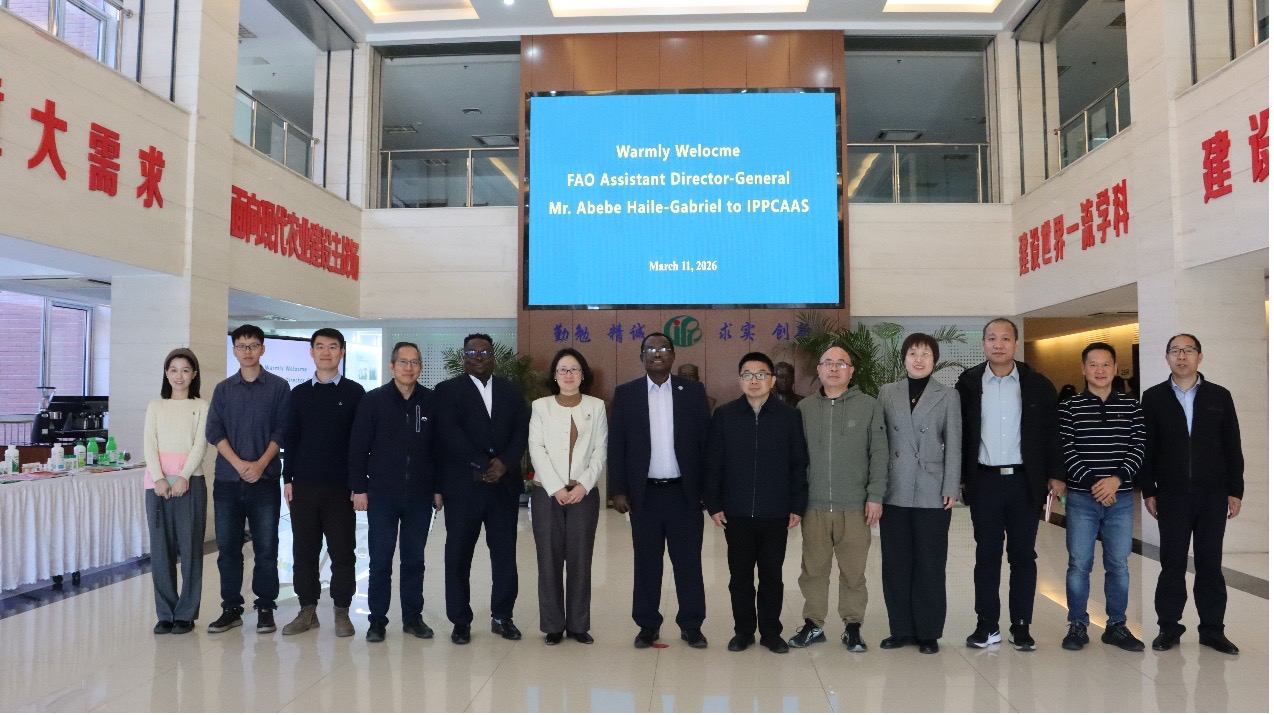 Assistant Director-General of the UN Food and Agriculture Organization Leads Delegation to Visit IPPCAAS
 -
 International Symposium on Plant Biosafety (ISPB 2025) Convenes in Guangzhou — Science-led plant health governance to secure food systems and advance the SDGs
 -
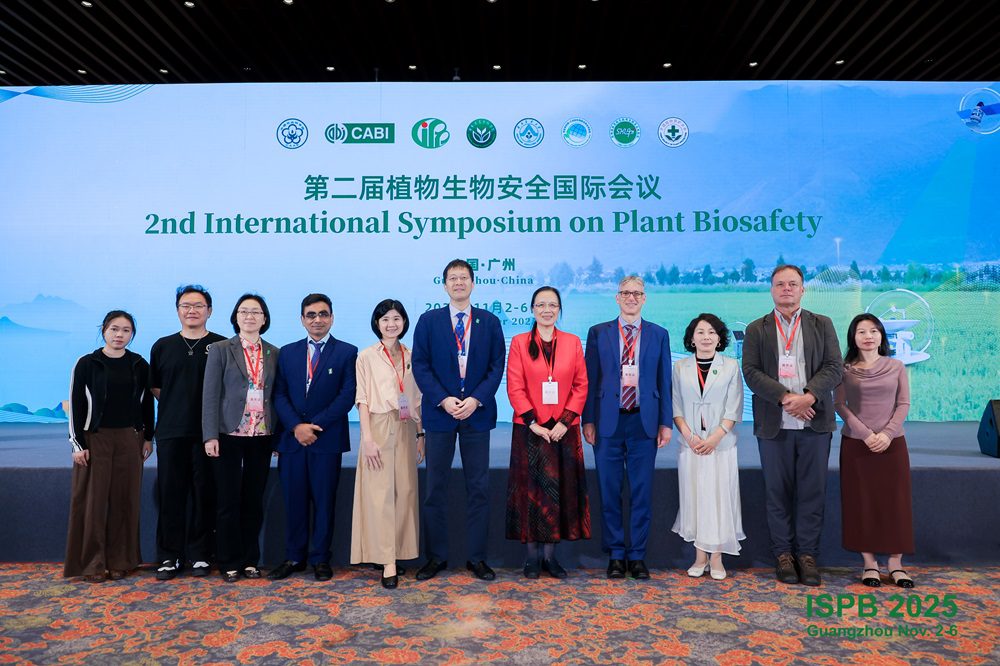 Three decades of China's membership of CABI celebrated at 2nd International Symposium on Plant Biosafety
 -
 CABI receives recognition from FAO for its work to support sustainable plant production and protection