

IPPCAAS and Partners Co-develop Ultrasensitive Detection Technology for Rice Pathogens
Bacterial blight of rice, caused by Xanthomonas oryzae pv. oryzae, is a major threat across rice-growing regions worldwide. It is not only widespread but also severely reduces yields, directly endangering global food security. Immunochromatographic (lateral-flow) test strips are widely used because they are simple to operate, rapid to detect, and require no complex instrumentation. However, traditional strips use colloidal gold as the signal label, which offers relatively low sensitivity and struggles with trace-level pathogen detection. Accordingly, developing superior signal labels to dramatically enhance strip sensitivity has become a shared goal in the field.
On September 19, 2025, Prof. Zhou Xueping of IPPCAAS, together with Zhejiang University and the Shanghai Agricultural Technology Extension Service Center, published a research article in the Chemical Engineering Journal (IF = 13.5) entitled “Engineering the high-spin 3d orbital in Co₃O₄ via compressive strain to enhance immunochromatographic assay.” The study reports an immunochromatographic test strip based on a newly strained-Co₃O₄ nanozyme featuring high-spin Co state, achieving ultrasensitive detection of the rice bacterial blight pathogen and providing a powerful new tool for precise monitoring and science-based control of this disease.
The researchers successfully fabricated a strained-Co3O4 exhibiting significant atomic compressive strain (εxx= -3.34%, εyy = -6.52%). The atomic-level displacement direction and distance information provided by atomic displacement analysis (ADA) offers detailed information for density functional theory computational modeling. They discovered that the strain engineering elevated crystal field splitting energy, which promotes the transition of Co3O4 from low-spin states (t2g6eg0) to high-spin states (t2g4eg2), resulting in efficient SET performance. Spin-state modulation enhances peroxidase-like catalytic efficiency, yielding 28.0-fold and 11.8-fold lower Michaelis constants (Km) for TMB and H2O2 respectively compared to pristine-Co3O4. In addition, the strained-Co3O4 was successfully employed in the development of LFIA for Xanthomonas oryzae pv. oryzae (Xoo) monitoring, and the lateral flow immunoassay (LFIA) achieved a detection sensitivity of 5 × 10²CFU mL−1 that was 20-fold higher than Au nanoparticles-based LFIA and was 2-3 orders of magnitude higher than commercially LFIAs. The findings established a correlation between strain‒spin orbit‒peroxidase-like activity, offering a promising strategy for the rational design of nanozymes.
Doctoral candidate Zhang Cui is the first author. Prof. Zhou Xueping, Prof. Wu Jianxiang (Zhejiang University), and Prof. Luo Jinyan (Shanghai Agricultural Technology Extension Service Center) are the co-corresponding authors.
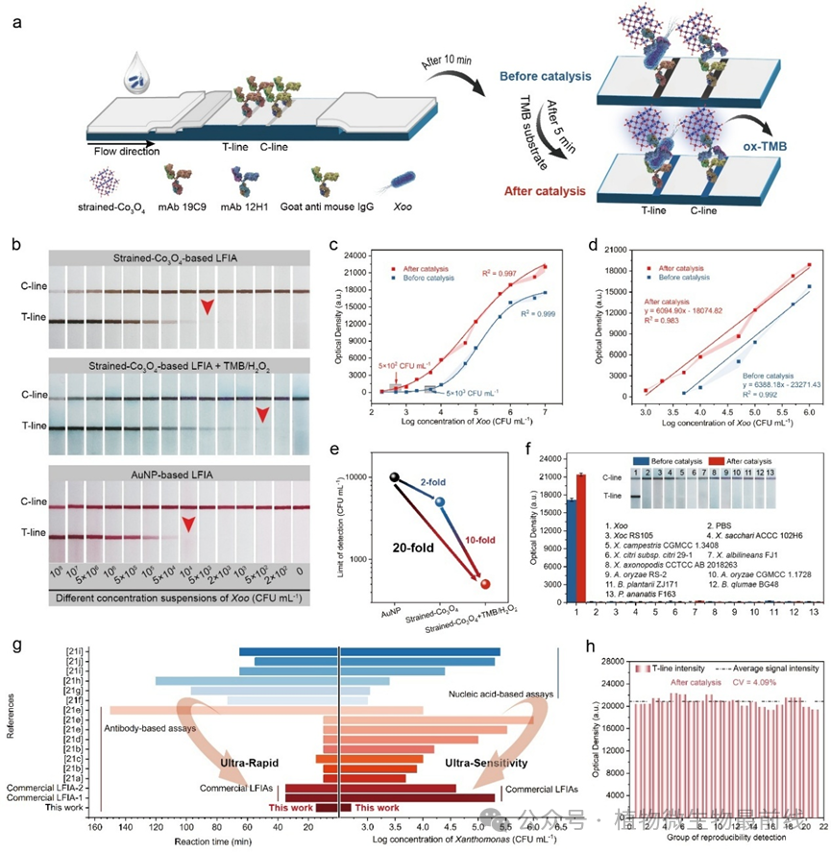
Figure 1. Principle and analytical performance of the strained-Co3O4-based LFIA for Xoo monitoring.
Links:https://doi.org/10.1016/j.cej.2025.168737
-
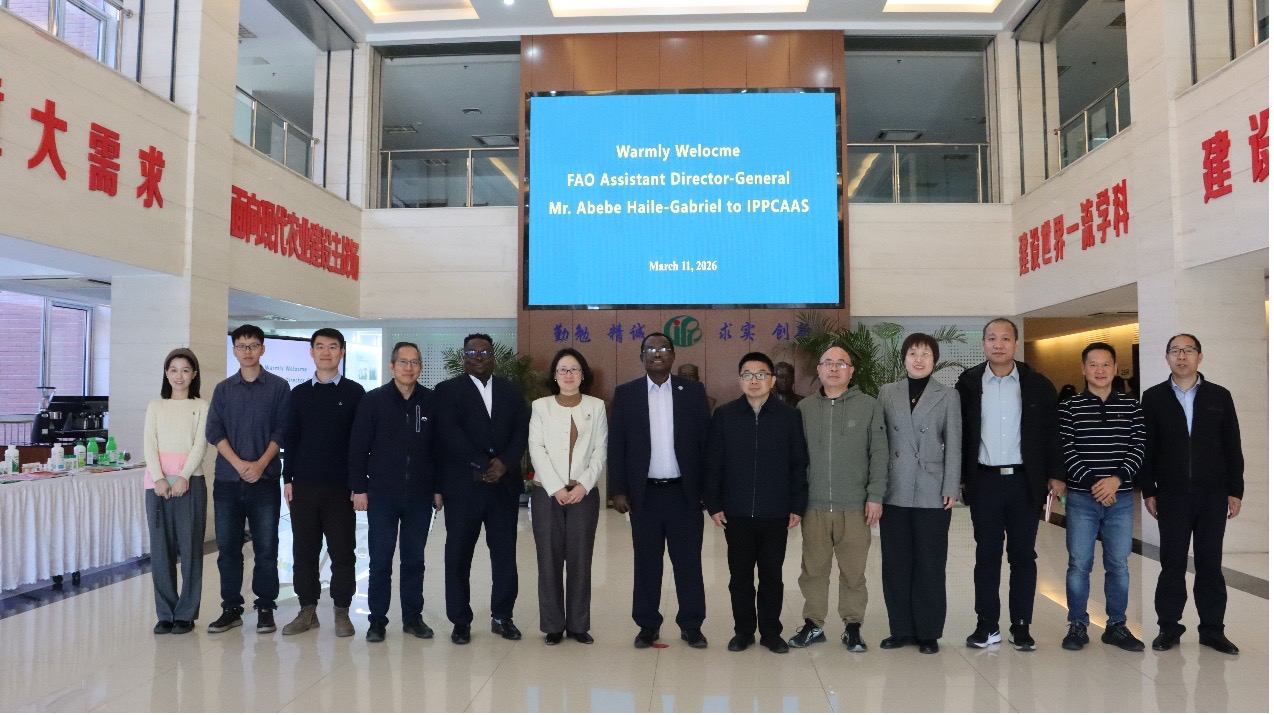 Assistant Director-General of the UN Food and Agriculture Organization Leads Delegation to Visit IPPCAAS
 -
 International Symposium on Plant Biosafety (ISPB 2025) Convenes in Guangzhou — Science-led plant health governance to secure food systems and advance the SDGs
 -
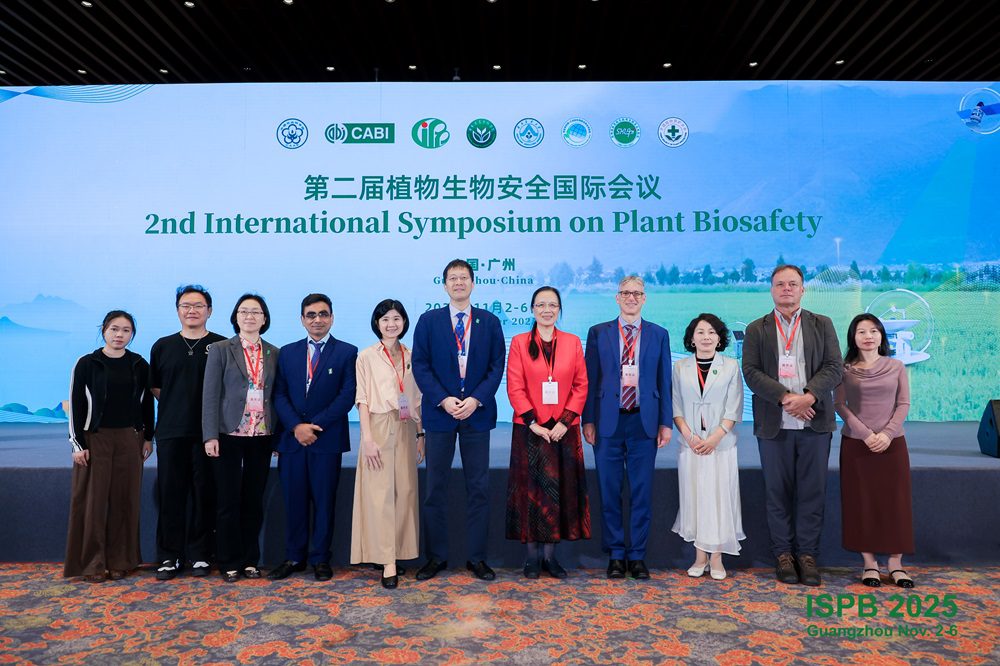 Three decades of China's membership of CABI celebrated at 2nd International Symposium on Plant Biosafety
 -
 CABI receives recognition from FAO for its work to support sustainable plant production and protection