

IPPCAAS Clarifies the Global Invasion Lineage Dispersal Pattern and Geographical Structure of the Bactrocera umbrosa
Recently, the Innovative Team for Prevention and Monitoring of Agricultural Invasive Species at the IPPCAAS published a research paper titled “Multiple drivers synergistically shape the genetic differentiation pattern and invasion potential of Bactrocera umbrosa” in Pest Management Science (a top journal in the Chinese Academy of Sciences Journal Ranking). By integrating population genetics and ecological niche modeling technologies, the study analyzed the global invasion history and genetic lineage characteristics of B. umbrosa. It revealed how multiple factors - including climate, geographical barriers, and human activities - synergistically shape its population genetic structure and geographical distribution pattern. The research also identified potential areas for its spread, providing crucial scientific guidance for monitoring and early warning of the invasion risks posed by this pest.
Bactrocera umbrosa, also known as the breadfruit fruit fly, is an oligophagous pest belonging to the family Tephritidae and genus Bactrocera. It primarily damages tropical fruits such as breadfruit and jackfruit. Currently, its distribution is mainly in the Southwest Pacific and Southeast Asia. Analysis based on global COI sequences revealed that three main genetic lineages globally: the Southwest Pacific (native region) SWP lineage, the Southeast Asian islands (invaded region) ISEA lineage, and the Southeast Asian mainland (invaded region) MSEA lineage. The SWP populations exhibit relatively high genetic diversity, while the ISEA and MSEA populations show lower genetic diversity, likely influenced by environmental filtering or founder effects. Analysis of population historical dynamics indicates that B. umbrosa overall underwent population expansion, with the MSEA lineage showing the most significant signal of expansion. These results suggest the species may have followed an invasion pathway from its native Southwest Pacific region to Southeast Asian islands, and then to Southeast Asia mainland. Factors such as climatic conditions, geographical barriers, and cross-border trade collectively drive its transboundary/regional spread and genetic differentiation. Furthermore, the study found that the potential suitable habitats for B. umbrosa highly overlap with those of its main host plants, breadfruit and jackfruit, posing a potential threat to global tropical fruit production. Southern and Southwestern China, where jackfruit and other tropical fruits are widely cultivated, have abundant host resources and face a high colonization risk. Additionally, the increasing volume of tropical fruit trade between China and Southeast Asian countries raises the potential risk of B. umbrosa being introduced into China. It is recommended to strengthen quarantine inspections on relevant imported host fruits to strictly prevent the invasion of B. umbrosa.
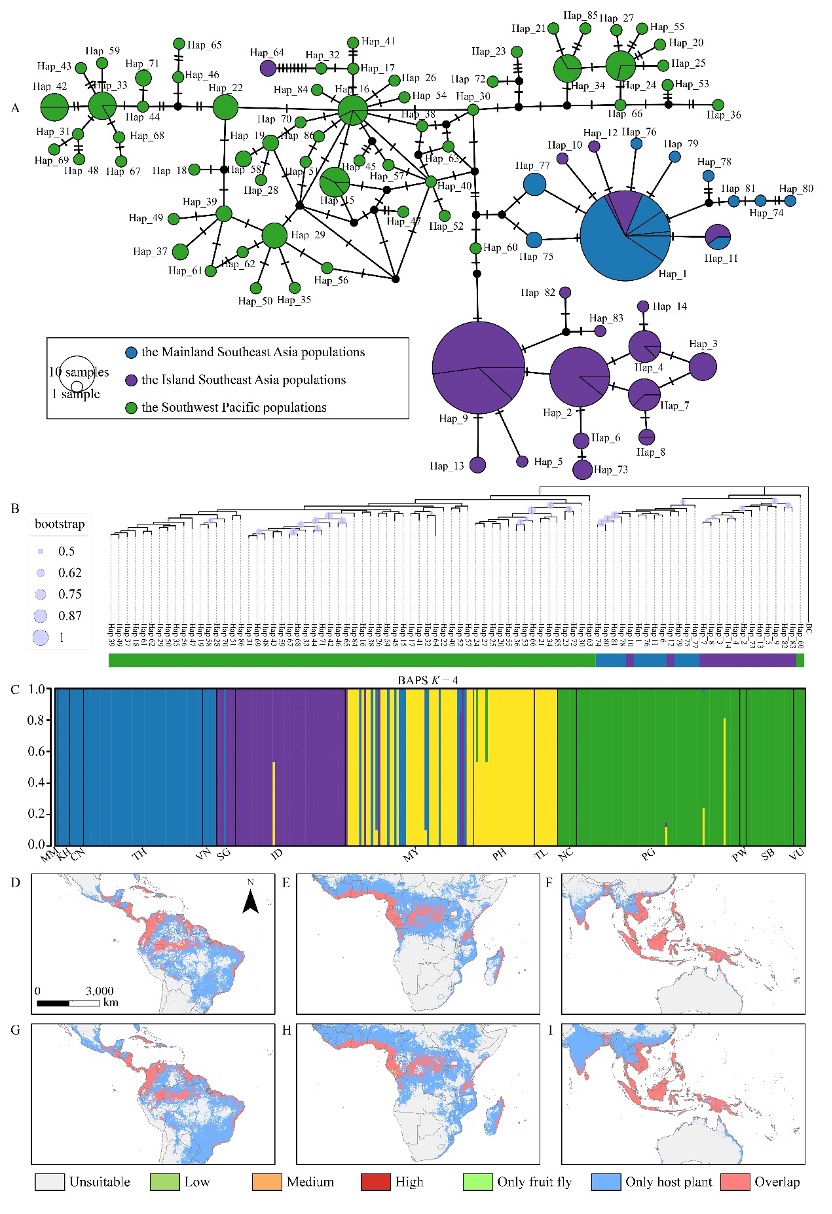
Figure. Population Genetic Structure and Potential Risk Areas of the Three-Banded Fruit Fly
The first author is Yu Zhang, a Ph.D. candidate in a joint program between the IPPCAAS and the University of Liège (ULiège)..Researcher Wanxue Liu and Associate Researcher Xiaoqing Xian, both from IPPCAAS, are the corresponding authors. Co-authors include Weijie Wan (Ph.D. candidate, IPPCAAS), Tianying Yang (master student, IPPCAAS), Fengqin Cao (Associate Professor, Hainan University), Bo Cai (Senior Agronomist, Haikou Customs), and Frédéric Francis (Professor, ULiège). This research was supported by the National Key Research and Development Program of China and the Major Science and Technology Missions of the Chinese Academy of Agricultural Sciences.
-
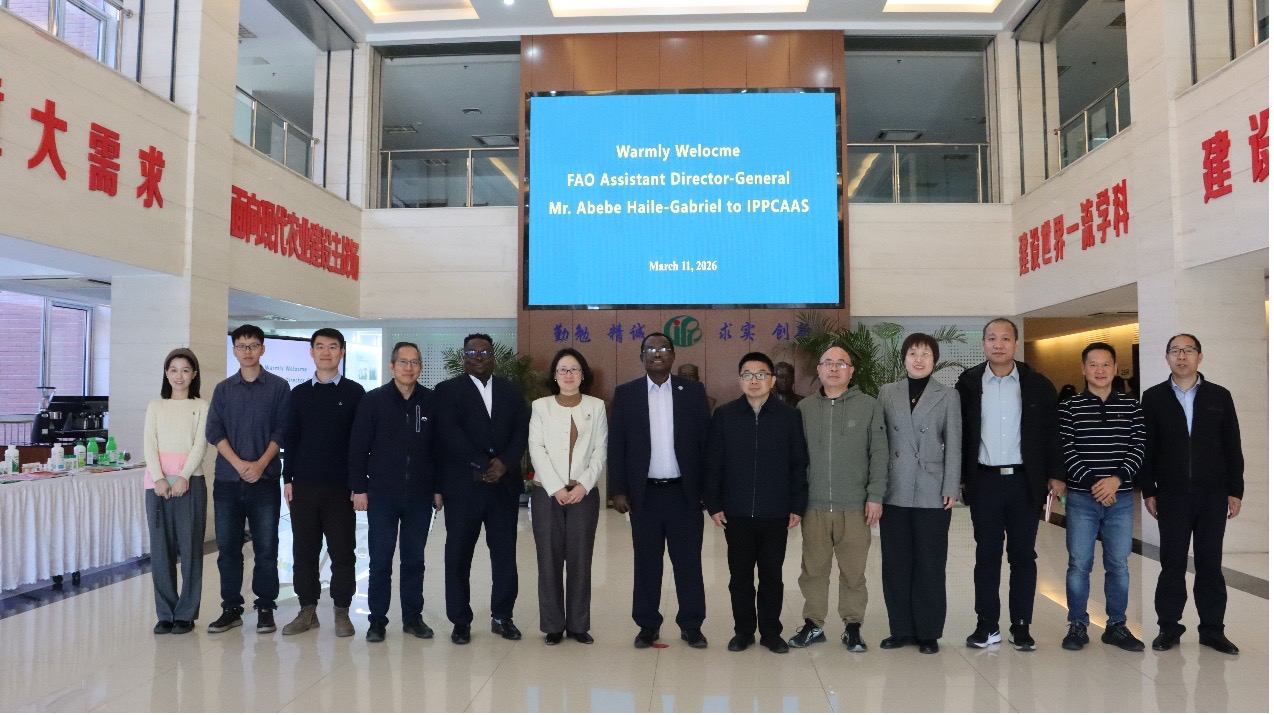 Assistant Director-General of the UN Food and Agriculture Organization Leads Delegation to Visit IPPCAAS
 -
 International Symposium on Plant Biosafety (ISPB 2025) Convenes in Guangzhou — Science-led plant health governance to secure food systems and advance the SDGs
 -
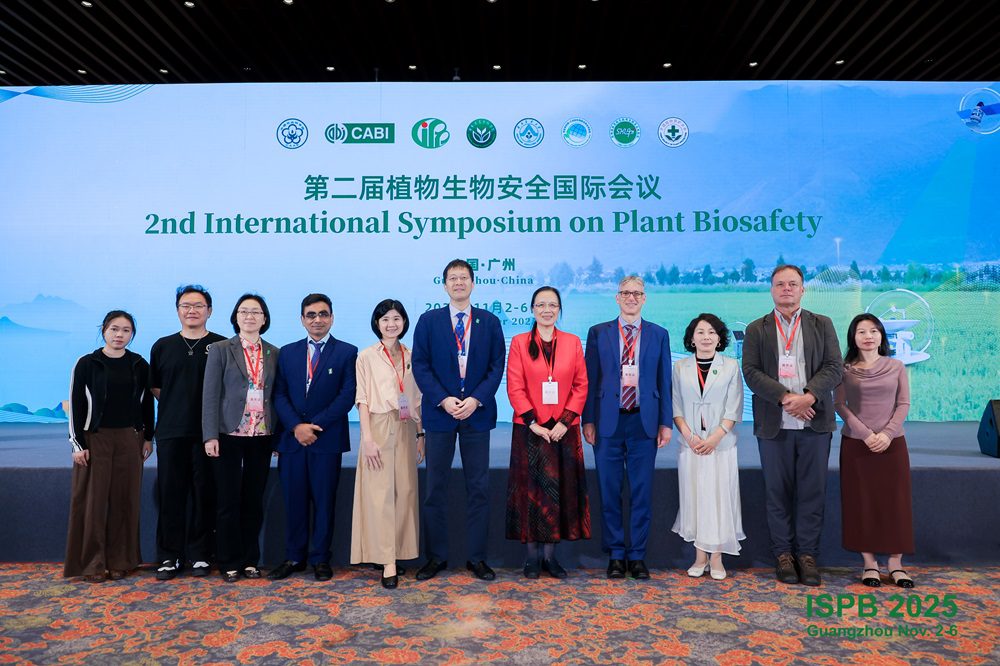 Three decades of China's membership of CABI celebrated at 2nd International Symposium on Plant Biosafety
 -
 CABI receives recognition from FAO for its work to support sustainable plant production and protection