

IPPCAAS Utilizes CRISPR/Cas9 to Reveal Resistance Mechanism of Fall Armyworm to Diamide Insecticides
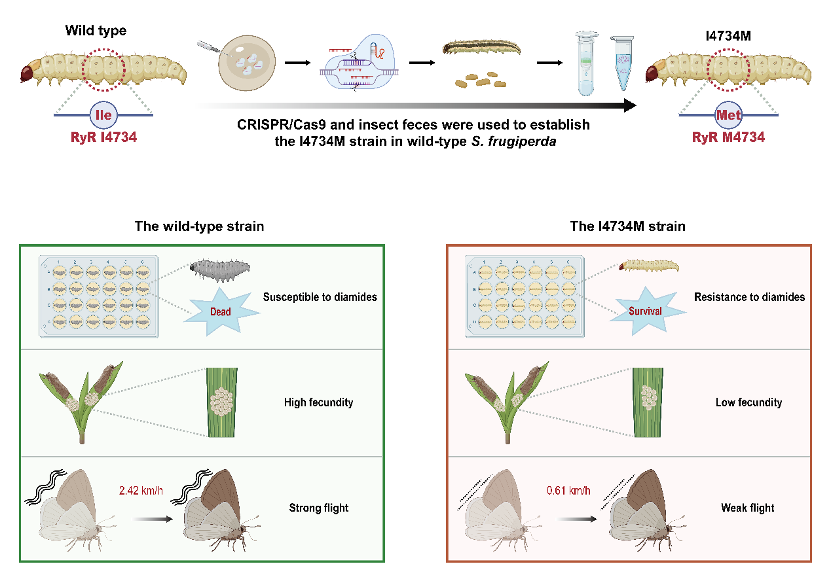
On October 1, the Smart Plant Protection Innovation Team at the IPPCAAS, published a research paper titled “Ryanodine receptor I4734M mutation confers diamide resistance but reduces invasiveness in Spodoptera frugiperda” in the International Journal of Biological Macromolecules. Using CRISPR/Cas9 gene-editing technology, the study successfully constructed a Spodoptera frugiperda strain with a homozygous I4734M mutation in the ryanodine receptor (RyR). This revealed the mechanism by which the RyR mutation mediates high-level resistance to diamide insecticides in fall armyworm , and it also significantly reduces the environmental adaptability and invasive capacity of the pest.
Fall armyworm (Spodoptera frugiperda) is a major invasive pest that severely threatens China’s food production security. Diamide insecticides are widely used for controlling fall armyworms due to their high efficacy and low toxicity. However, the target-site resistance mechanism of fall armyworm to diamide insecticides remains unclear. This study innovatively developed a non-invasive genotyping method based on insect fecal DNA, providing a new technical pathway for efficiently screening gene-edited individuals. For the first time, CRISPR/Cas9 gene-editing technology was used to mutate the 4734th amino acid of the fall armyworm RyR from isoleucine (I) to methionine (M), successfully obtaining a homozygous I4734M mutant strain. Compared to the wild-type strain, the gene-edited mutant strain exhibited high-level resistance to chlorantraniliprole and tetraniliprole, with resistance ratios of 396.7-fold and 149.1-fold, respectively. Genetic analysis revealed that the resistance to chlorantraniliprole is inherited as an autosomal incomplete recessive trait. The study also found that the RyR I4734M mutation, while conferring resistance, is accompanied by significant fitness costs: the mutant population showed significantly reduced reproductive capacity, prolonged life cycle, and decreased flight distance and speed. This mutation notably diminishes the environmental adaptability and invasive potential of fall armyworm. The research not only systematically elucidates the dual function of the ryanodine receptor I4734M mutation in resistance development and biological behavior regulation but also provides critical theoretical foundations for scientifically assessing resistance evolution risks and formulating management strategies based on fitness costs.
IPPCAAS is the first affiliation. Mr. Yang Qingjie (Ph.D. candidate) from the Smart Plant Protection Innovation Team is the first author, and Prof. Cui Li (IPPCAAS) is the corresponding author. The research received guidance and support from Prof. Yuan Huizhu (IPPCAAS) and Prof. Rui Changhui (IPPCAAS). This study was funded by the National Key Research and Development Program of China (2022YFD1400904), the Youth Innovation Program of the Chinese Academy of Agricultural Sciences (Y2024QC03), the National Natural Science Foundation of China (32272603), and the Major Tasks Program of the Chinese Academy of Agricultural Sciences (CAAS-ZDRW202412).
-
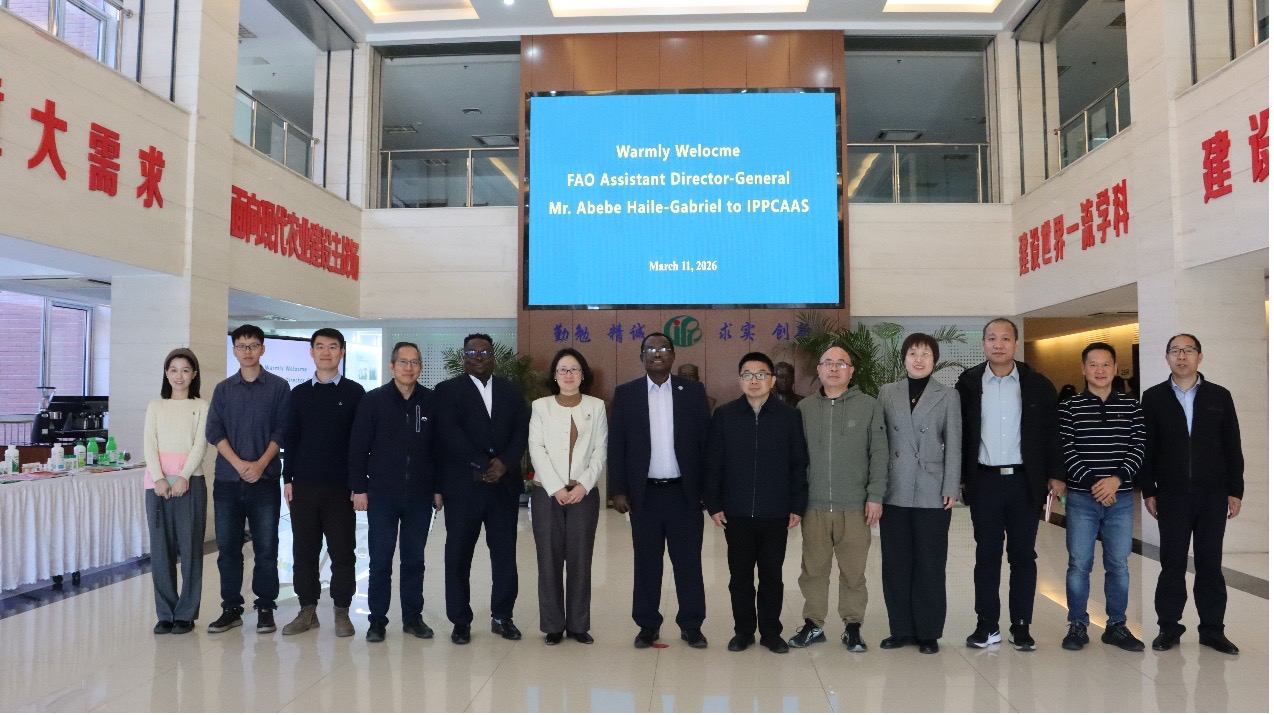 Assistant Director-General of the UN Food and Agriculture Organization Leads Delegation to Visit IPPCAAS
 -
 International Symposium on Plant Biosafety (ISPB 2025) Convenes in Guangzhou — Science-led plant health governance to secure food systems and advance the SDGs
 -
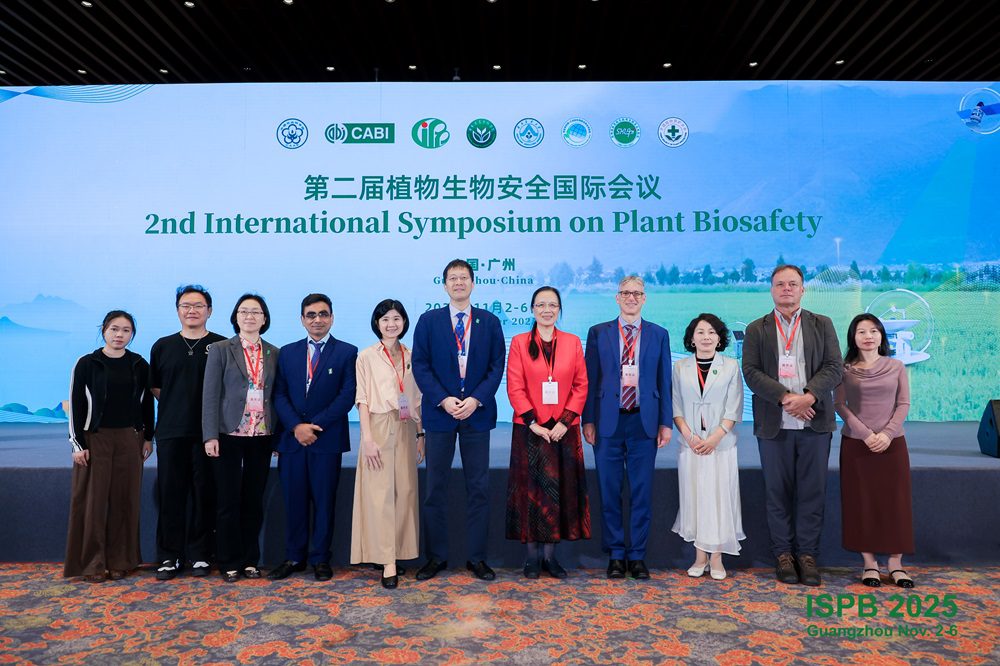 Three decades of China's membership of CABI celebrated at 2nd International Symposium on Plant Biosafety
 -
 CABI receives recognition from FAO for its work to support sustainable plant production and protection