

IPPCAAS Reveals Molecular Mechanism of Imidacloprid’s Visual Toxicity to Zebrafish
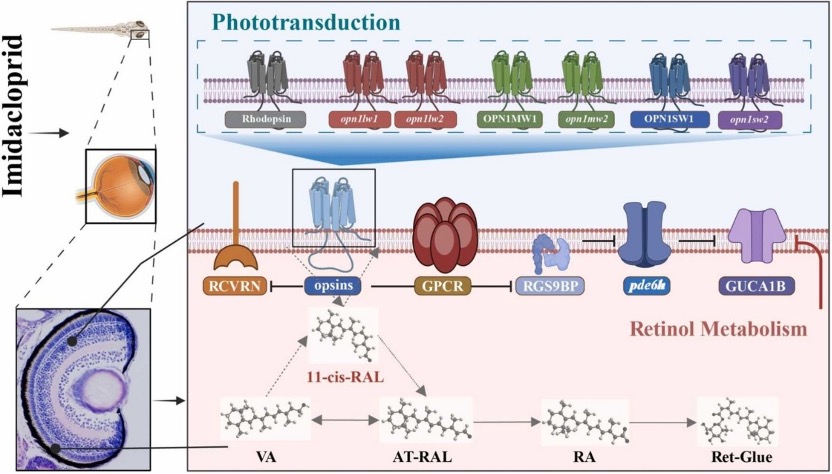
A recent study conducted by the research teams led by Prof. Zhang Lan and Prof. Liu Xingang at the IPPCAAS, has systematically revealed the mechanism underlying the visual toxicity of the neonicotinoid insecticide imidacloprid to zebrafish. The research combined behavioral analysis, targeted metabolomics, transcriptomics, and gene-protein validation experiments. It elucidated that imidacloprid exposure ultimately leads to visual dysfunction in zebrafish through a three-dimensional synergistic effect involving ocular structural damage, phototransduction pathway disruption, and retinol metabolism disturbance. This work provides an important theoretical basis for assessing the visual toxicity of pesticides to aquatic organisms. The related findings have been published in the Journal of Hazardous Materials (Impact Factor 11.3).
Imidacloprid, one of the most widely used neonicotinoid insecticides globally, has been detected in various environmental media and organisms. It poses potential visual risks to non-target organisms, yet its toxic mechanism has remained unclear. Zebrafish exhibit phylogenetically conserved toxicological responses and have become an ideal model for evaluating visual toxicity.
The research team exposed zebrafish embryos to imidacloprid at concentrations of 10, 100, and 1000 μg/L. After 4-day and 21-day exposure, they systematically investigated the characteristics of visual behavior, ocular histomorphology, and perturbations in related pathways and metabolism. The results showed that imidacloprid exposure caused multi-layered ocular damage in zebrafish. Structurally, the lens area of zebrafish larvae was reduced, and the retina exhibited a thickening of the inner and outer plexiform layers (IPL and OPL), along with thinning of the pigment epithelial layer (RPE). Functionally, imidacloprid exposure disrupted the phototransduction and retinol metabolism cascade in zebrafish, which involves the generation of visual signals across three critical stages, namely, light input, photopigment activation, and photoelectric conversion. Therefore, the structural damage and molecular perturbations synergistically acted together, ultimately leading to significant impairment in core visual functions of zebrafish, such as color discrimination and light perception. Further risk analysis indicated that the visual-related genes perturbed by imidacloprid are highly homologous to pathogenic targets of human eye diseases, suggesting that environmental accumulation of this pesticide may pose a potential risk to human visual health.
IPPCAAS is the first affiliation. Doctoral candidate Fu Ruiqiang is the first author, with Prof. Zhang Lan and Prof. Liu Xingang serving as co-corresponding authors. This research was supported by the National Key Research and Development Program of China (Grant No. 2022YFD1700204).
-
 Assistant Director-General of the UN Food and Agriculture Organization Leads Delegation to Visit IPPCAAS
 -
 International Symposium on Plant Biosafety (ISPB 2025) Convenes in Guangzhou — Science-led plant health governance to secure food systems and advance the SDGs
 -
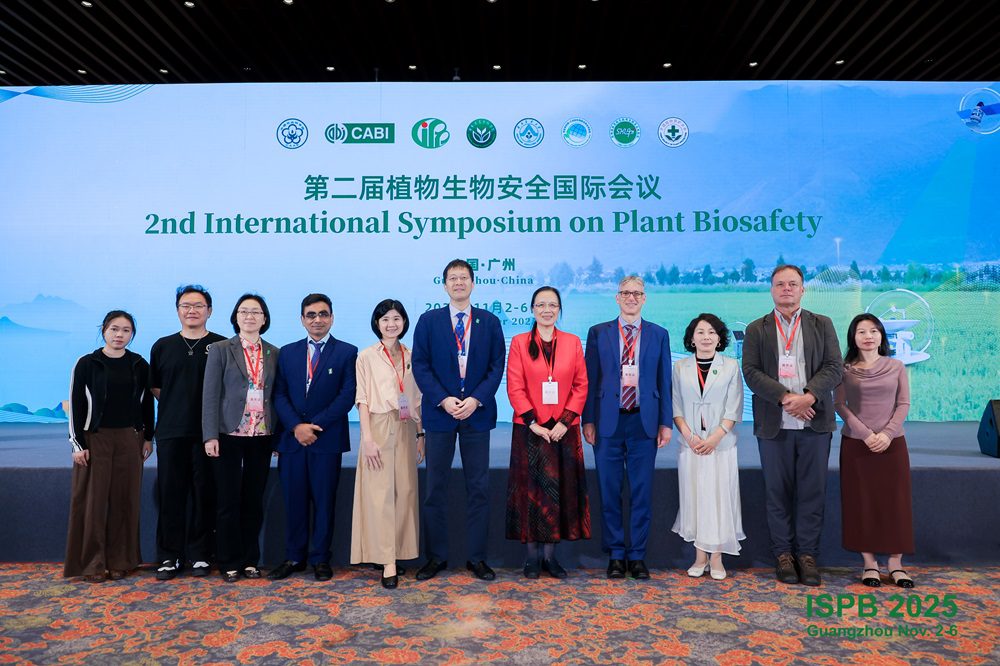 Three decades of China's membership of CABI celebrated at 2nd International Symposium on Plant Biosafety
 -
 CABI receives recognition from FAO for its work to support sustainable plant production and protection