

IPP Reveals the Critical Role of Pest Behavior in Predicting Crop Yield Loss Under Global Climate Change
Recently, the Center for Agricultural Pest Monitoring and Control from the Institute of Plant Protection (IPP), Chinese Academy of Agricultural Sciences (CAAS), published a research paper titled “Behavioural plasticity of a pest species may aggravate global wheat yield loss under climate change” in Nature Communications (5-year IF=17.2). The study found that pests can mitigate the adverse effects of extreme high temperatures through behaviors at both individual and population levels, leading to increased global pest population densities, aggravated crop yield losses, and heightened threats to global food security.
Global food security is increasingly challenged by climate change, and crop yield losses caused by pests and diseases are one of the major issues. Accurate prediction is crucial for pest and disease control. Taking wheat and the grain aphid (Sitobion avenae) as a typical “crop-pest” system, this study confirmed through a series of experiments and prediction models that aphids can reduce the adverse effects of extreme high temperatures through fine-scale thermoregulatory behaviors within their habitats. This significantly improves their survival rate, thereby promoting aphid population growth, increasing global aphid population densities, and exacerbating wheat yield losses. The aggravated yield losses are more prominent in major global wheat-producing regions as well as low-income and food-deficit countries. Furthermore, wheat yield reduction caused by aphid behaviors intensifies with global warming. Many other pests can also alleviate the adverse effects of extreme climates through behaviors, further worsening crop yield losses. Therefore, global food security under climate change will face enormous challenges.
This work innovatively quantified the impact of pest behaviors on their population growth in different regions and global wheat yields. It provides a model for combining large-scale macroecology with fine-scale insect ecology to predict the impact of global climate change on pests and food security. It has important guiding significance for accurately assessing crop yield losses caused by pests and improving the accuracy of pest forecasting in the future.
The Institute of Plant Protection, CAAS, is the first completing unit of the paper. Associate Researcher Ma Gang from the Center for Agricultural Pest Monitoring and Control is the first author. Professor Ma Chunsen from Hebei University is the corresponding author. Bai Xue, a graduated master student from IPP; Wang Xuejing, a doctoral student from IPP (now a lecturer at Hebei University); research assistants Peng Yu, Zhu Liang; Associate Researcher Zhang Wei from IPP; Dr. Yang Heping from the National Meteorological Information Center; and Professor Sylvain Pincebourde from the University of Tours (France), among others, participated in this work. The study was supported by projects including the National Natural Science Foundation of China and the National Key Research and Development Program of China.
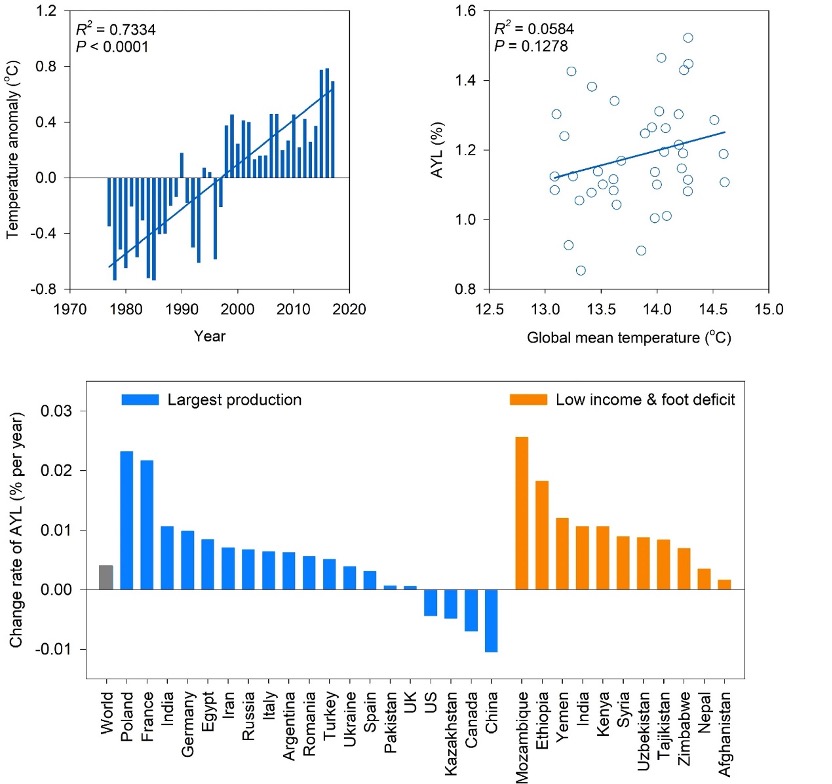
Figure. Trend of Global Wheat Yield Reduction Caused by Thermoregulatory Behaviors of Sitobion avenae With Climate Warming
-
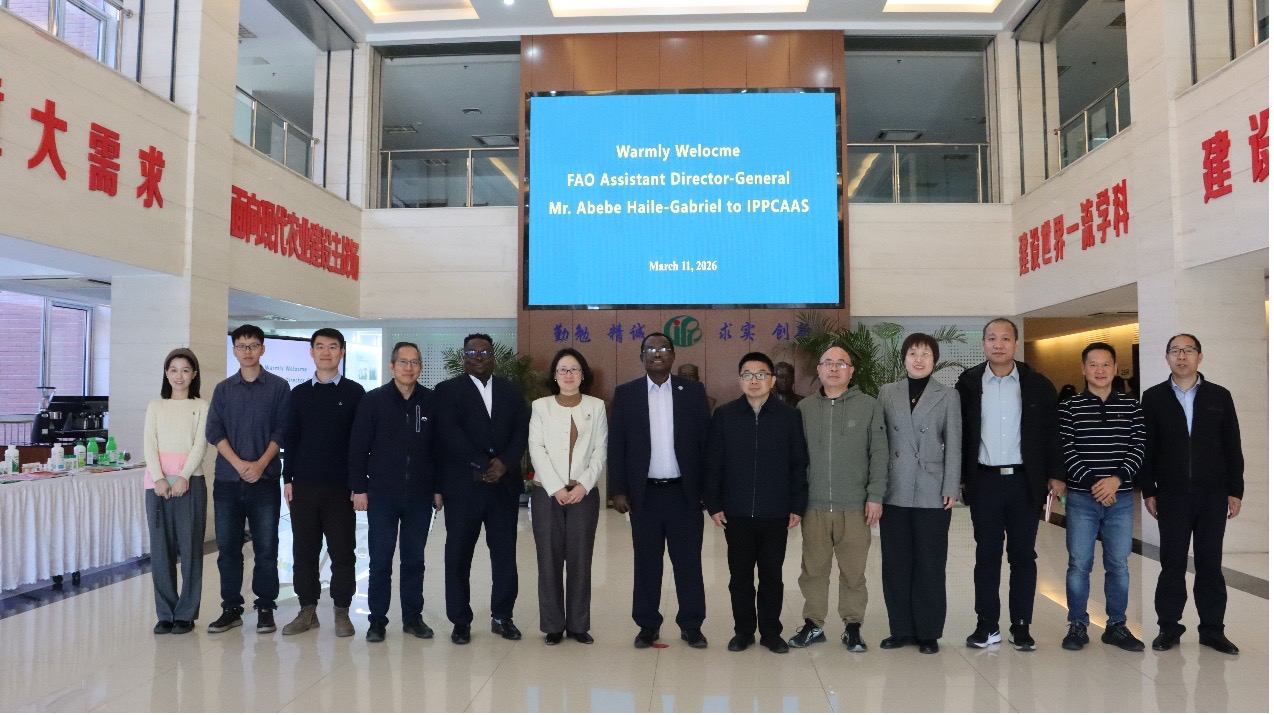 Assistant Director-General of the UN Food and Agriculture Organization Leads Delegation to Visit IPPCAAS
 -
 International Symposium on Plant Biosafety (ISPB 2025) Convenes in Guangzhou — Science-led plant health governance to secure food systems and advance the SDGs
 -
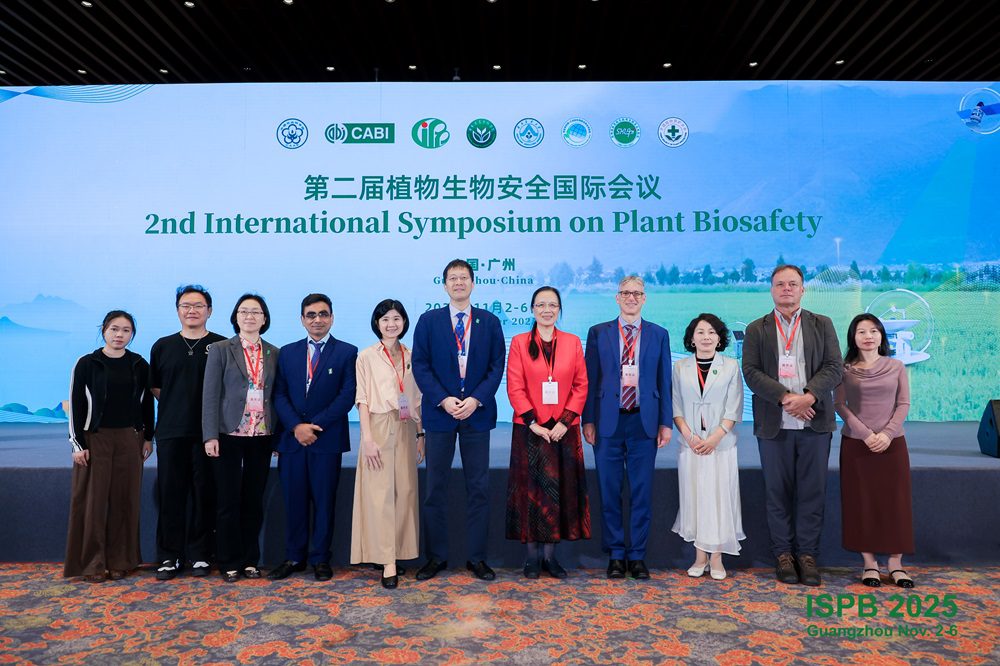 Three decades of China's membership of CABI celebrated at 2nd International Symposium on Plant Biosafety
 -
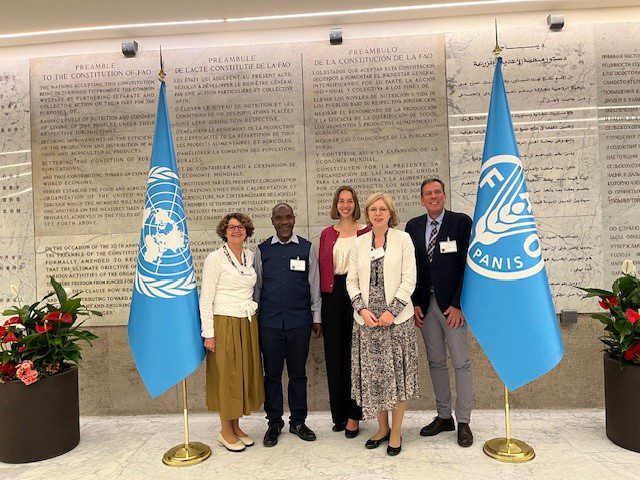 CABI receives recognition from FAO for its work to support sustainable plant production and protection