

IPPCAAS Reveals a New Mechanism by Which the Rice Volatile TMTT Suppresses Brown Planthopper Reproduction via CapaR
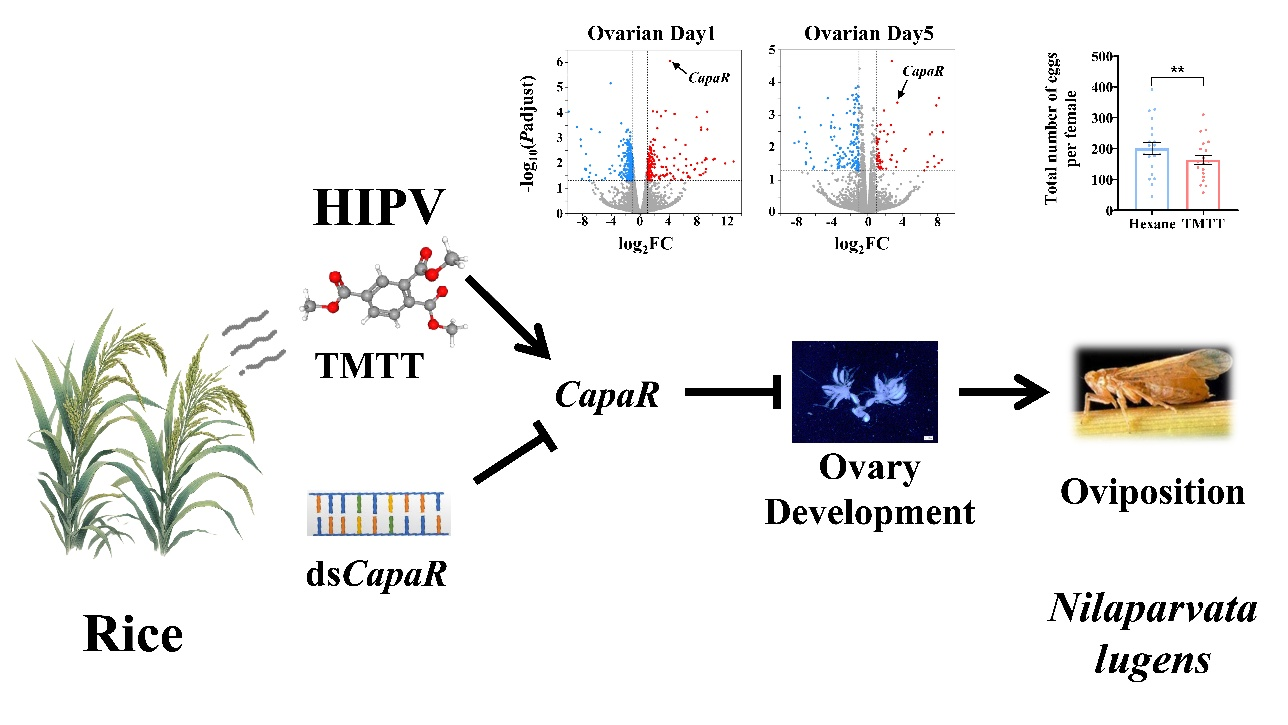
Recently, the Innovation Team for Ecological Safety Assessment and Utilization of Pest-Resistant Crops at the Institute of Plant Protection, Chinese Academy of Agricultural Sciences (IPPCAAS), published a research article in Pest Management Science entitled “Plant volatile TMTT suppresses reproduction of the brown planthopper by affecting the neuropeptide receptor CapaR.” The study systematically characterized the phenotypic effects of the herbivore-induced rice volatile TMTT on brown planthopper reproduction and, for the first time, identified a potential role for the neuropeptide receptor CapaR mediating reproductive suppression. The findings provide a preliminary mechanistic basis for developing fecundity-targeted, sustainable strategies for brown planthopper management.
The brown planthopper, Nilaparvata lugens, is one of the most destructive migratory pests in Asia’s major rice-producing regions. Its strong migratory ability and high reproductive capacity can contribute to large-scale outbreaks. Long-term overreliance on chemical control has intensified insecticide resistance, reduced natural-enemy populations and increased environmental pollution on farmland ecosystems, underscoring the urgent need for environmentally friendly pest-management technologies. Herbivore-induced plant volatiles (HIPVs) are important defense signals that can directly or indirectly regulate the behavior and physiology of herbivorous insects. In an earlier study published in Plants, the team showed that different HIPVs exerted distinct effects on ovarian development and oviposition in the striped stem borer—some promoted oviposition, while others suppressed it—indicating that plant volatiles may have potential for regulating insect reproduction in a species- and context-dependent manner. However, the molecular mechanisms underlying HIPVs regulate reproductive development in insect pests remain poorly understood.
In the present study, the researchers investigated the herbivore-induced terpene volatile TMTT, or (3E,7E)-4,8,12-trimethyltrideca-1,3,7,11-tetraene, and the brown planthopper. Through laboratory bioassays, semi-field cage experiments, ovarian dissection, transcriptome sequencing and RNA functional validation, the team systematically revealed how TMTT suppresses oviposition in the brown planthopper and identified CapaR as a potential molecular mediator. Unlike earlier studies that focused mainly on the indirect defensive roles of HIPVs in repelling pests or attracting natural enemies, this study demonstrated that TMTT can directly affect pest reproduction. It also, for the first time, established a potential regulatory link between a plant volatile, an insect neuropeptide receptor and reproductive development, providing new insights into the molecular basis of HIPV-mediated reproductive regulation. The findings further expand the known biological functions of CapaR, a G-protein-coupled receptor previously associated with osmoregulation and stress responses, and suggest a potential role for CapaR in regulating reproduction in insects.
The study highlights the potential of TMTT as a fecundity-targeted strategy for insect pests. It also suggests that CapaR-specific agonists or RNAi-based biopesticides could provide new approaches for green control of the brown planthopper, potentially reducing reliance on chemical pesticides and supporting sustainable rice-pest management.
Hao Jingxuan, a master’s student jointly trained by IPPCAAS and Hainan University, and Associate Professor Xiaowei Yang of IPPCAAS are co-first authors. Professors Lanzhi Han and Yunhe Li are co-corresponding authors. Researchers from Hainan University, Henan University and Hebei Agricultural University also contributed to the study. The research was supported by the Young Scientists Project of the National Key Research and Development Program of China and the Agricultural Science and Technology Innovation Program of CAAS.
-
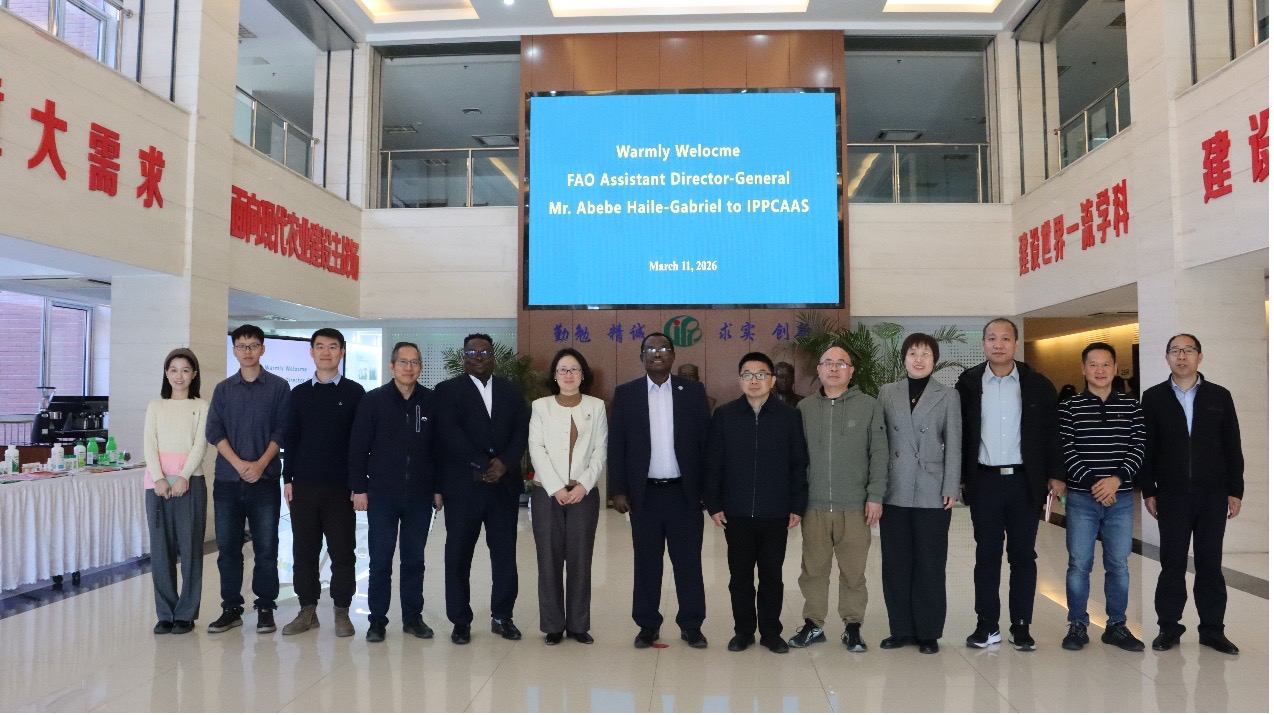 Assistant Director-General of the UN Food and Agriculture Organization Leads Delegation to Visit IPPCAAS
 -
 International Symposium on Plant Biosafety (ISPB 2025) Convenes in Guangzhou — Science-led plant health governance to secure food systems and advance the SDGs
 -
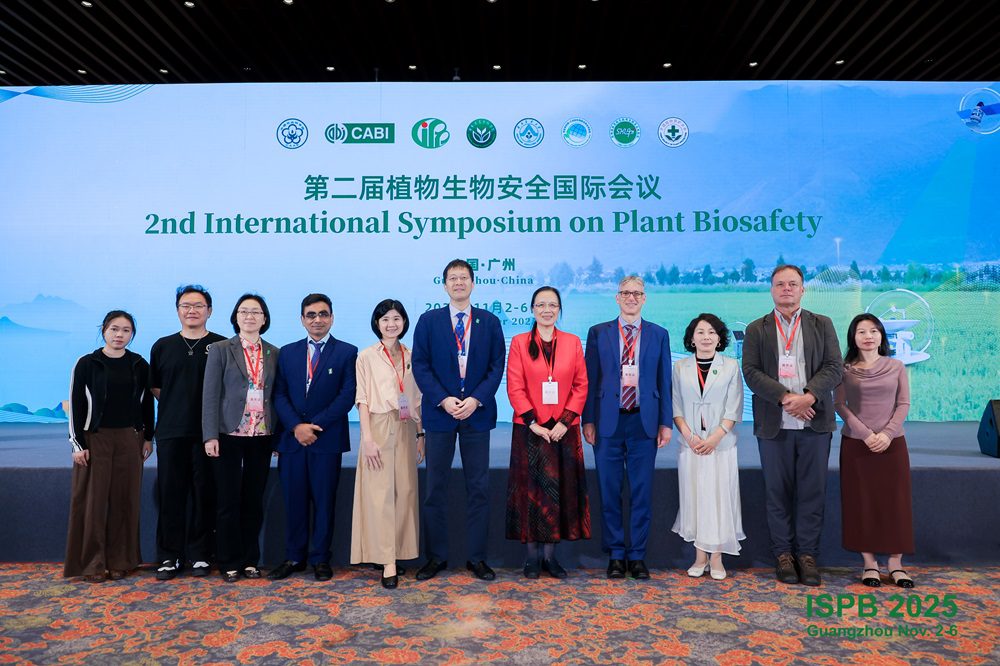 Three decades of China's membership of CABI celebrated at 2nd International Symposium on Plant Biosafety
 -
 CABI receives recognition from FAO for its work to support sustainable plant production and protection