
Zhou Xueping’s Team Reveals How a Plant Sterol Methyltransferase Balances Growth and Antiviral Defense
Recently, the research team led by Professor Xueping Zhou of the Institute of Plant Protection, Chinese Academy of Agricultural Sciences (IPPCAAS), and Zhejiang University published a paper entitled “Multiple-level regulation of a plant sterol methyltransferase during rice stripe virus infection.” in Plant Communications. The study systematically reveals the multi-level regulatory mechanisms through which the plant sterol methyltransferase NbSMT2 balances plant growth and resistance to rice stripe virus (RSV), providing important for molecular breeding and management of rice stripe disease.
Sterols are core components of plant cell membranes and are extensively involved in cell division, membrane permeability, plant growth and development. Although previous studies have indicated an association between plant sterol metabolism and disease resistance, it remained elusive whether and how sterols regulate plant negative-sense RNA virus infection.
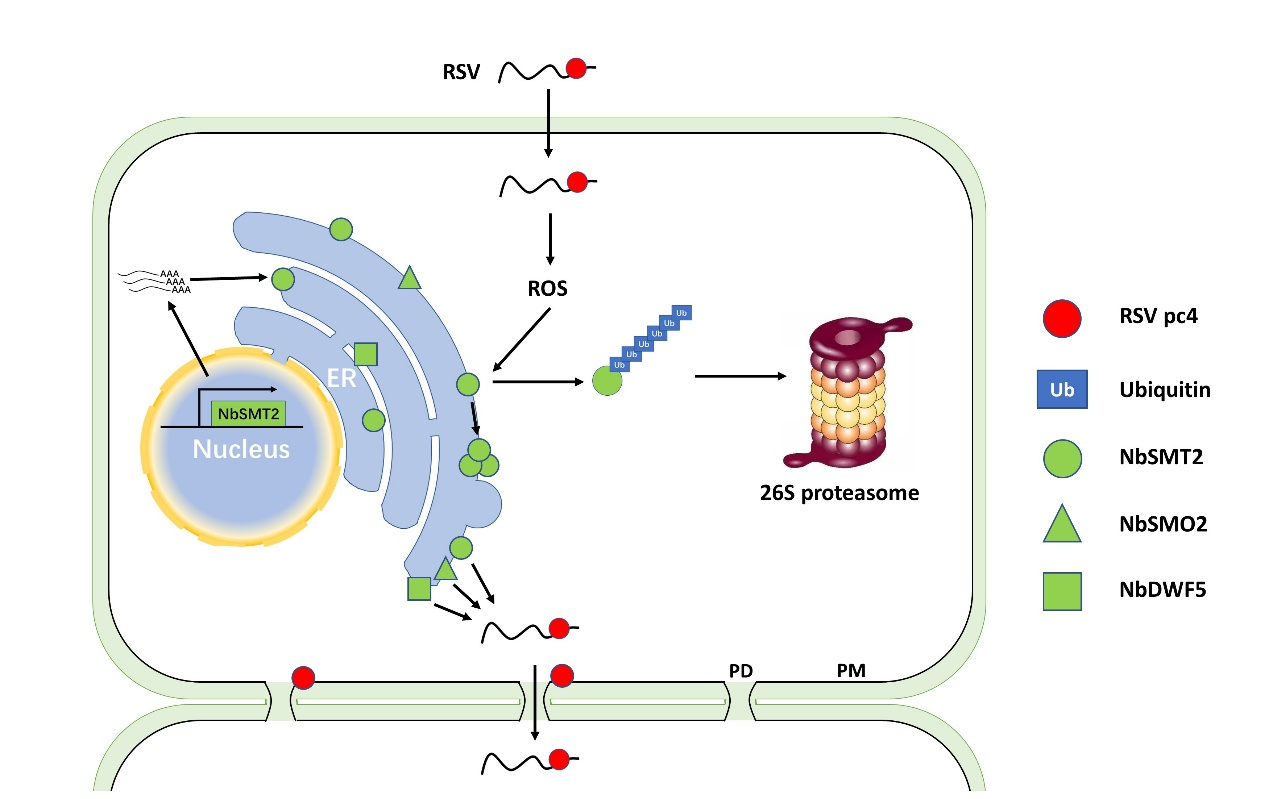
RSV is a negative-sense RNA virus that is transmitted by the small brown planthopper. Infection of rice plants by RSV causes plant stunting, leaf chlorosis and death of newly emerging leaves, posing a serious threat to rice production. In earlier work, the team analyzed the changes in the plant ubiquitinome and proteome after RSV infection. They found that the plant sterol methyltransferase NbSMT2 was significantly downregulated at the protein level, while the ubiquitination of identified ubiquitinated lysine sites in this protein was significantly upregulated, indicating that NbSMT2 may be ubiquitinated and subsequently deraded in response to RSV infection In this study, they further investigation showed that NbSMT2 localizes to the endoplasmic-reticulum membrane and acts as an important susceptibility factor in RSV infection. It enhances the cell-to-cell movement of pc4, the movement protein encoded by RSV, thereby promoting viral spread and infection. Silencing of NbSMT2 inhibited pc4 movement, delayed disease development and reduced viral accumulation, whereas overexpression of NbSMT2 promoted pc4 movement, accelerated viral spread and enhanced disease symptoms. A key downstream protein in the sterol pathway was also found to act together with NbSMT2 in regulating viral movement, which is independent of the classical callose-deposition pathway.
Based on these findings, the team uncovered a multi-level regulatory mechanism through which plants defend against RSV while maintaining normal growth. RSV infection induces the production of large amounts of reactive oxygen species, activating host immune responses and triggering polyubiquitination and degradation of NbSMT2 through the 26S proteasome pathway to restrict the intercellular motility of RSV pc4. As NbSMT2 is also essential for plant growth and development and excessive degradation would impair normal growth, plants therefore employ an additional protective mechanism by which NbSMT2 forms intracellular disulfide bonds that prevent its complete degradation. This allows the plant to weaken viral infection while maintaining sterol metabolism and normal development, ultimately achieving a dynamic balance between growth and antiviral immunity.
The study provides the first evidence that a sterol biosynthesis enzyme directly regulates the cell-to-cell movement of a plant negative-sense RNA virus. It also reveals the regulatory network linking plant sterol metabolism, viral movement and reactive-oxygen-species-mediated immune defense, and provides important targets for developing rice germplasm with durable disease resistance.
Liu Yu, who completed his PhD at Zhejiang University, is the first author. Professors Zhou Xueping and Wu Jianxiang of Zhejiang University and Professor Yang Xiuling of IPPCAAS are corresponding authors. The research was supported by the National Key Research and Development Program of China, the Agricultural Science and Technology Innovation Program of CAAS, and the Earmarked Fund for Modern Agro-industry Technology Research System .
Original paper: https://www.cell.com/plant-communications/fulltext/S2590-3462(26)00287-7
-
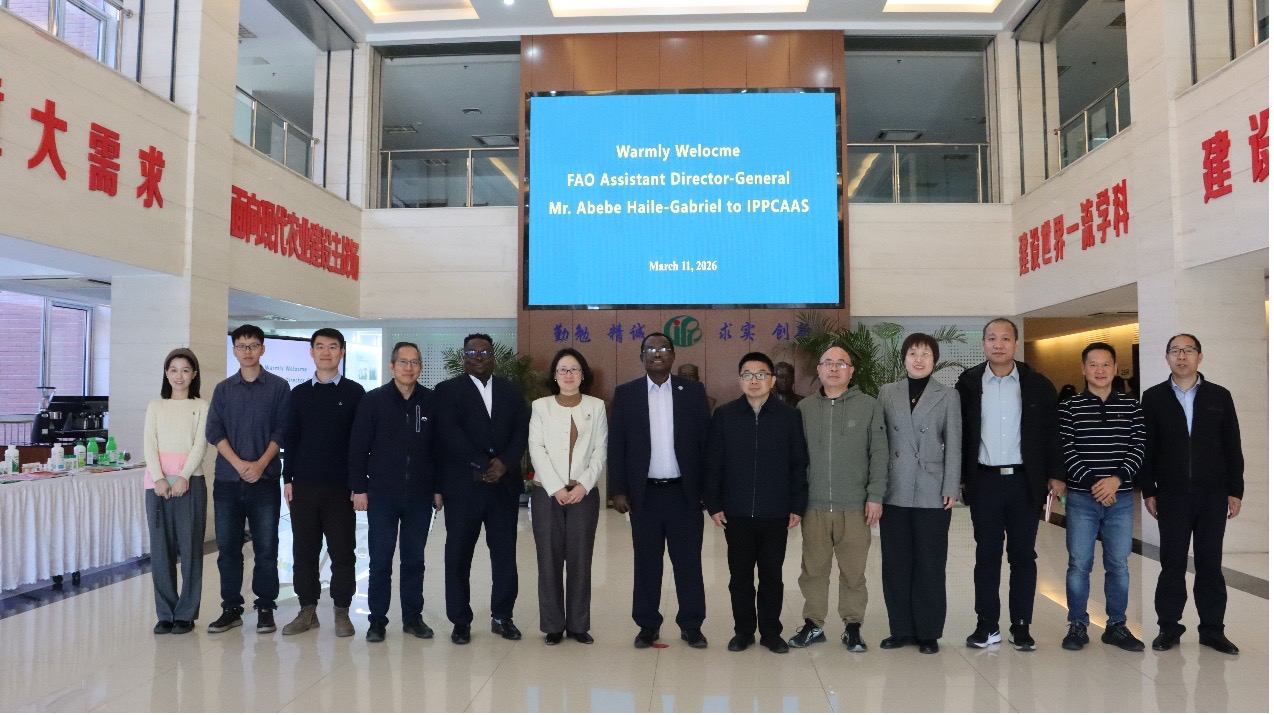 Assistant Director-General of the UN Food and Agriculture Organization Leads Delegation to Visit IPPCAAS
 -
 International Symposium on Plant Biosafety (ISPB 2025) Convenes in Guangzhou — Science-led plant health governance to secure food systems and advance the SDGs
 -
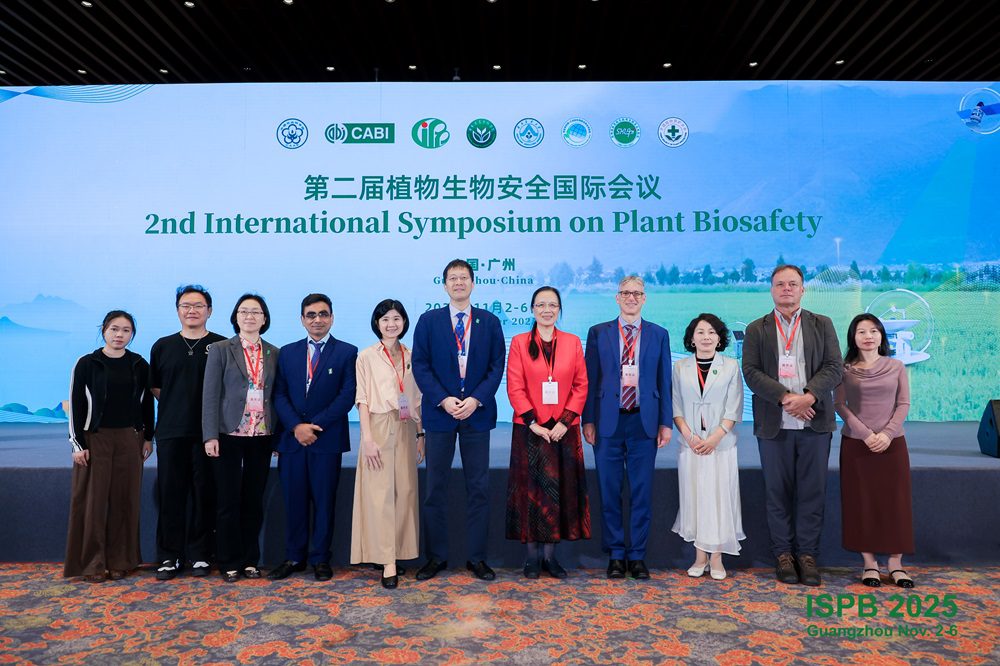 Three decades of China's membership of CABI celebrated at 2nd International Symposium on Plant Biosafety
 -
 CABI receives recognition from FAO for its work to support sustainable plant production and protection