
IPPCAAS Selects and Approves a High-Yield, High-Protein, and Disease-Resistant Soybean Variety
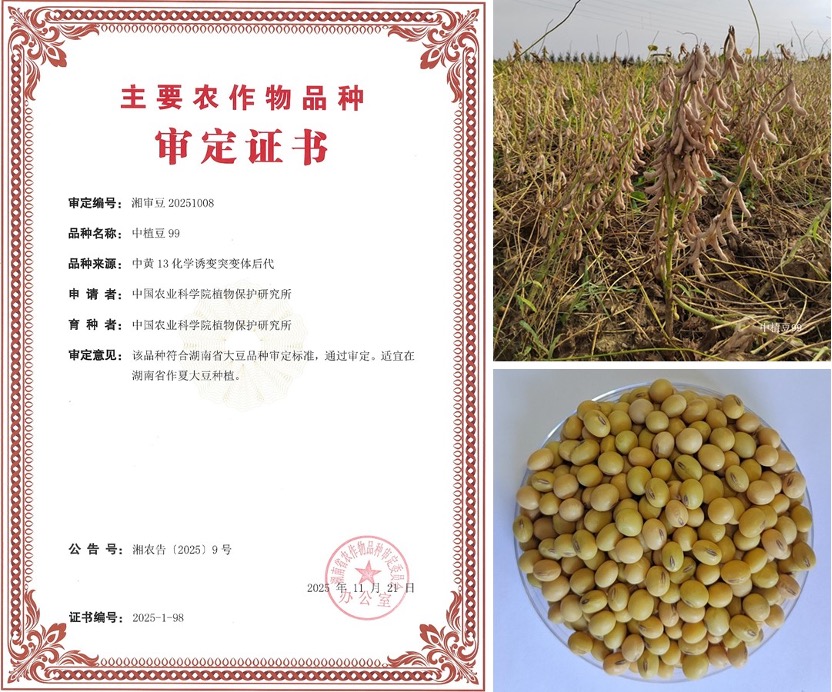
The Crop Nematode and Bacterial Disease Monitoring and Control Innovation Team at the IPPCAAS has successfully selected and approved a high-yield, high-protein, and disease-resistant soybean variety named “Zhongzhidou 99” (Variety Protection Application No. 20231000354). This variety has been officially approved by the Hunan Provincial Crop Variety Approval Committee under the approval number “Xiangshendou 20251008.”
In 2016, the team developed two large-scale chemically induced soybean mutant populations at the experimental bases in Langfang, Hebei, and Shunyi, Beijing: the Zhonghuang 13 mutant population and the PI437654 mutant population. These populations serve as two new soybean genetic germplasm resource banks, from which a series of trait mutants and candidate genes have been screened and identified (Ge et al., Journal of Integrative Agriculture, 2018; Liu et al., Theoretical and Applied Genetics, 2019; Zhang et al., Theoretical and Applied Genetics, 2019). Using these mutant populations, the team conducted continuous years of selection, testing, and demonstration at experimental bases in Xinxiang, Henan, and Langfang, Hebei. As a result, six non-transgenic soybean varieties with high yield, high protein, high oil content, disease resistance, and/or salt-alkali tolerance, including “Zhongzhidou 99,” have been selected and applied for variety protection. These varieties have also undergone extensive testing and demonstration in Hunan, Shandong, Guangxi, Inner Mongolia, and Xinjiang, demonstrating excellent performance and broad adaptability. They are primarily suitable for summer sowing but can also be sown in spring.
“Zhongzhidou 99” participated in and passed the Hunan Provincial Soybean Regional Trials and Production Trials in 2023 and 2024, and was officially approved by the Hunan Provincial Crop Variety Approval Committee in 2025. This variety is characterized by high protein content, high and stable yield, and disease resistance, with a per-mu yield exceeding 300 kilograms and a seed protein content as high as 47.56% (oil content 20.05%). It exhibits resistance to soybean mosaic virus and is classified as an early-to-medium-maturing variety, with a summer sowing growth period of 104.6 days in Hunan. With its balanced traits and outstanding protein content, “Zhongzhidou 99” serves as a valuable addition to soybean varieties aimed at “improving quality and increasing yield” in the Huang-Huai-Hai region and the Yangtze River Basin. It is particularly suitable for the production of soybean products and protein feed. The variety was selected by Liu Shiming and his team at the IPPCAAS. The research was supported by projects including the National High-Level Talent Program, the National Key Research and Development Program, the National Natural Science Foundation of China, and the Agricultural Science and Technology Innovation Program of the CAAS.
-
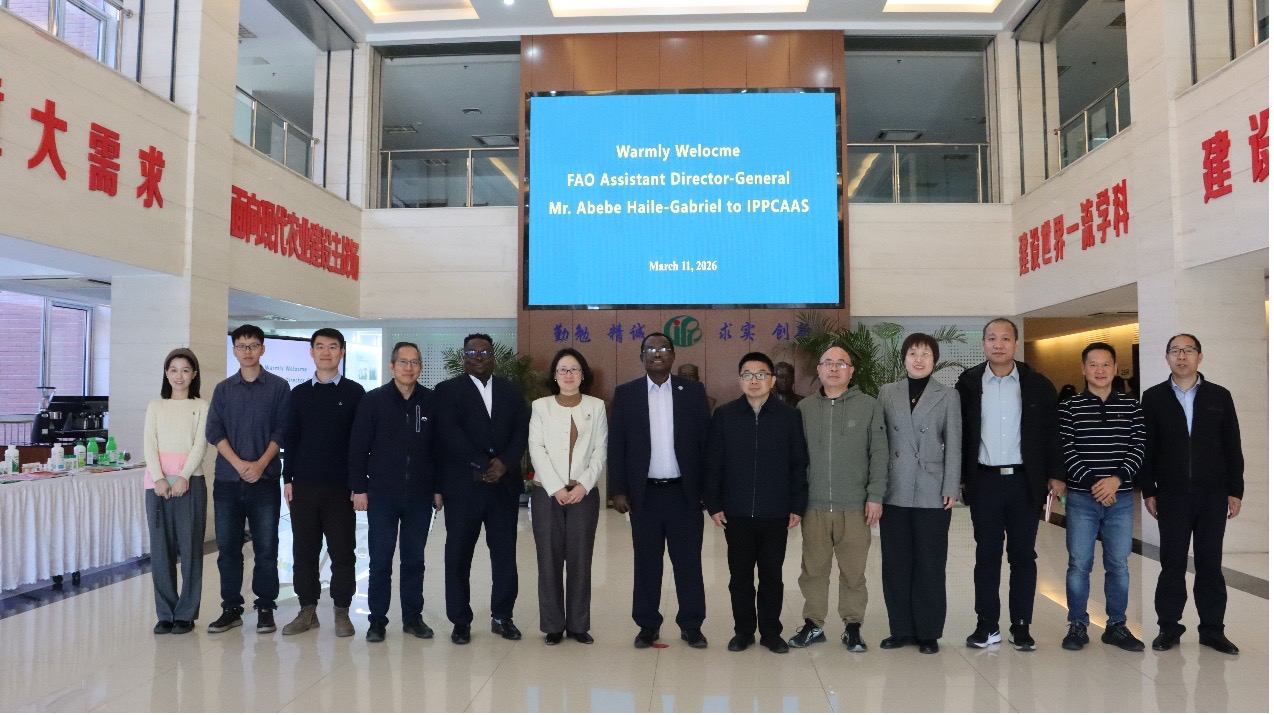 Assistant Director-General of the UN Food and Agriculture Organization Leads Delegation to Visit IPPCAAS
 -
 International Symposium on Plant Biosafety (ISPB 2025) Convenes in Guangzhou — Science-led plant health governance to secure food systems and advance the SDGs
 -
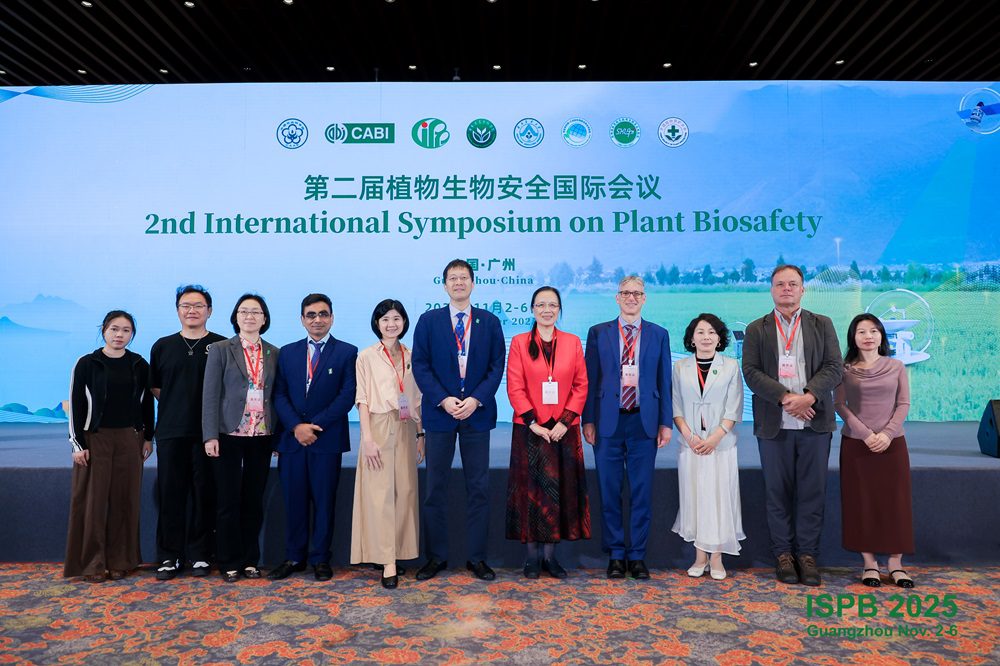 Three decades of China's membership of CABI celebrated at 2nd International Symposium on Plant Biosafety
 -
 CABI receives recognition from FAO for its work to support sustainable plant production and protection