

IPPCAAS reveals dual-pathway mechanism by which ZmPHT3 enhances broad-spectrum resistance in maize through metabolic and regulatory synergy
Researchers from the Cereal Crop Fungal Disease Monitoring and Prevention Team at the Institute of Plant Protection, Chinese Academy of Agricultural Sciences (IPPCAAS), have published findings in Plant Physiology revealing that the phenolamide regulator ZmPHT3 coordinately regulates broad-spectrum resistance to pathogens in maize through two synergistic pathways. This discovery deepens our understanding of how secondary metabolites participate in crop immunity and provides new strategies and key genetic resources for the green control of maize foliar diseases and for resistance breeding.
Phenolamides constitute a critical line of defense in plant immunity. Upon pathogens invasion, these compounds rapidly accumulate in plant tissues, acting through two primary mechanisms: directly inhibiting pathogen growth and strengthening the cell wall barrier to block pathogen spread. However, the response mechanisms, biosynthetic and regulatory networks, and the molecular basis of broad-spectrum resistance mediated by phenolamides in maize had remained largely elusive.
To understand how secondary metabolites and their regulatory genes change when maize responds to pathogen infection, the research team performed integrated metabolomic and transcriptomic analyses. They identified a key gene, ZmPHT3, which encodes a BAHD family acyltransferase responsible for catalyzing the biosynthesis of three putrescine-derived phenolamides: feruloyl putrescine glycoside, coumaroyl putrescine and caffeoyl putrescine. Experiments demonstrated that overexpression of ZmPHT3 significantly increased the levels of these compounds, thereby enhancing maize resistance to southern corn leaf blight (caused by Bipolaris maydis) and anthracnose (caused by Colletotrichum graminicola). In contrast, knockout of ZmPHT3 reduced phenolamide accumulation, increased hyphal spread and greater plant susceptibility. In vitro enzyme activity assays confirmed that ZmPHT3 directly catalyzes the production of these three phenolamide metabolites, with coumaroyl putrescine and caffeoyl putrescine showing inhibitory effects against pathogen hyphal growth.
The study further revealed that ZmPHT3 not only directly synthesizes antimicrobial phenolamides through its enzymatic activity but also indirectly regulates the stability of another key protein, ZmPP2-B8, via its catalytic products. ZmPP2-B8 is a phloem protein containing an F-box domain that acts as a positive regulator of maize immunity. Together with ZmPHT3, ZmPP2-B8 co-activates the expression of genes involved in cell wall biosynthesis, thereby strengthening the cell wall defense barrier.
This study reveals the dual role of ZmPHT3: it directly produces antimicrobial molecules while also safeguarding an immune regulatory protein. Working in synergy, these two components form a defense module that reinforces the cell wall and broadens disease resistance, effectively conferring enhanced, durable protection in maize.
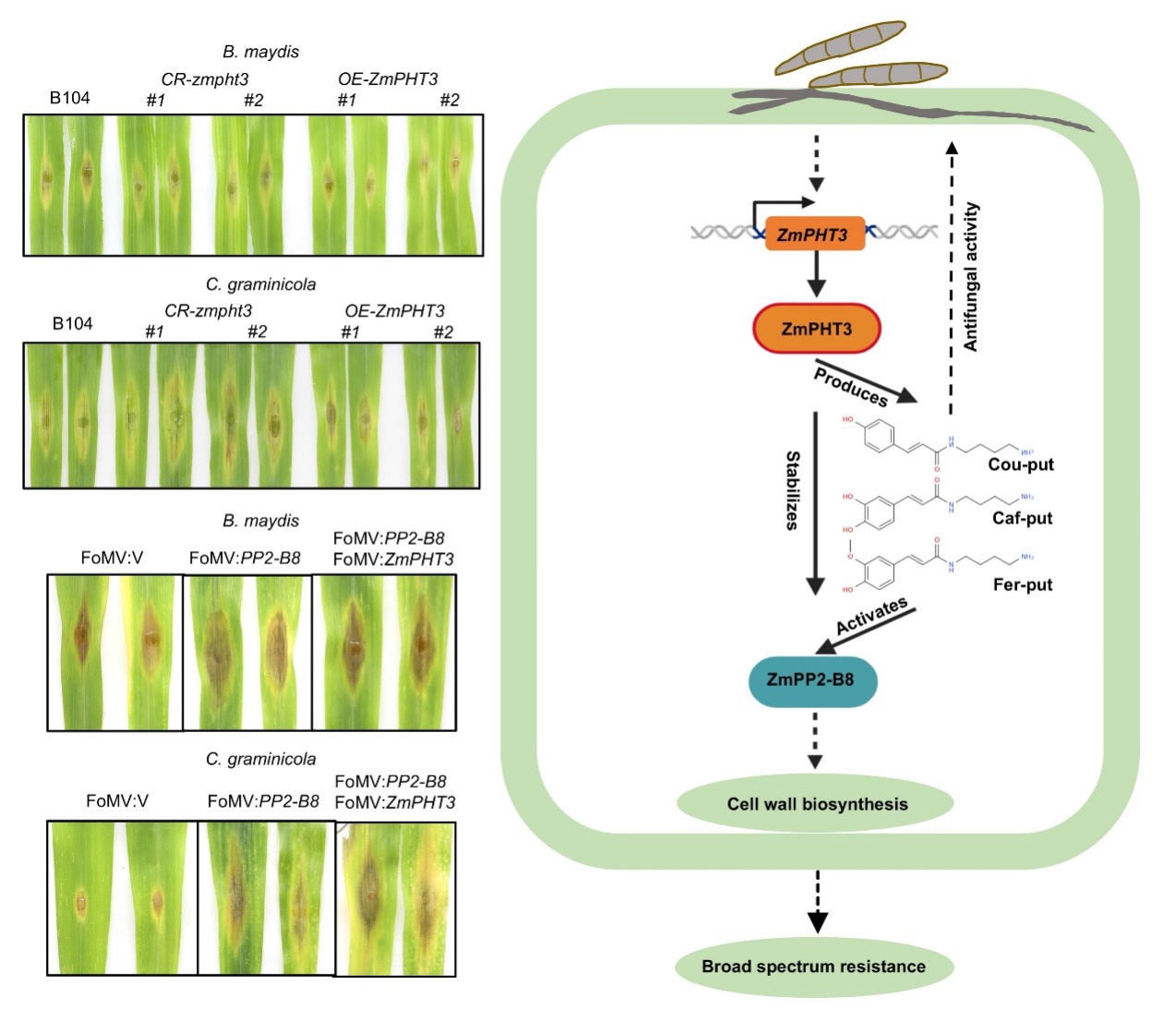
ZmPHT3 synergizes with ZmPP2-B8 to regulate broad-spectrum resistance in maize
Gong Ziwen (a joint postdoctoral fellow between the Institute of Plant Protection, CAAS, and the Agricultural Genomics Institute at Shenzhen) is the first author of this paper. Professor Liu Wende and Associate Researcher Li Zhiqiang, both at the Institute of Plant Protection, CAAS, are co-corresponding authors. This research was supported by the International Cooperation and Exchange Program of the National Natural Science Foundation of China (grant no. 32061143033).
-
 Assistant Director-General of the UN Food and Agriculture Organization Leads Delegation to Visit IPPCAAS
 -
 International Symposium on Plant Biosafety (ISPB 2025) Convenes in Guangzhou — Science-led plant health governance to secure food systems and advance the SDGs
 -
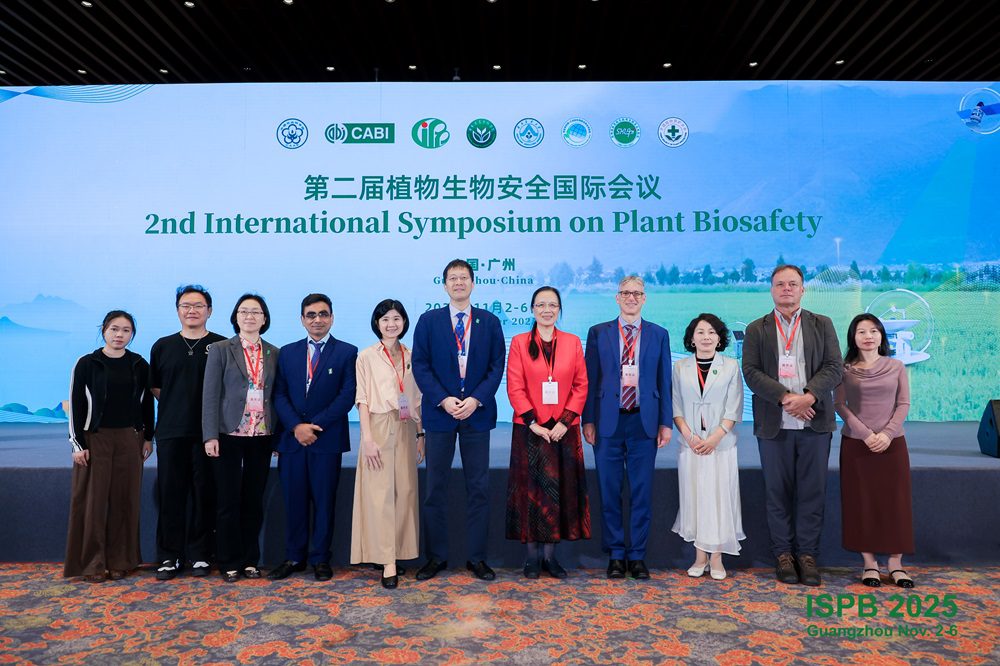 Three decades of China's membership of CABI celebrated at 2nd International Symposium on Plant Biosafety
 -
 CABI receives recognition from FAO for its work to support sustainable plant production and protection