

IPP and Hunan Agricultural University Collaboratively Reveal Rice Immunity Mechanism Mediated by E3 Ubiquitin Ligase-Regulated Rab GTPase Homeostasis
Recently, the Crop Pathogen Functional Genomics Research Innovation Team from the Institute of Plant Protection (IPP), Chinese Academy of Agricultural Sciences (CAAS), in collaboration with Hunan Agricultural University, published a research paper titled “E3 ubiquitin ligase mediated degradation of Rab GTPase suppresses an MAPKK and activates immunity in rice” in Journal of Integrative Plant Biology (JIPB). The study uncovers the molecular mechanism by which rice E3 ubiquitin ligase regulates the MAPKK pathway and activates immunity through the ubiquitination and degradation of the rice Rab family protein OsRab11C1.
Rab family proteins are a class of small GTPases with the largest number of members and diverse functions in plants, which can regulate plant immune responses. However, the role of Rab proteins in maintaining immune homeostasis is still lacking.
This study revealed that loss-of-function of OsRab11C1 significantly enhances resistance to rice blast, accompanied by the upregulation of defense-related gene expression, increased reactive oxygen species (ROS) burst, and activation of the MAPK signaling pathway. OsRab11C1 interact with the MAPKK kinase OsMKK6 and maintain its stability; while suppressing the expression of OsMKK6 improve resistance to rice blast. Further research found that the rice RING-type E3 ubiquitin ligase EL5 mediated the ubiquitination of OsRab11C1 and promote its degradation through the 26S proteasome pathway. Overexpression of EL5 accelerates the degradation of OsRab11C1, thereby reducing the stability of OsMKK6 and enhancing rice disease resistance.
This study reveals that E3 ubiquitin ligase regulates the function of Rab GTPase through post-translational modification and degradation pathways to balance immune signals. The “EL5-OsRab11C1-OsMKK6” regulatory module provides new theoretical basis and genetic resources for rice disease-resistant breeding.
Su Jiang, a jointly trained doctoral student from IPP, CAAS and Hunan Agricultural University, is the first author of the paper. Professor Yuese Ning from IPP, CAAS, Associate Professor Dan Wang and Professor Yinghui Xiao from Hunan Agricultural University are the co-corresponding authors. The research was supported by projects including the Science and Technology Innovation Program of CAAS and the National Natural Science Foundation of China.
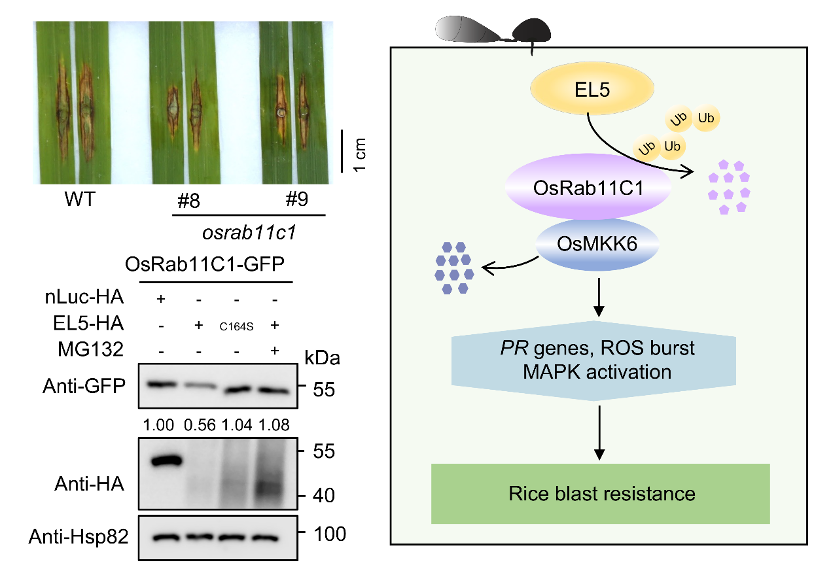
Figure. Molecular Mechanism of Rice Small G Protein OsRab11C1 Negatively Regulating Rice Blast Resistance
-
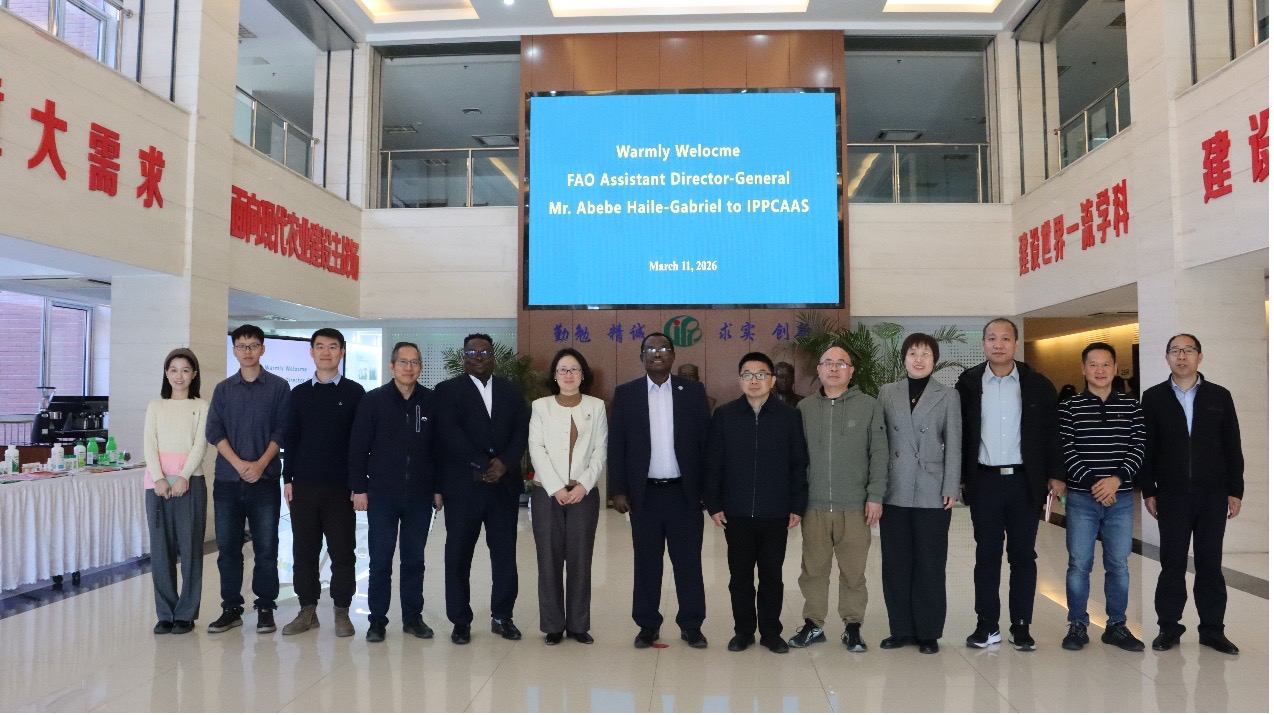 Assistant Director-General of the UN Food and Agriculture Organization Leads Delegation to Visit IPPCAAS
 -
 International Symposium on Plant Biosafety (ISPB 2025) Convenes in Guangzhou — Science-led plant health governance to secure food systems and advance the SDGs
 -
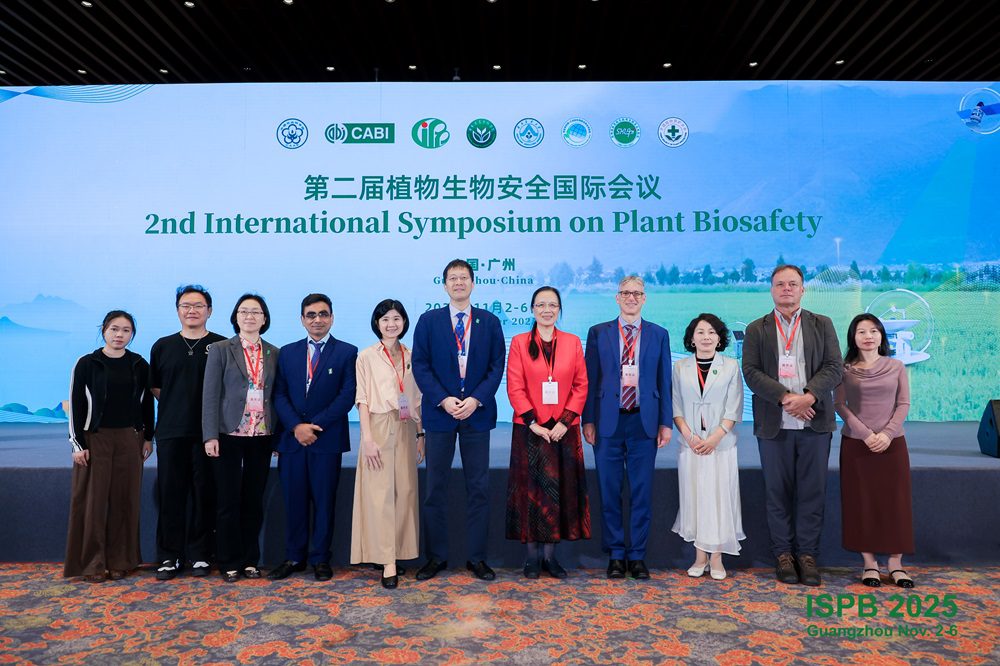 Three decades of China's membership of CABI celebrated at 2nd International Symposium on Plant Biosafety
 -
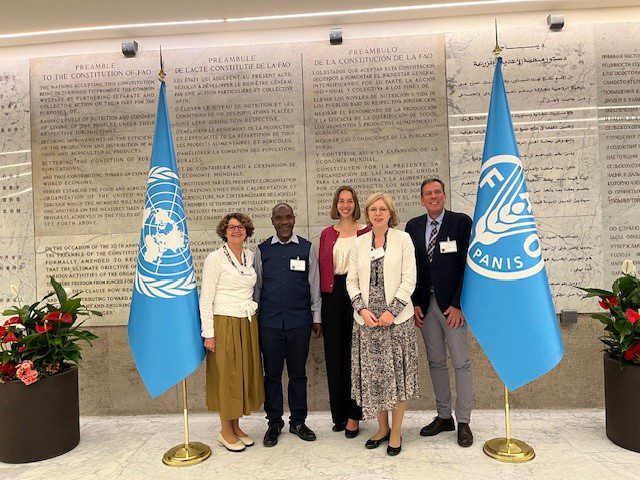 CABI receives recognition from FAO for its work to support sustainable plant production and protection