
IPP Reveals Green Manure Crop Rotation Promotes Ecological Control of Migratory and Borers Pests in Rice
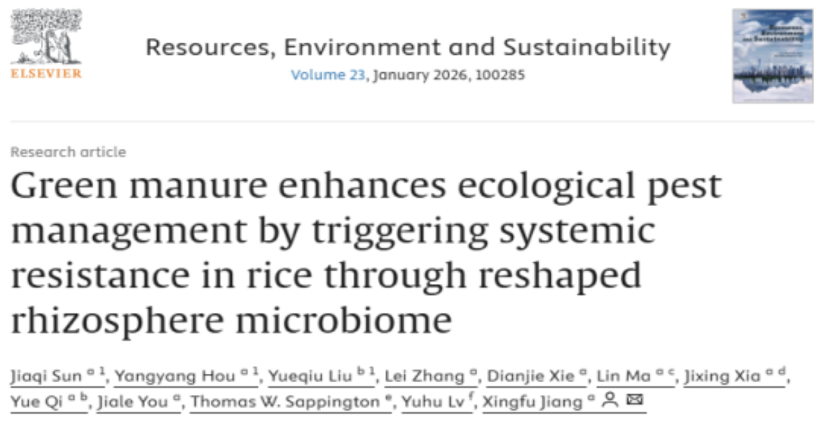
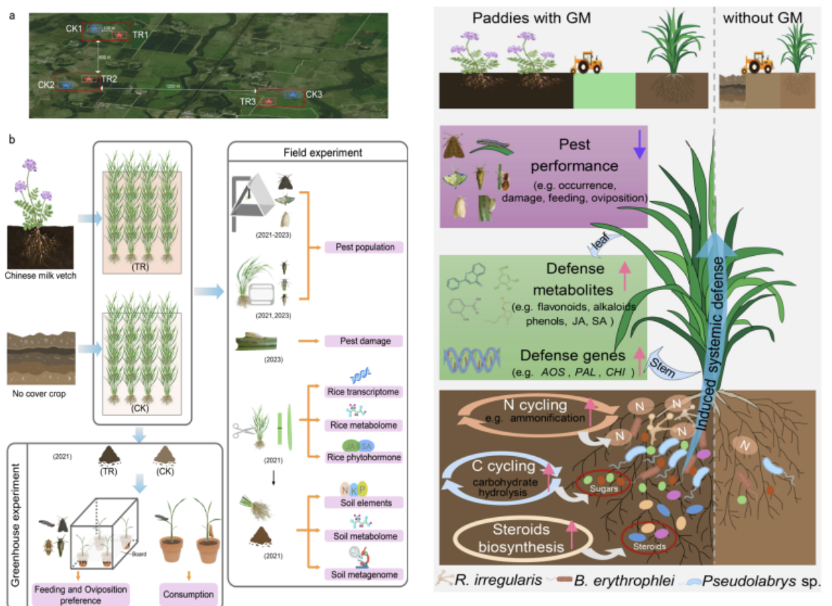
Recently, the Migratory Pest Research Group of the Innovation Team for Monitoring and Control of Grain Crop Pests from the Institute of Plant Protection (IPP), Chinese Academy of Agricultural Sciences (CAAS), published a research paper titled “Green manure enhances ecological pest management by triggering systemic resistance in rice through reshaped rhizosphere microbiome” in Resources, Environment and Sustainability (5-year IF=10.4). The study found that rotating the green manure crop Chinese milk vetch (Astragalus sinicus) with rice can recruit beneficial soil microorganisms, enhance rice systemic insect resistance, and significantly inhibit the feeding, oviposition, and population growth of major rice pests—thereby promoting the ecological control of rice pests.
With social progress and improved living standards, the concepts of green agriculture and ecological environmental protection have become increasingly rooted in people’s minds. Promoting green crop yield increase and green pest management has emerged as a key direction for agricultural development. The traditional Chinese farming practice of “green manure” enriches soil quality and injects new-quality productive forces into green crop production, serving as an important practice of the “storing grain in land and technology” strategy. However, the value of green manure in green pest management remains unclear.
Employing interdisciplinary technologies integrating plant protection and soil-fertilizer science, this study conducted a cascade analysis of green manure-soil-rice-pests. Compared with conventional cultivation (winter fallow), green manure-rice rotation reduced the occurrence and damage of migratory and borer pests in rice, including the oriental armyworm (Mythimna separata), rice leaf folder (Cnaphalocrocis medinalis), striped stem borer (Chilo suppressalis), and rice planthoppers. It disrupted the feeding and oviposition behaviors of the oriental armyworm and brown planthopper (Nilaparvata lugens), upregulated the expression of defense-related genes in aboveground rice tissues, stimulated the synthesis of insect-resistant substances such as flavonoids and alkaloids, and promoted the accumulation of jasmonic acid and salicylic acid. Meanwhile, green manure cultivation enriched beneficial microorganisms in the rice rhizosphere soil, enhanced soil nitrogen and carbon cycling, increased the contents of total nitrogen, available nitrogen, and organic matter, and activated aboveground rice defenses by reshaping the rhizosphere microbiome—thus achieving systemic resistance against multiple pests and ecological control. This research provides technical support for the national action plan of reducing pesticide and chemical fertilizer use, improving rice yield and quality, and realizing sustainable agricultural development.
The Institute of Plant Protection, CAAS, is the first completing unit of the paper. Sun Jiaqi, a doctoral student in residence; Hou Yangyang, a graduated master student; and Professor Liu Yueqiu from Beijing University of Agriculture are the co-first authors. Professor Jiang Xingfu is the corresponding author. Professor Zhang Lei, Assistant Professor Xie Dianjie, Assistant Professor Ma Lin from the Western Agricultural Research Center, Professor Xia Jixing from China Agricultural University, master students Qi Yue and You Jiale in residence, Professor Thomas W. Sappington from Iowa State University (USA), and Professor Lü Yuhu from Xinyang Academy of Agricultural Sciences participated in this work. The study was supported by projects including the National Natural Science Foundation of China (Grant Nos. 32572941, 32072420) and the National Green Manure Industry Technology System (CRAS-22).
Link: https://doi.org/10.1016/j.resenv.2025.100285
-
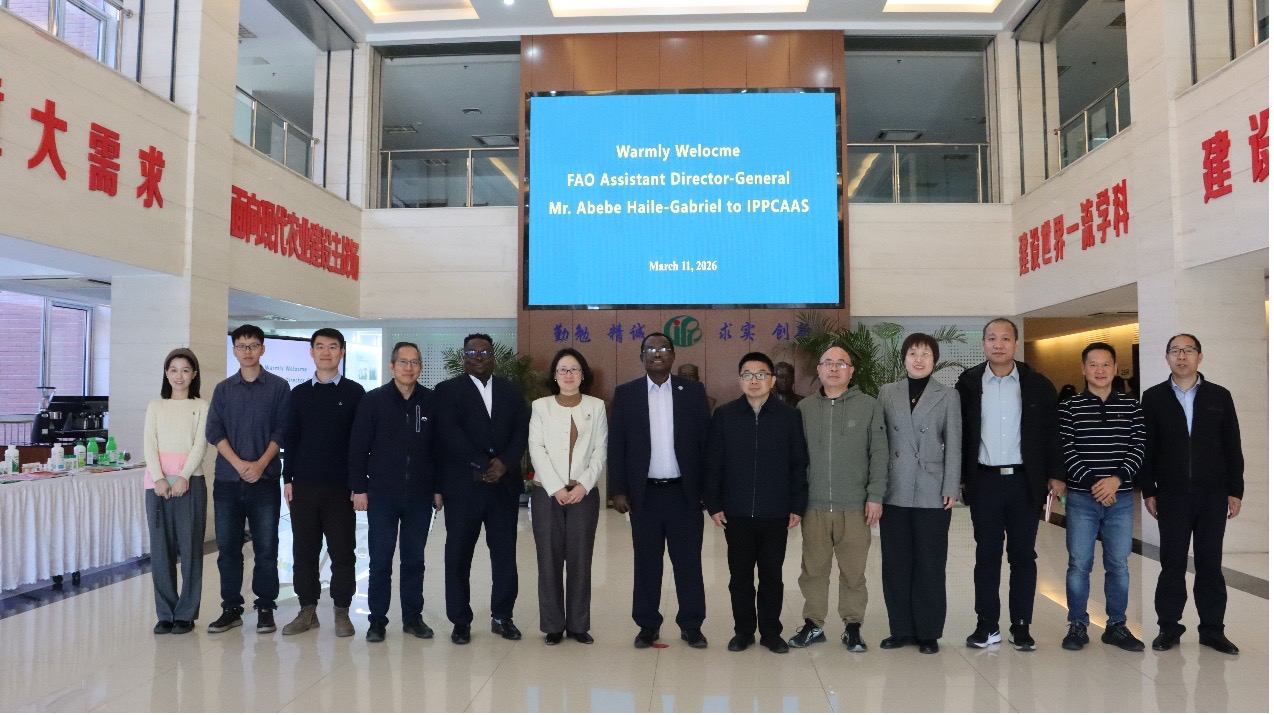 Assistant Director-General of the UN Food and Agriculture Organization Leads Delegation to Visit IPPCAAS
 -
 International Symposium on Plant Biosafety (ISPB 2025) Convenes in Guangzhou — Science-led plant health governance to secure food systems and advance the SDGs
 -
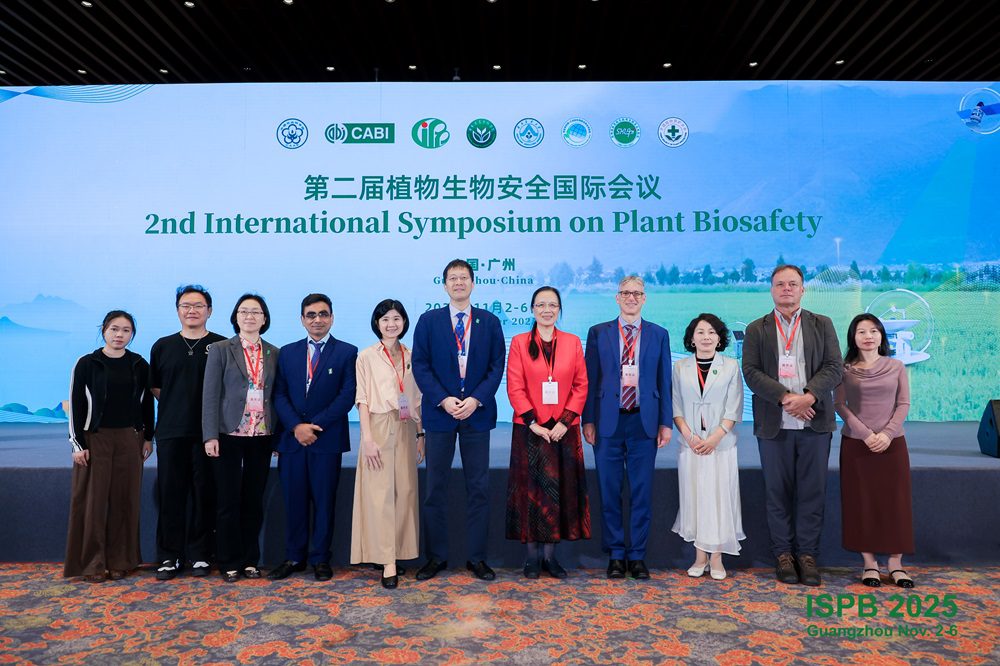 Three decades of China's membership of CABI celebrated at 2nd International Symposium on Plant Biosafety
 -
 CABI receives recognition from FAO for its work to support sustainable plant production and protection