

IPPCAAS collaboration develops mycovirus-based VIGS system for control of western flower thrips
Researchers from the Crop Virus Disease Monitoring and Prevention Innovation Team at Institute of Plant Protection, Chinese Academy of Agricultural Sciences (IPPCAAS), in collaboration with Inner Mongolia Agricultural University, have published an online paper in Plant, Cell & Environment, a CAS Q1 top-tier journal, titled “Mycovirus-induced functional reprogramming of a plant pathogenic fungus for biocontrol of western flower thrips”. Using a virus-induced gene silencing (VIGS) system based on a mycovirus, the team successfully transformed Fusarium graminearum – the causal agent of wheat head blight – into a biocontrol agent capable of effectively managing the global pest western flower thrips. This work offers an innovative solution for green pest control.
The western flower thrips (Frankliniella occidentalis) is one of the world’s most destructive invasive pests, posing a serious threat to hundreds of crop species including vegetables, ornamentals and fruit trees, and causing substantial agricultural losses. The pest is not only highly fecund and polyphagous, but also develops resistance extremely rapidly – it has already acquired high-level resistance to multiple chemical insecticides, making control exceptionally difficult. Although entomopathogenic fungi represent an important resource for green agricultural pest management, effective fungal strains against F. occidentalis remain scarce, a critical bottleneck for the development of biological control.
Fusarium graminearum gemytripvirus 1 (FgGMTV1) is a fungal multi‑segment DNA virus first reported internationally by this research team. Leveraging the unique genome structure and infection characteristics of FgGMTV1, the team developed the VIGS vector p26‑D4. This vector efficiently targets and silences key pathogenicity genes in F. graminearum, significantly reducing the fungus’s ability to infect wheat while also lowering DON toxin production – providing a new tool for green management of wheat head blight.
Building on these previous results, the present study expands the technology’s application, achieving a cross‑kingdom breakthrough from “controlling a fungal pathogen” to “controlling an agricultural pest.” The research team inserted gene fragments of key thrips genes (ACT and SNF) into the p26‑D4 vector and then successfully transfected the virus into a F. graminearum strain lacking the DON toxin synthesis gene Tri5. This transformed strain, originally a wheat pathogen, now continuously produces small RNAs (sRNAs) targeting F. occidentalis during growth, enabling cross‑kingdom gene silencing that precisely attacks the pest.
Experimental data showed that when a mycelial suspension of the transfected strain was sprayed onto thrips larvae, adults and the leaves they inhabit, target gene expression in the thrips was significantly down‑regulated within just three days. Survival rates of both larvae and adults began to decline significantly from day three onward, demonstrating a clear and efficient control effect. Notably, whereas in vitro synthesized dsRNA has shown poor efficacy against larvae, the sRNA delivered via the mycovirus successfully overcame this technical hurdle – highlighting the unique advantage of this biocontrol system. The research has been granted a national invention patent, laying the groundwork for practical application of the technology.
In summary, this study has successfully established a cross‑kingdom gene silencing technology platform based on a mycovirus VIGS system, achieving a genuine cross‑domain innovation and technological upgrade from “controlling a fungal pathogen” to “controlling an agricultural pest.” In the future, this strategy can be extended to the green control of many other important agricultural pests, while also providing a replicable and deployable technological paradigm for the development of RNAi‑based biopesticides – helping to drive innovative technologies from the laboratory to the field.
The joint first authors of this paper are Sheng Xueyuan (a master’s student jointly trained by the Institute of Plant Protection, CAAS, and the College of Grassland Science, Inner Mongolia Agricultural University) and Wang Yanfei (a PhD student at the Institute of Plant Protection, CAAS). The co‑corresponding authors are Professor Guo Lihua (Institute of Plant Protection, CAAS) and Professor Zhao Yan (College of Grassland Science, Inner Mongolia Agricultural University). An Qi (a recent master’s graduate from Inner Mongolia Agricultural University), along with Professor Chen Chang, Associate Researcher Wang Shuangchao and Professor Wang Endong (all from the Institute of Plant Protection, CAAS), contributed to the research. This work was supported by the National Key Research and Development Program of China, the Agricultural Science and Technology Innovation Program of the Chinese Academy of Agricultural Sciences, and the Hohhot Key Research and Development Program.
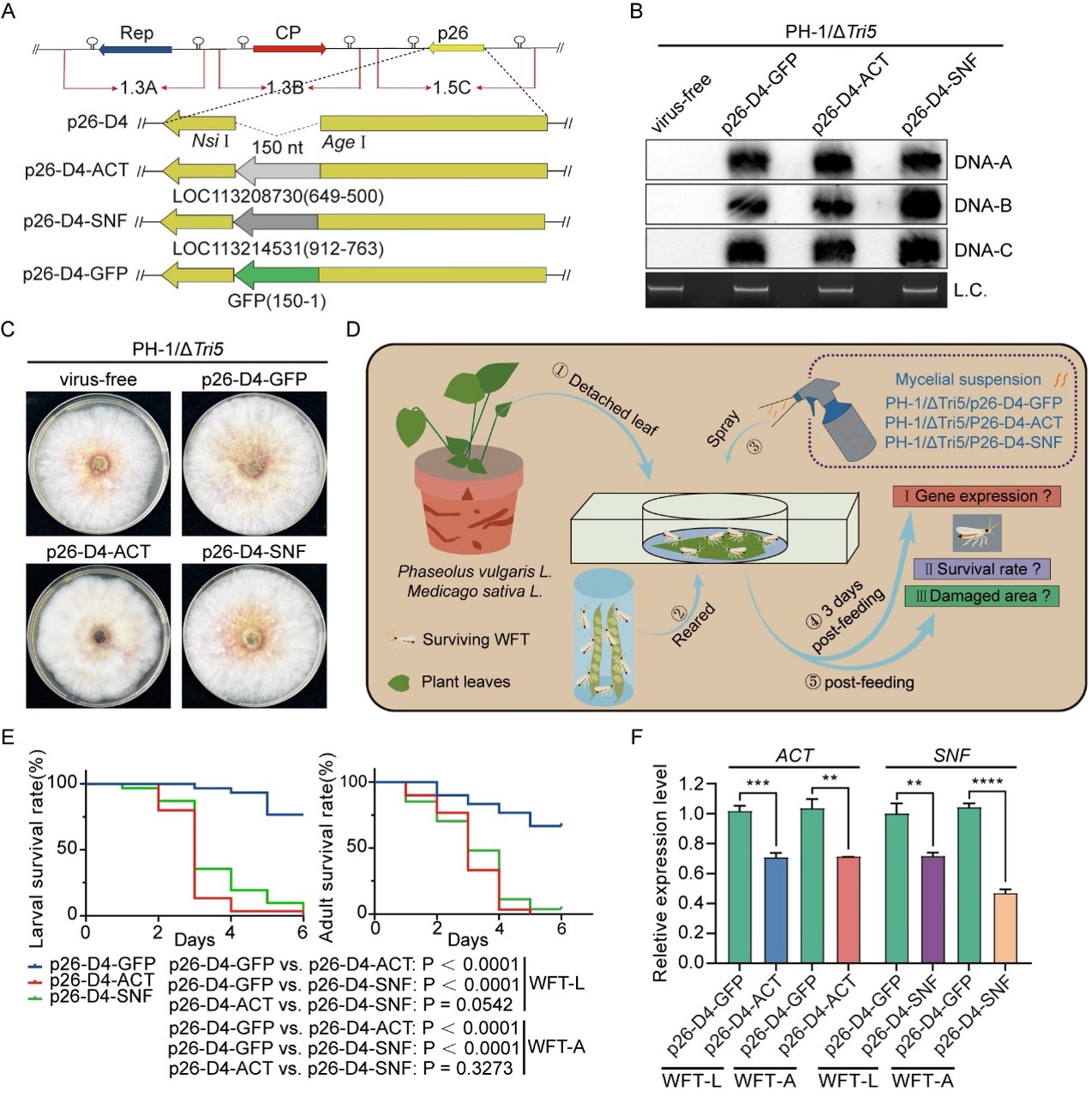
Link: https://onlinelibrary.wiley.com/doi/10.1111/pce.70485
-
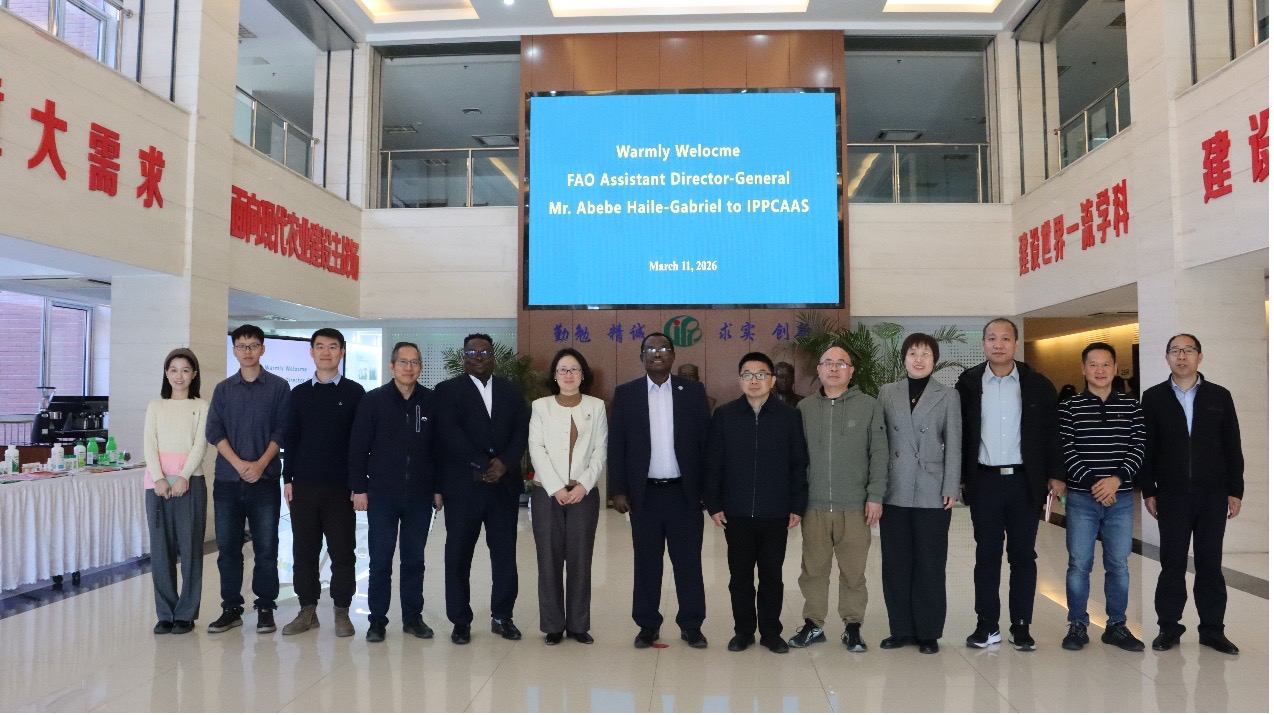 Assistant Director-General of the UN Food and Agriculture Organization Leads Delegation to Visit IPPCAAS
 -
 International Symposium on Plant Biosafety (ISPB 2025) Convenes in Guangzhou — Science-led plant health governance to secure food systems and advance the SDGs
 -
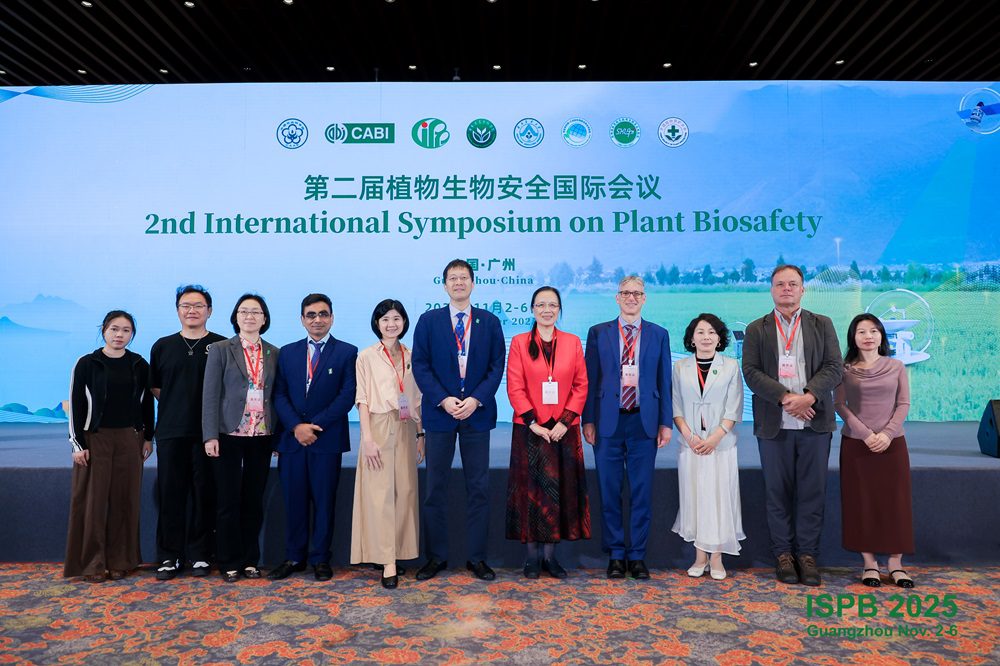 Three decades of China's membership of CABI celebrated at 2nd International Symposium on Plant Biosafety
 -
 CABI receives recognition from FAO for its work to support sustainable plant production and protection