

IPPCAAS Reveals Population Adaptive Mechanisms Driving Cross-border and Regional Invasion and Spread of Liriomyza sativae
Recently, the Innovation Team for the Prevention and Monitoring of Agricultural Invasive Species at IPPCAAS published a research paper entitled The combined roles of climate change and human activities in facilitating the global dispersal and regional invasion of Liriomyza sativae in the journal Entomologia Generalis. Integrating population genetics, network analysis and ecological niche modeling, the study systematically clarified the global dispersal history, regional invasion routes and genetic adaptive potential of Liriomyza sativae in newly invaded habitats from the perspectives of cross-border and inter-regional invasion. It uncovered the pivotal mechanism by which climate change, human activities and population adaptability synergistically shape the cross-border and regional invasion processes of the pest. The research outcomes provide a scientific basis for source tracing, monitoring and interception of cross-border and regional invasive alien pests.
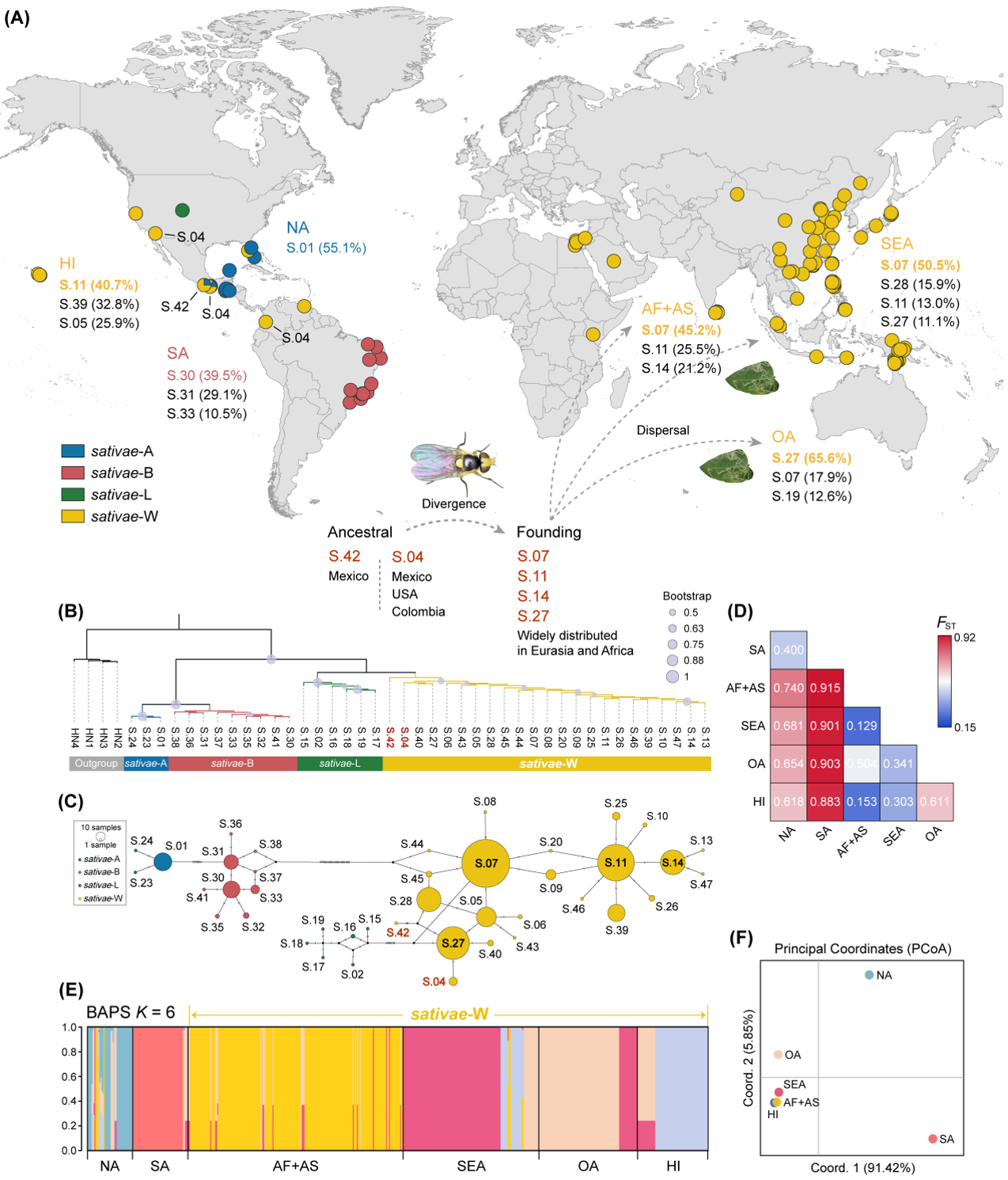
Global Population Genetic Structure and Phylogeography of Liriomyza sativae
Liriomyza sativae is a important invasive pest that damages vegetables and ornamental plants, and was first detected in China in 1994.Based on 952 cytochrome c oxidase subunit I (COI) sequences sampled from 21 countries, researchers reconstructed the global phylogenetic pattern of the pest. The results revealed that the sativae-W lineage acts as the globally dominant invasive lineage among its four genetic lineages. Mexico was identified as the origin of its ancestral haplotypes and as a critical high-risk source region for global invasion and spread. Regions such as Malaysia, Papua New Guinea and Hawaii function as important bridgeheads in its cross-border invasion process. Global gene flow network analysis indicated that L. sativae shows pronounced long-distance intercontinental dispersal, predominantly driven by human activities including international trade and the transportation of infested plant materials. Further analysis using single nucleotide polymorphism (SNP) data from 146 specimens representing 15 geographic populations in China showed that coastal areas of South China serve as a core bridgehead for the pest’s spread within China, presenting an overall dispersal trend from south to north and from coastal areas to inland regions. Notably, the pest exhibits evident environmental response capacity and adaptive evolution during range expansion. Analysis of niche dynamics between native and invasive populations based on global distribution records indicated that invasive populations have developed significantly enhanced low-temperature tolerance. Genotype-environment association analysis identified multiple candidate adaptive loci closely associated with environmental factors including precipitation, low temperature and altitude. These findings demonstrate that the pest possesses a strong capability for rapid adaptation to new environments and has an inherent genetic basis for continued invasion and expansion into high-latitude and low-temperature regions.
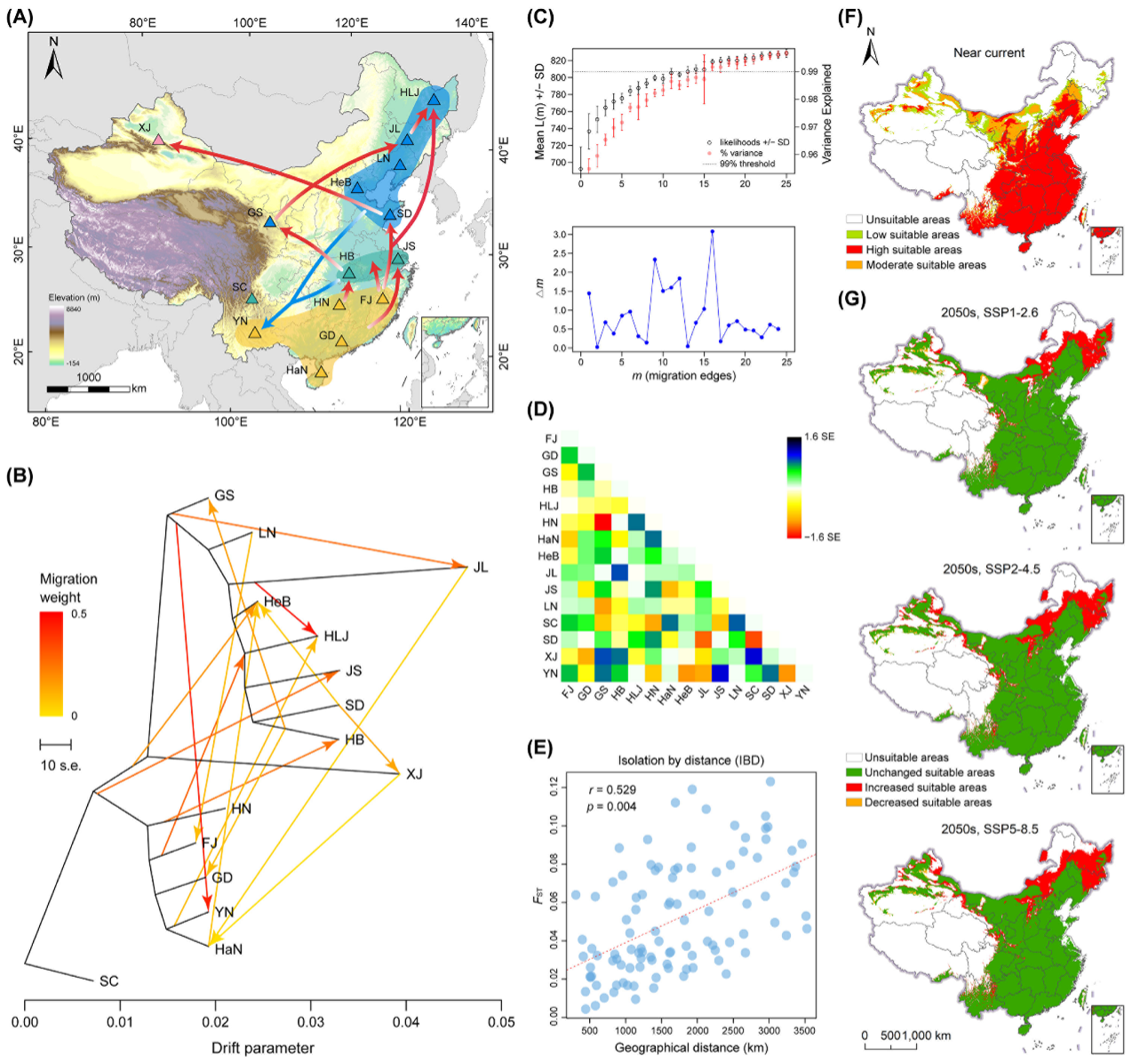
Historical Interregional Dispersal Pathways and Dynamics of Potential Suitable Habitats of Invasive Liriomyza sativae Populations in China
Liang Yongxuan, a master’s graduate, and Dr. Zhao Haoxiang from IPPCAAS, are co-first authors of the paper. Researcher Liu Wanxue and Associate Researcher Guo Jianyang are corresponding authors. The study also received guidance from doctoral student Ye Fuyu, postdoctoral researcher Du Sujie, Researcher Yang Nianwan, Researcher Wan Fanghao from CAAS, and Professor Frédéric Francis from the University of Liège. This study was funded by the National Key Research and Development Program of China (2023YFC2065200, 2021YFC2600400), CAAS Innovation Program (CAASCX2022-2025-IAS) and Agricultural Science and Technology Innovation Program (CAAS-ZDRW202505).
Link:https://doi.org/10.1127/entomologia/3374
-
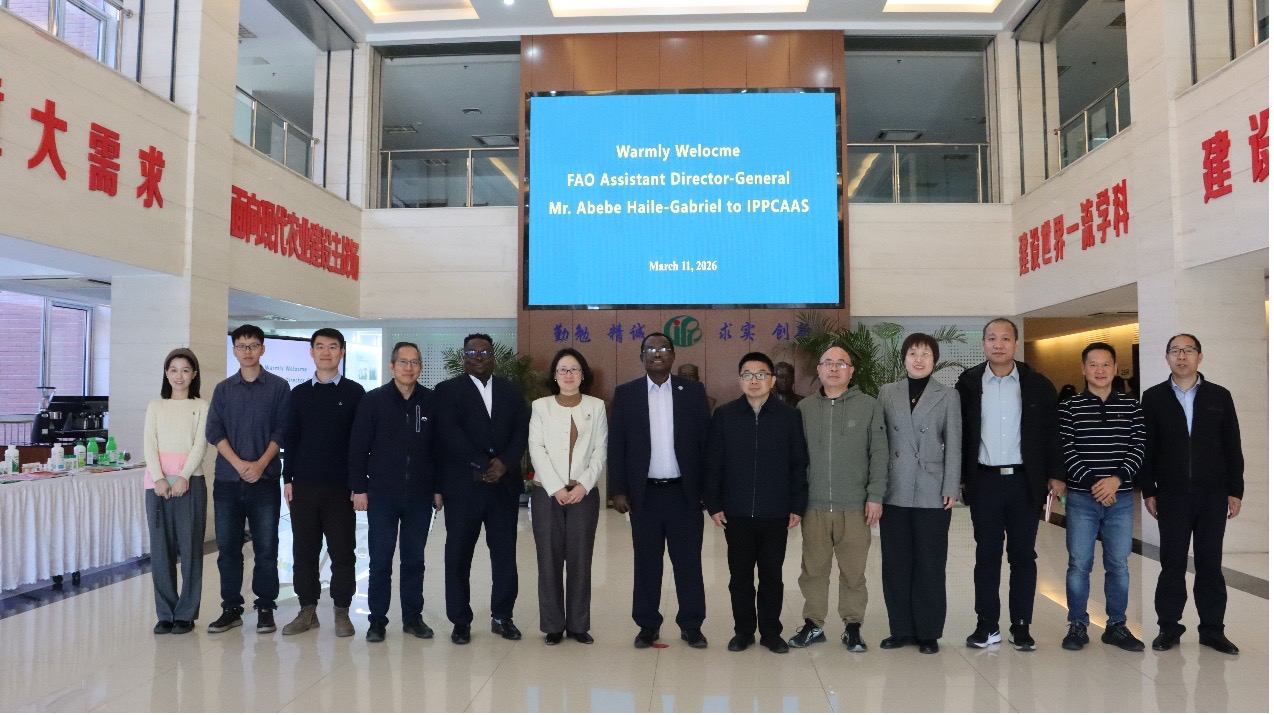 Assistant Director-General of the UN Food and Agriculture Organization Leads Delegation to Visit IPPCAAS
 -
 International Symposium on Plant Biosafety (ISPB 2025) Convenes in Guangzhou — Science-led plant health governance to secure food systems and advance the SDGs
 -
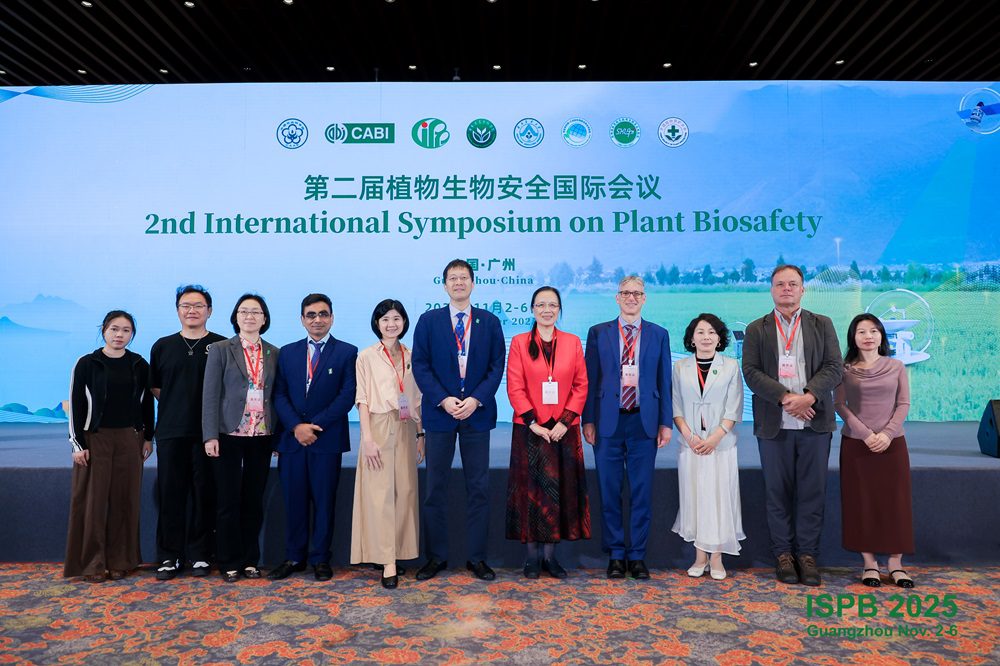 Three decades of China's membership of CABI celebrated at 2nd International Symposium on Plant Biosafety
 -
 CABI receives recognition from FAO for its work to support sustainable plant production and protection