
IPPCAAS Develops Sprayable Short-Fiber Carriers for Efficient Pesticide Delivery
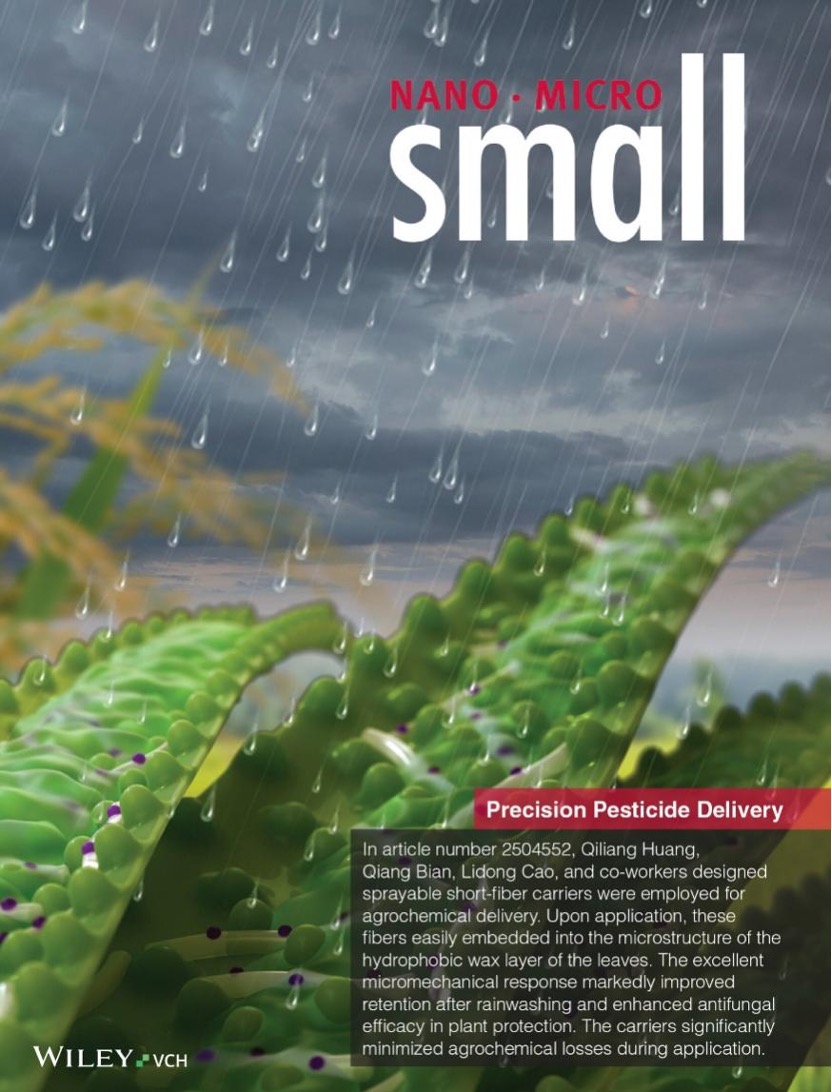
Recently, the Innovation Team for Molecular Targets and Green Pesticides Development at the Institute of Plant Protection, Chinese Academy of Agricultural Sciences (IPPCAAS), developed a sprayable short-fiber suspension loaded with the fungicide fludioxonil. The formulation achieves excellent foliar deposition and rainfastness, thereby improving pesticide use efficiency. The results were published in Small (IF 13.0) under the title “Geometrically and Micromechanically Optimized Sprayable Short Fibers for Precision Pesticide Delivery,” and were selected as a Frontispiece (inside front cover) feature.
Using electrospinning in combination with aminolysis, the study created high-aspect-ratio short fibers based on the biodegradable polymer poly(3-hydroxybutyrate) (PHB). These fibers effectively anchor within the interspaces among papillae on rice leaves, delivering high on-leaf retention while enhancing resistance to wash-off by rainfall. Compared with conventional microspheres, the short-fiber carriers increased the maximum stable on-leaf retention by at least 1.47× and the retained amount after rinsing tests by at least 1.43×. Finite-element modeling of drug-loaded micro/nanoparticles interacting with the rice-leaf micro-surface showed that short fibers provide a larger contact area and a higher likelihood of contact, producing a more uniform stress distribution. The short-fiber suspension also exhibited good formulation stability and a pH-responsive release profile, and it effectively suppressed cucumber gray mold and rice sheath blight. Under simulated rainfall, its antifungal activity against Rhizoctonia solani surpassed that of a commercial suspension concentrate. Moreover, the short-fiber suspension showed minimal effects on zebrafish, indicating a favorable biosafety profile.
IPPCAAS is the lead institution on the paper. Doctoral candidate Wenjie Shangguan is the first author. Researcher Qiliang Huang (IPPCAAS), Senior Engineer Qiang Bian (Nankai University), and Researcher Lidong Cao (IPPCAAS) are co-corresponding authors. The work was supported by the National Natural Science Foundation of China, the Beijing Natural Science Foundation, and the Central Public-Interest Scientific Institution Basal Research Fund.
Links: https://doi.org/10.1002/smll.202504552
-
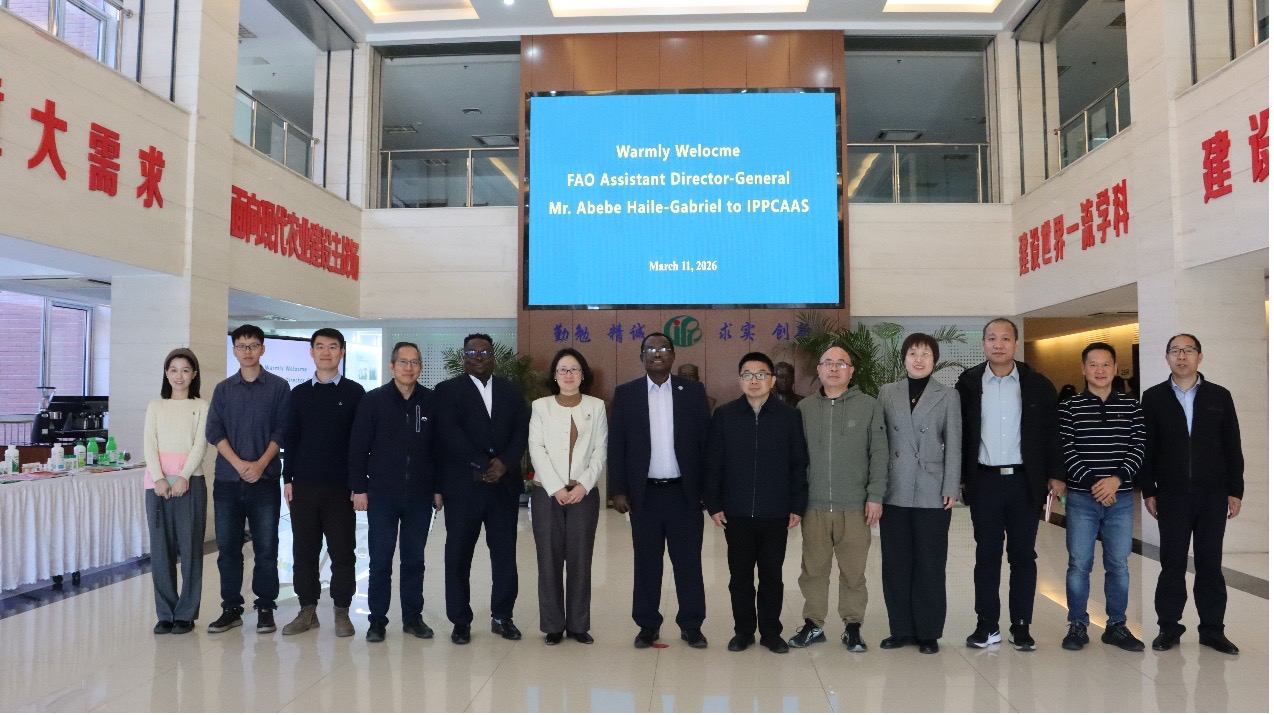 Assistant Director-General of the UN Food and Agriculture Organization Leads Delegation to Visit IPPCAAS
 -
 International Symposium on Plant Biosafety (ISPB 2025) Convenes in Guangzhou — Science-led plant health governance to secure food systems and advance the SDGs
 -
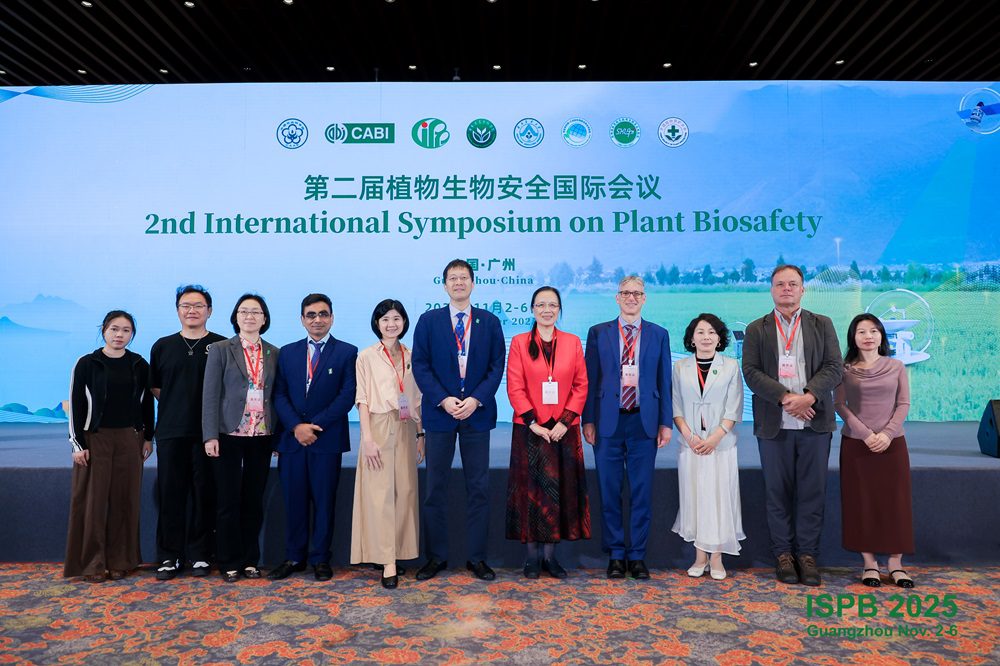 Three decades of China's membership of CABI celebrated at 2nd International Symposium on Plant Biosafety
 -
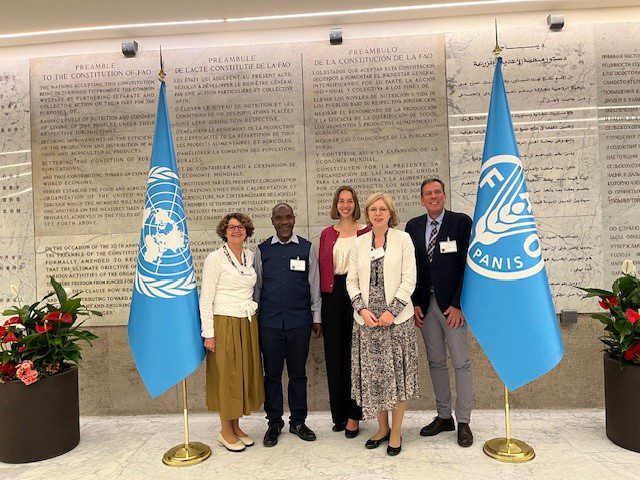 CABI receives recognition from FAO for its work to support sustainable plant production and protection