

IPPCAAS Uncovers Single-base Mutation in Rice that Confers Enhanced Resistance to Root-knot Ematode
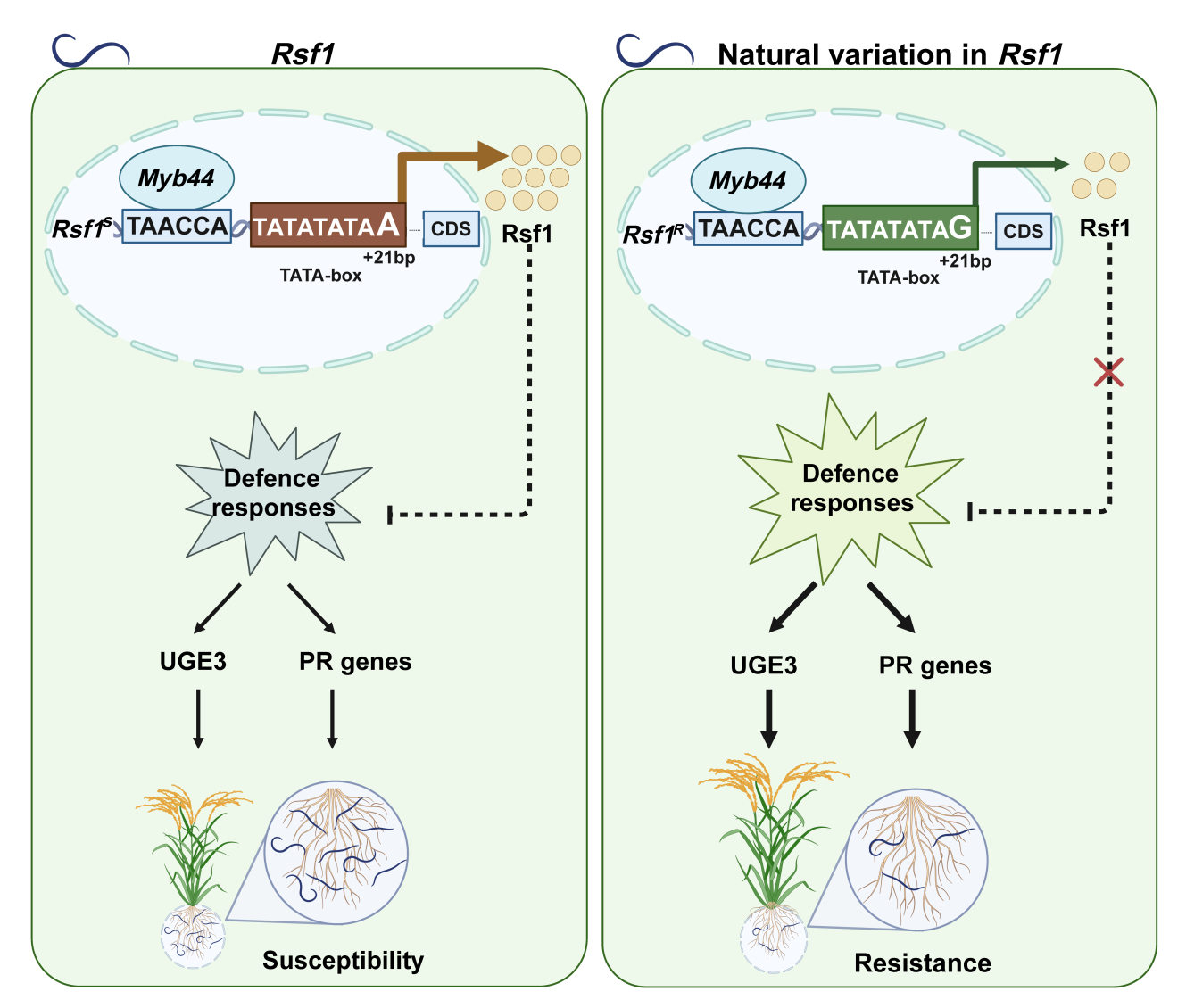
Researchers from the Institute of Plant Protection , Chinese Academy of Agricultural Sciences(IPPCAAS), in collaboration with Southwest University, have published a paper online in July, in Nature Communications titled "A natural variation in rice susceptibility factor Rsf1 confers resistance to root-knot nematode". The study reveals that a single-base natural variation in the promoter region of the rice root-knot nematode (RRKN) susceptibility gene OsRsf1 significantly enhances resistance to root-knot nematode, providing a new target for nematode-resistant breeding.
This decade-long study systematically evaluated the resistance of nearly 400 rice accessions through laboratory and field trials. Combined with genetic and functional analyses, the team successfully identified OsRsf1, a RRKN susceptibility factor encoding a thionin-like protein. Notably, in certain rice accessions, a single-base natural variation in the TATA-box element of the OsRsf1 promoter — from TATATAA (HapA, susceptible) to TATATAG (HapG, resistant) — significantly reduced gene expression activity, thereby greatly enhancing rice defense against RRKN. Further investigation revealed that the transcription factor Myb44 positively regulates OsRsf1, and knockout of Myb44 in rice mutants significantly enhanced resistance to RRKN.
When nematodes infect rice, the susceptible haplotype HapA of OsRsf1 is highly induced, suppressing basal immunity and "opening the gate" for nematode establishment and development in roots. In contrast, gene-edited knockout mutants of OsRsf1 exhibited significantly enhanced resistance and reduced yield losses. More strikingly, T-DNA mutants of AtRsf1, the ortholog of OsRsf1 in Arabidopsis, also showed significantly enhanced resistance to RRKN, indicating that Rsf1 function is highly conserved between monocots and dicots. Nematodes may exploit this conserved "switch" to infect different crops. This study reveals a conserved mechanism of plant-nematode interaction and provides a crucial target gene for nematode-resistant crop breeding.
Jingwen Yu , a joint PhD candidate student between the IPPCAAS and Southwest University, is the first author of this paper. Professor Wenkun Huang and Houxiang Kang from IPPCAAS are co-corresponding authors. Professors Deliang Peng, Huan Peng, Shiming Liu and Ling'an Kong, PhD student Chao Xiang (all from IPPCAAS), along with Professor Ling Qing and Associate Professor Mingjun Li (both from Southwest University), contributed significantly to this research.
This work was supported by the Agricultural Science and Technology Innovation Program of the Chinese Academy of Agricultural Sciences, the National Natural Science Foundation of China, and the National Key Research and Development Program of China.
Link: https://www.nature.com/articles/s41467-026-74677-7
-
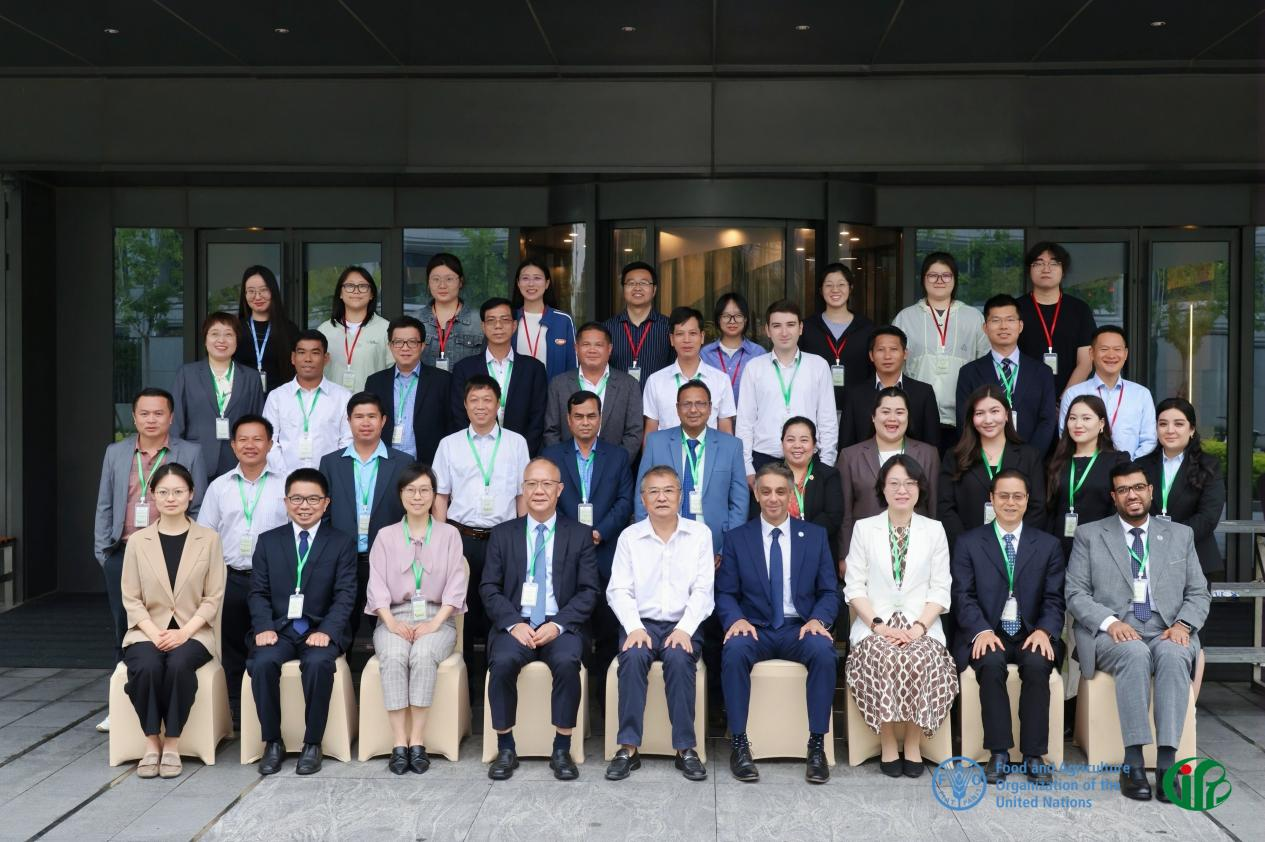 FAO–China South-South Cooperation Technical Workshop on Sustainable Management of Fall Armyworm and Other Transboundary Pests in Asia Successfully Held in Beijing
 -
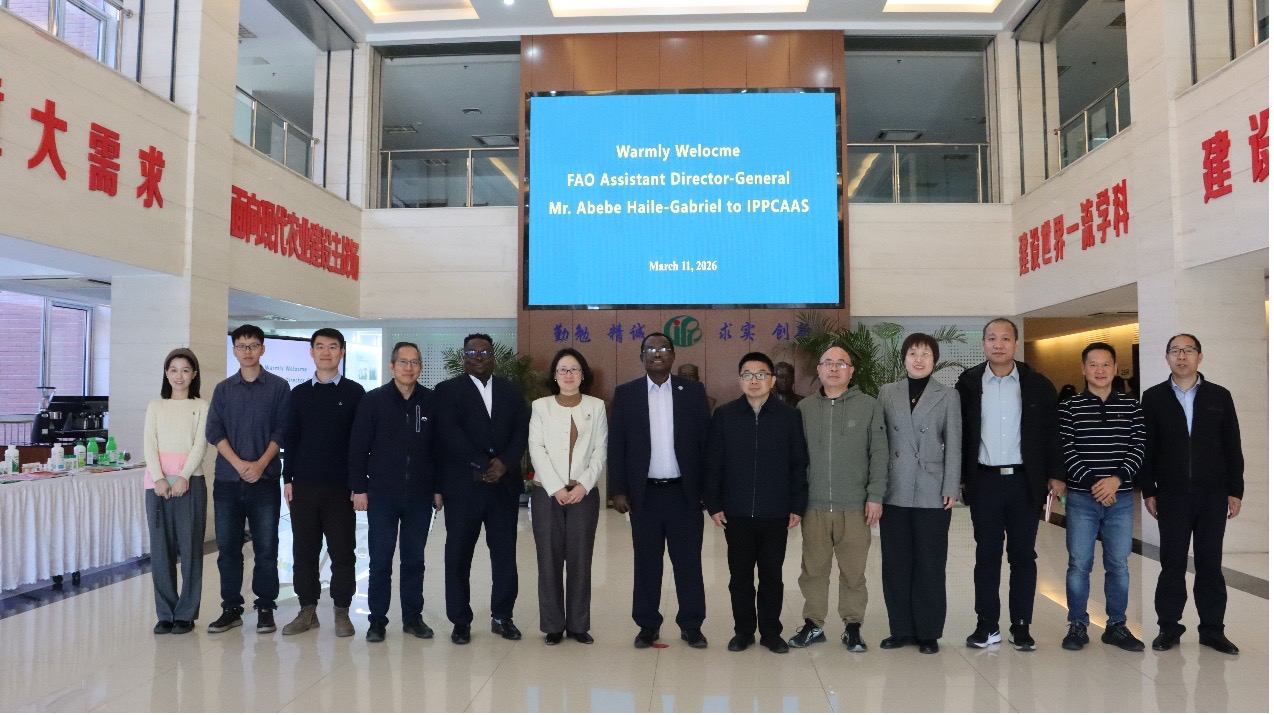 Assistant Director-General of the UN Food and Agriculture Organization Leads Delegation to Visit IPPCAAS
 -
 International Symposium on Plant Biosafety (ISPB 2025) Convenes in Guangzhou — Science-led plant health governance to secure food systems and advance the SDGs
 -
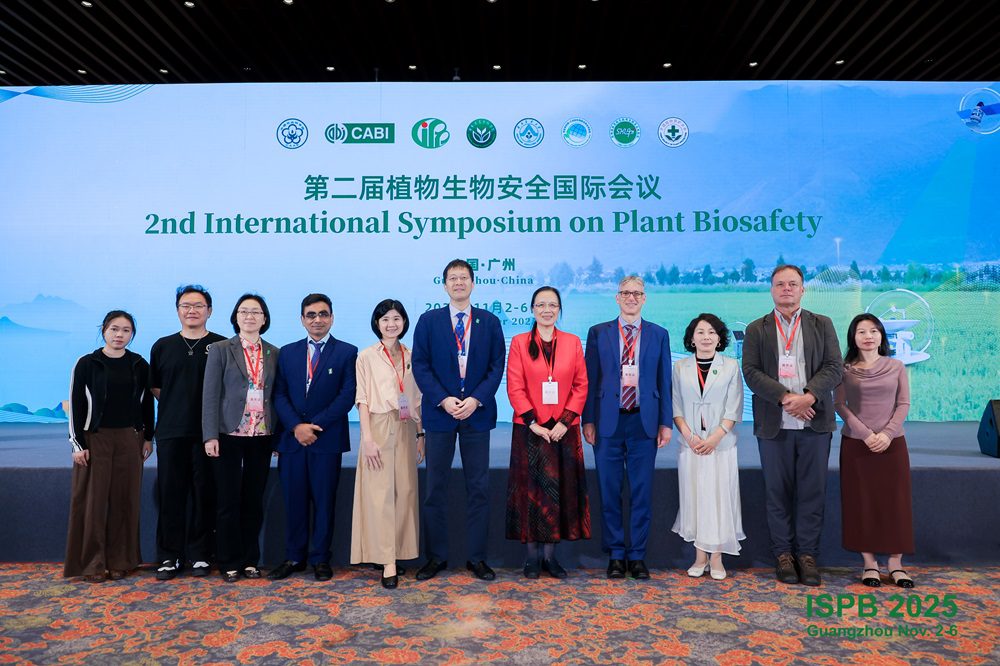 Three decades of China's membership of CABI celebrated at 2nd International Symposium on Plant Biosafety