

IPPCAAS Collaboration Deciphers Molecular Mechanism of Sex Pheromone Perception in Aphids
Researchers from the Innovation and Utilization of Bio-pesticides Team at the Institute of Plant Protection (IPP), Chinese Academy of Agricultural Sciences (CAAS), in collaboration with Huazhong Agricultural University and the Agricultural Genomics Institute at Shenzhen, CAAS, published a research paper entitled "Structural basis of sex pheromone detection in aphids" in the journal Cell Research. This study elucidated the olfactory mechanism of sex pheromone recognition in the pea aphid (Acyrthosiphon pisum), resolved high-resolution cryo-EM structures of the sex pheromone receptor ApOR22–Orco complex in three conformational states, and revealed the structural basis of sex pheromone perception in aphids.
Sex pheromone-mediated intraspecific chemical communication is a fundamental biological basis for reproductive isolation and mate recognition in insects. In the sexual generation of aphids, sex pheromones are released from the hind tibiae of oviparous sexual females to attract males for mating. The major components, nepetalactone and nepetalactol, have been known for decades, yet the molecular mechanisms underlying the perception of these signals have remained unclear.
In this study, two sex pheromone receptors, ApOR21 and ApOR22, were identified in the A. pisum , which specifically recognize nepetalactol and nepetalactone, respectively. Their essential roles in aphid sex pheromone recognition were confirmed in vivo. The team resolved high-resolution cryo-EM structures of the ApOR22–Orco complex in three states: unbound closed, nepetalactone-bound closed, and nepetalactone-bound open. The complex was found to adopt a 1:3 heterotetrameric architecture, consisting of one ApOR22 subunit and three Orco subunits forming an ion channel. Upon ligand binding, helices S5, S6 and S7 of ApOR22 undergo coordinated conformational shifts, driving displacement of gating residues and transitioning the pore from closed to open states. Notably, specific hydrogen bonds formed by key residues on helices S2 and S6 are essential for maintaining the open state of the channel. Through amino acid swap mutagenesis, several key residues on helices S2 and S5 were identified as determinants of ligand specificity between ApOR22 and ApOR21, revealing a molecular "switch" that coordinately regulates ligand selectivity preferences. This study, for the first time, reveals the ligand recognition and gating mechanisms of an insect sex pheromone receptor at the atomic level, elucidates the specific binding mode and conformational regulation of ApOR22 with its ligand, and provides theoretical support for understanding insect sex pheromone chemical communication, as well as a structural foundation for virtual screening of sex pheromone analogs based on target structures.
Professor Yin Ping (Huazhong Agricultural University), Professor Wang Guirong and Professor Wang Bing (both at the Institute of Plant Protection, CAAS) are cocorresponding authors of this paper. Dong Zhi (a PhD student at Huazhong Agricultural University), Professor Wang Yidong (Huazhong Agricultural University) and Tian Ying (a joint PhD student between the Institute of Plant Protection, CAAS, and Henan Agricultural University) are cofirst authors. Lecturer Cao Song (Central China Normal University), Professor Gong Zhou (Wuhan Institute of Precision Measurement Science and Technology Innovation, Chinese Academy of Sciences), Professor Zhao Xincheng (Henan Agricultural University) and Professor Ma Weihua (Huazhong Agricultural University) also contributed to this research. This work was supported by the National Key Research and Development Program of China, the National Natural Science Foundation of China, and the Agricultural Science and Technology Innovation Program (CAAS).
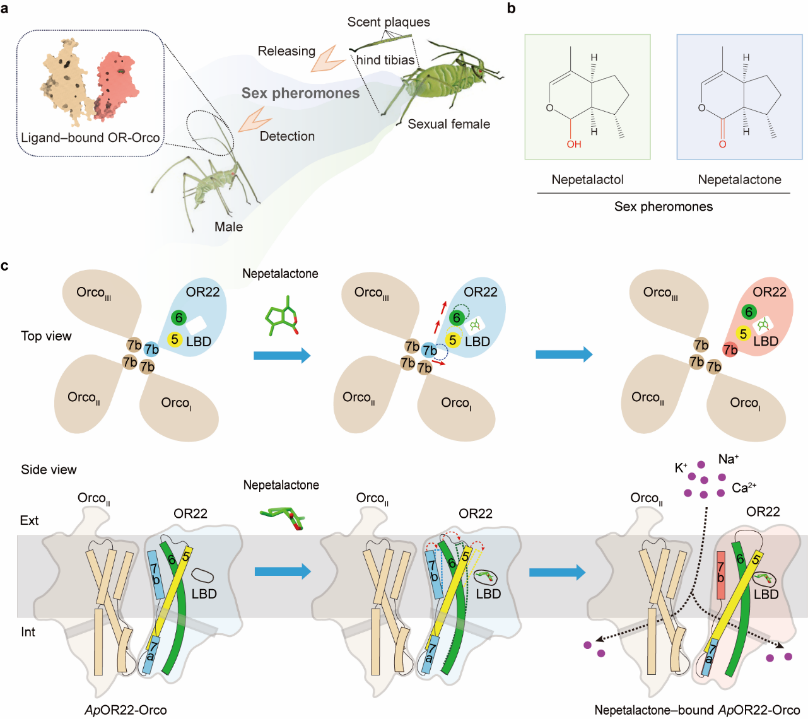
Figure: Model of aphid sex pheromone recognition and activation mechanism of the ApOR22–Orco complex
-
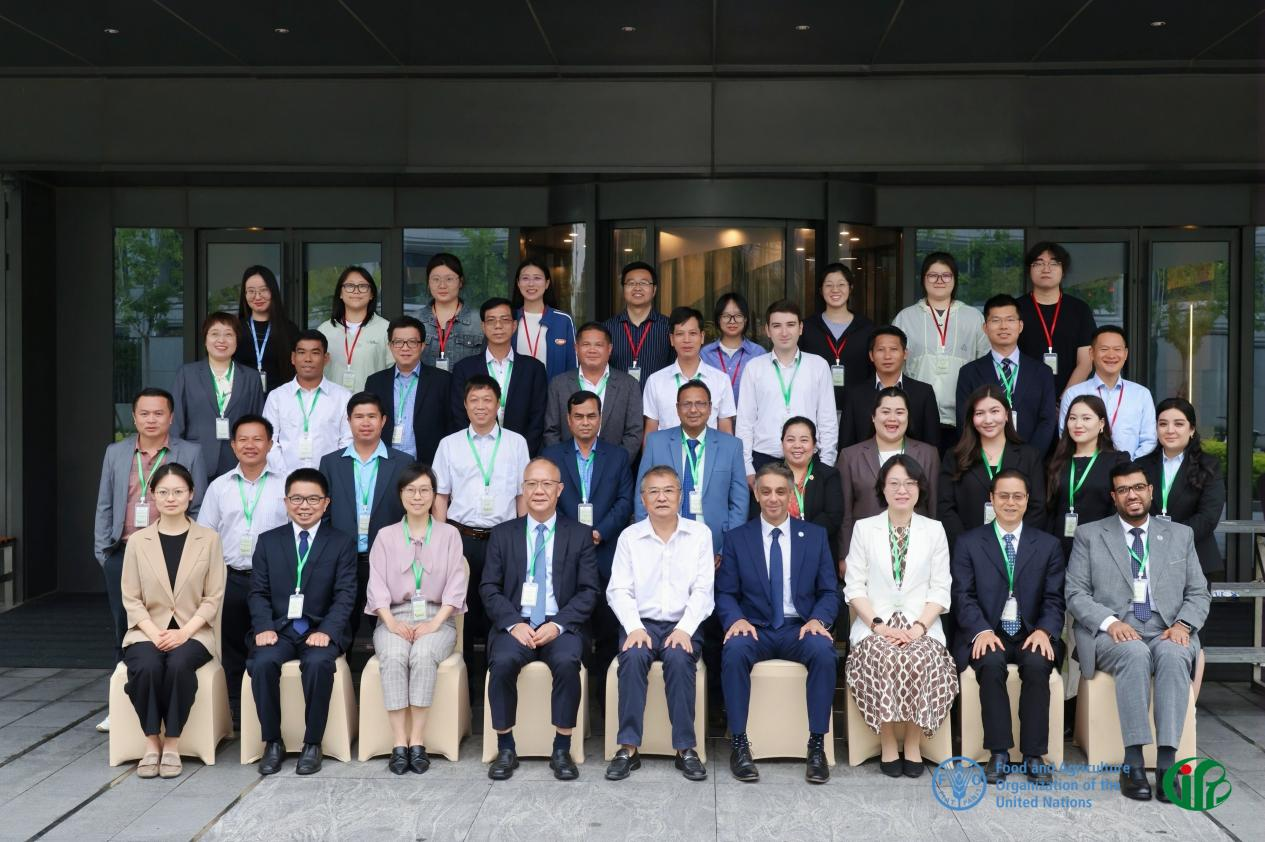 FAO–China South-South Cooperation Technical Workshop on Sustainable Management of Fall Armyworm and Other Transboundary Pests in Asia Successfully Held in Beijing
 -
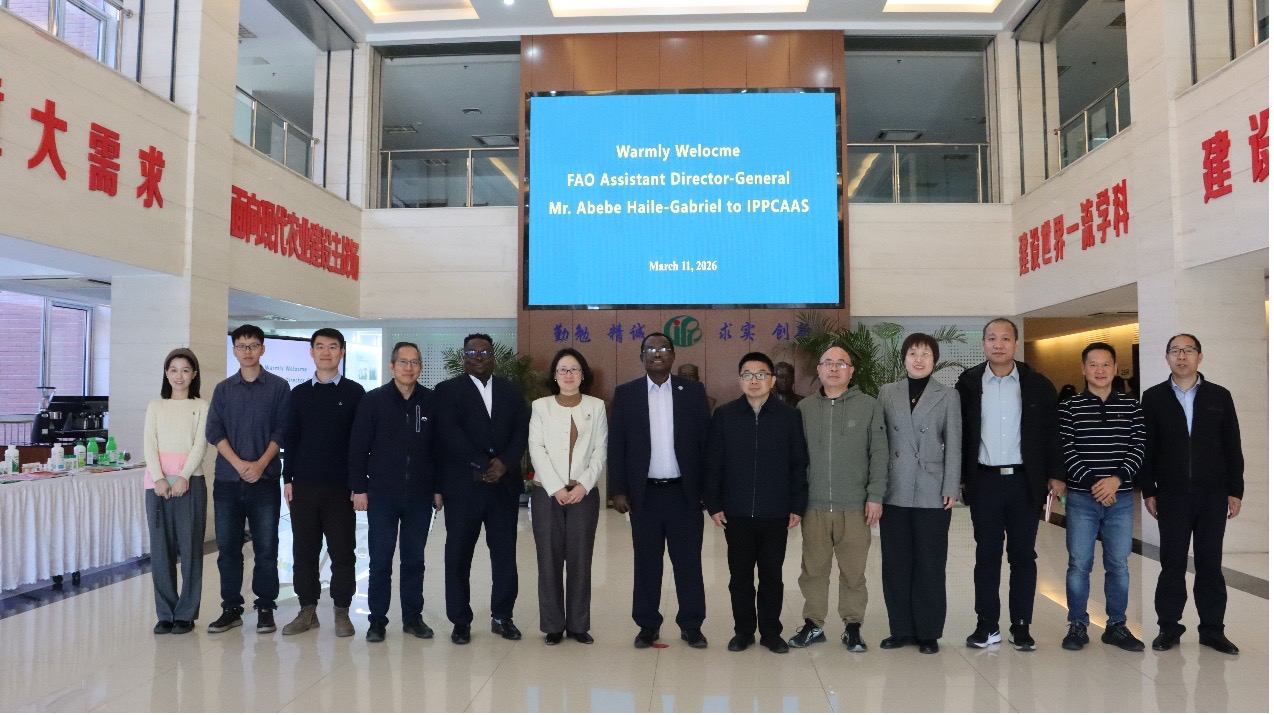 Assistant Director-General of the UN Food and Agriculture Organization Leads Delegation to Visit IPPCAAS
 -
 International Symposium on Plant Biosafety (ISPB 2025) Convenes in Guangzhou — Science-led plant health governance to secure food systems and advance the SDGs
 -
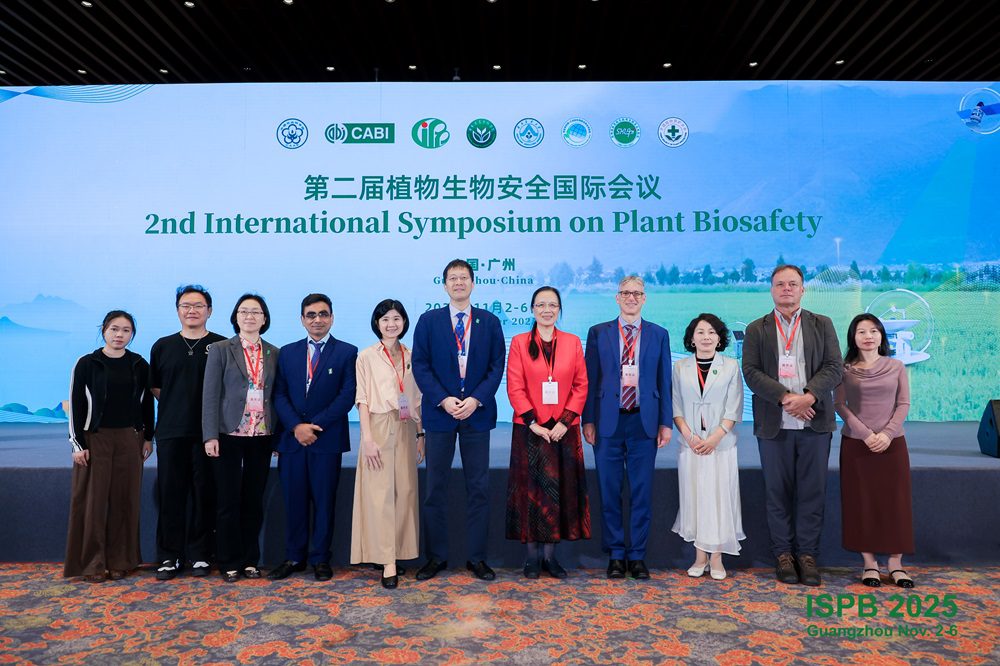 Three decades of China's membership of CABI celebrated at 2nd International Symposium on Plant Biosafety