

IPPCAAS Develops Novel 3D-Printed Degradable and Recyclable Carrier for Insect Sex Pheromones
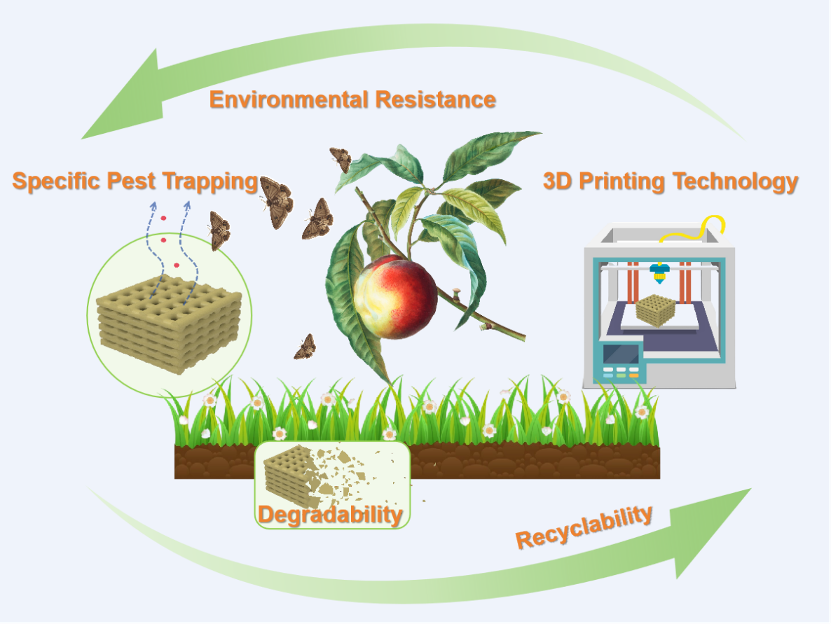
Recently, the Innovation Team for Pesticide Molecular Targets and Green Pesticide Creation at the IPPCAAS has successfully developed a novel degradable and recyclable slow-release carrier for insect sex pheromones using 3D printing technology. This carrier enhances release control capability through metal coordination cross-linking technology, providing a new strategy for the green control of agricultural pests. The related research findings have been published in Advanced Science (IF 14.1) under the title “Degradable and Recyclable 3D-Printed Pheromones Delivery System Reinforced by Metal Coordination Cross-Linking for Efficient Pest Trapping”.
Insect sex pheromones are regarded as a key technique in green plant protection due to their characteristics of high efficiency at trace amounts, target specificity, and environmental friendliness. However, their chemical instability and uncontrollable release are major factors affecting their field application efficacy. 3D printing technology, particularly Direct Ink Writing (DIW), offers an ideal platform for constructing functionalized pheromone slow-release carriers due to its excellent material adaptability and flexible structural design capabilities.
This study successfully developed a 3D printing ink based on cellulose acetate. By introducing a metal coordination synergistic enhancement mechanism formed between lignosulfonate and Fe³⁺, a stable cross-linked network 3D-printed carrier for the sex pheromone of Grapholita molesta was constructed. Performance tests showed that the pheromone encapsulation efficiency of this carrier exceeded 95%, its cumulative soil degradation rate after 105 days surpassed 20%, and its trapping efficacy period for G. molesta lasted over 6 weeks.Its cumulative soil degradation rate and total field trapping count were higher than those of traditional rubber carriers. Notably, this research achieved the recycling and re-printing of the carrier material. After three printing cycles, the carrier still maintained high encapsulation efficiency and biological activity.
This 3D-printed delivery system integrates the advantages of rapid manufacturing, environmental compatibility, and recyclability, offering an innovative solution for green pest control. In the future, by optimizing material formulations and printing processes, this technology is expected to further achieve controlled release of pheromones and expand into broader plant protection application scenarios, providing technical support for building a resource-saving, environmentally friendly, and green sustainable agricultural system.
IPPCAAS is the first completion unit. Jointly trained master’s student Wang Teng and doctoral candidate Shangguan Wenjie from the Institute are co-first authors. Associate Professor Zhang Fang from Beijing University of Technology, Professor Frederik R. Wurm from the University of Twente (Netherlands), and Researcher Cao Lidong from IPPCAAS are co-corresponding authors. Researcher Huang Qiliang provided significant guidance for the paper. This research was supported by the National Natural Science Foundation of China, the Beijing Natural Science Foundation, and the Fundamental Research Funds for Central Public Welfare Research Institutes.
-
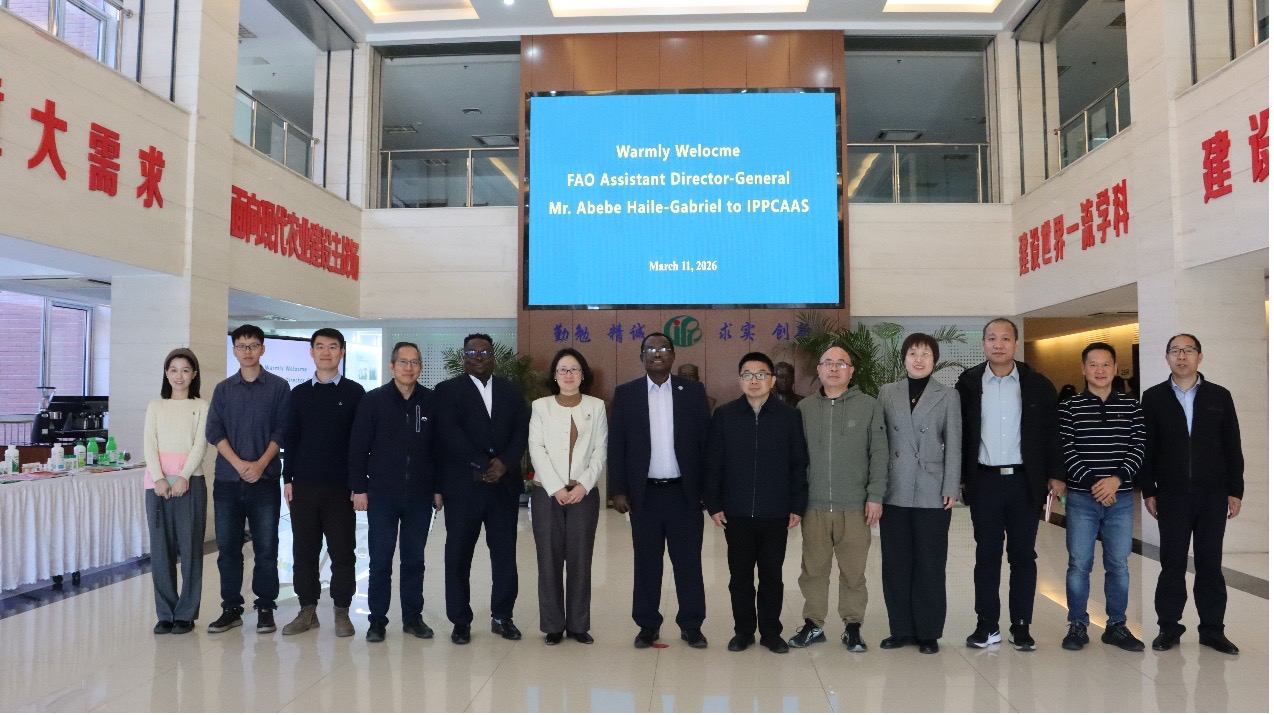 Assistant Director-General of the UN Food and Agriculture Organization Leads Delegation to Visit IPPCAAS
 -
 International Symposium on Plant Biosafety (ISPB 2025) Convenes in Guangzhou — Science-led plant health governance to secure food systems and advance the SDGs
 -
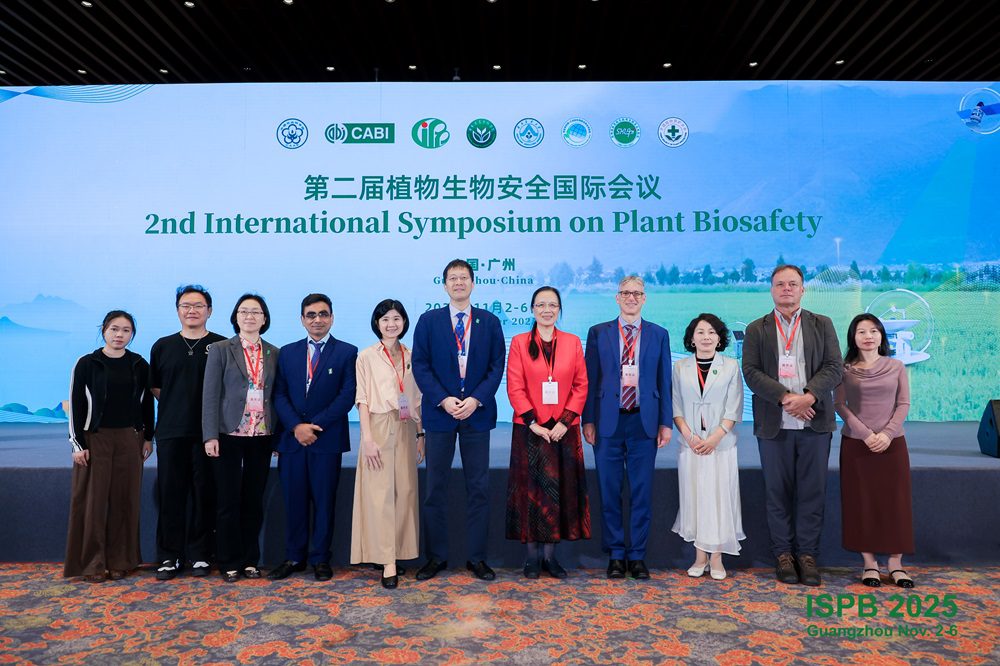 Three decades of China's membership of CABI celebrated at 2nd International Symposium on Plant Biosafety
 -
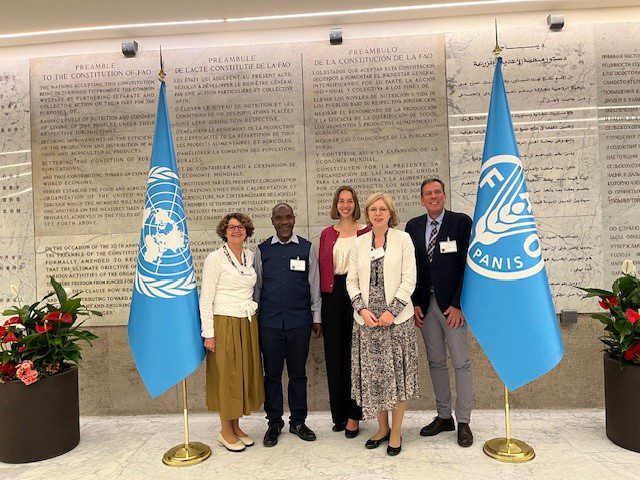 CABI receives recognition from FAO for its work to support sustainable plant production and protection