

PPCAAS identifies safe and efficient RNAi targets for eco-friendly control of tomato leafminer
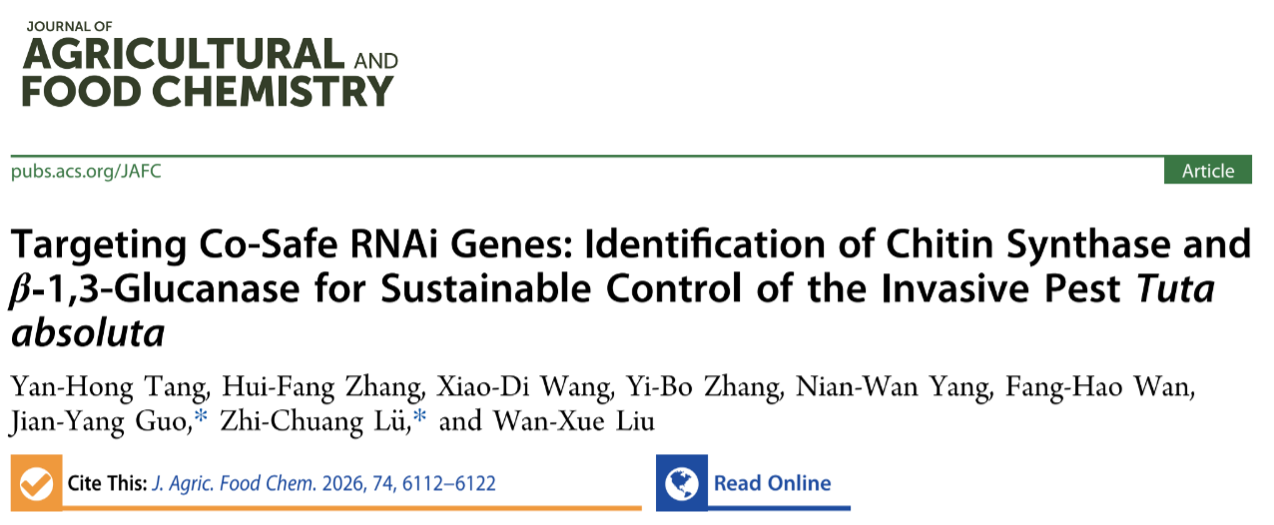
Researchers from the Agricultural Invasive Alien Species Monitoring, Prevention and Control Center of the Institute of Plant Protection, Chinese Academy of Agricultural Sciences (IPPCAAS), have published a paper in the Journal of Agricultural and Food Chemistry, a Q1 top-tier journal of the Chinese Academy of Sciences (CAS), titled “Targeting Co‑safe RNAi Genes: Identification of Chitin Synthase and β‑1,3‑glucanase for Sustainable Control of the Invasive Pest Tuta absoluta”. The study successfully identified three safe and highly efficient RNAi target genes in the tomato leafminer – two chitin synthase genes (TaChs1 and TaChs2) and one β-1,3-glucanase gene (TaBeta) – and confirmed that they pose no adverse effects on non-target organisms. These findings provide a core target set and an ecological safety foundation for the sustainable management of this invasive pest.
The tomato leafminer (Tuta absoluta), native to South America, primarily infests solanaceous plants such as tomato. The pest is highly fecund, disperses rapidly, and readily develops resistance to conventional chemical insecticides. Moreover, chemical control often harms non-target organisms. As a result, T. absoluta has become a key biotic constraint on global tomato production, and the development of environmentally friendly control measures is urgently needed. RNA interference (RNAi) technology, with its strong target specificity and good environmental compatibility, holds great promise as a green control strategy. However, a prerequisite for its application is the identification of target genes that are both highly effective and ecologically safe.
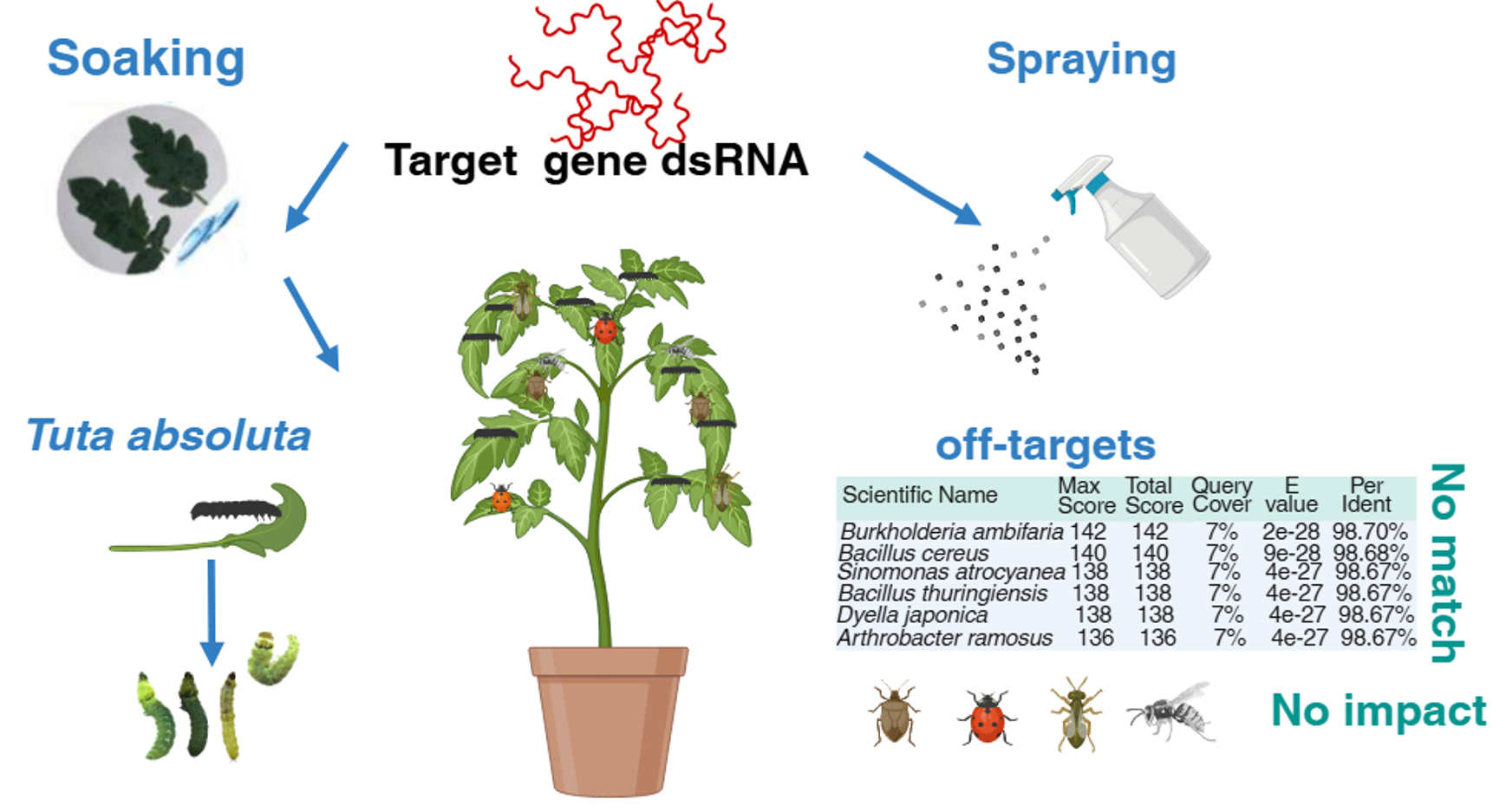
Chitin synthase is a key enzyme in insect chitin synthesis, regulating the formation of the cuticle and peritrophic matrix. β-1,3-glucanase is involved in insect immunity and digestion. Both are core factors affecting pest growth and development and have potential as ideal RNAi targets. In this study, the researchers identified and evaluated the RNAi target potential of TaChs1, TaChs2and TaBeta in T. absoluta, with a particular focus on ecological safety validation. The results showed that targeted interference caused larval mortality rates of 53–69% and induced lethal phenotypes including malformed insects and midgut damage –indicating a strong control effect. Ecological safety assessment revealed no homologous sequences in humans or key non-target organisms (the predatory mirid bug Nesidiocoris tenuis, the multicolored Asian lady beetle Harmonia axyridis, the parasitic wasp Trichogramma sp., and the hoverfly Episyrphus balteatus), suggesting no off-target risk. Experiments further showed that dsRNA treatment had no significant impact on the survival of these non-target organisms, nor did it negatively affect their predation, parasitism or pollination abilities. This study not only identifies highly efficient RNAi target genes but also advances the framework for ecological safety assessment of RNAi targets, providing solid evidence for the environmental safety of RNAi-based biopesticides.
This work is the latest in a series of studies led by the team of Professor Liu Wanxue at the IPP on the invasion mechanisms of T. absoluta and RNAi-based green control. Tang Yanhong, a PhD student, is the first author. Associate Researcher Guo Jianyang and Professor Lv Zhichuang are co‑corresponding authors. Professor Wan Fanghao, Professor Yang Nianwan and Professor Zhang Yibo provided guidance. Postdoctoral researcher Wang Xiaodi and undergraduate student Zhang Huifang contributed to the work. The research was supported by the National Key Research and Development Program of China (grant no. 2025YFC2609100) and other funding sources.
Link: https://pubs.acs.org/doi/full/10.1021/acs.jafc.5c15898
-
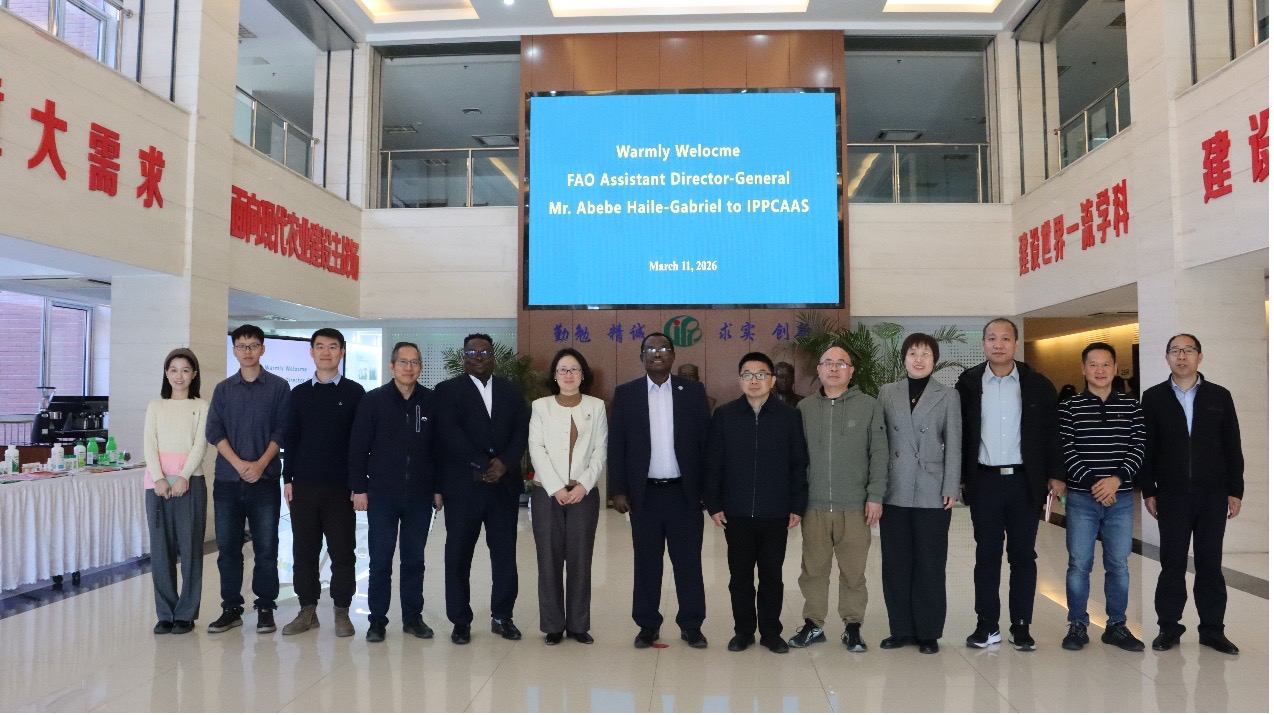 Assistant Director-General of the UN Food and Agriculture Organization Leads Delegation to Visit IPPCAAS
 -
 International Symposium on Plant Biosafety (ISPB 2025) Convenes in Guangzhou — Science-led plant health governance to secure food systems and advance the SDGs
 -
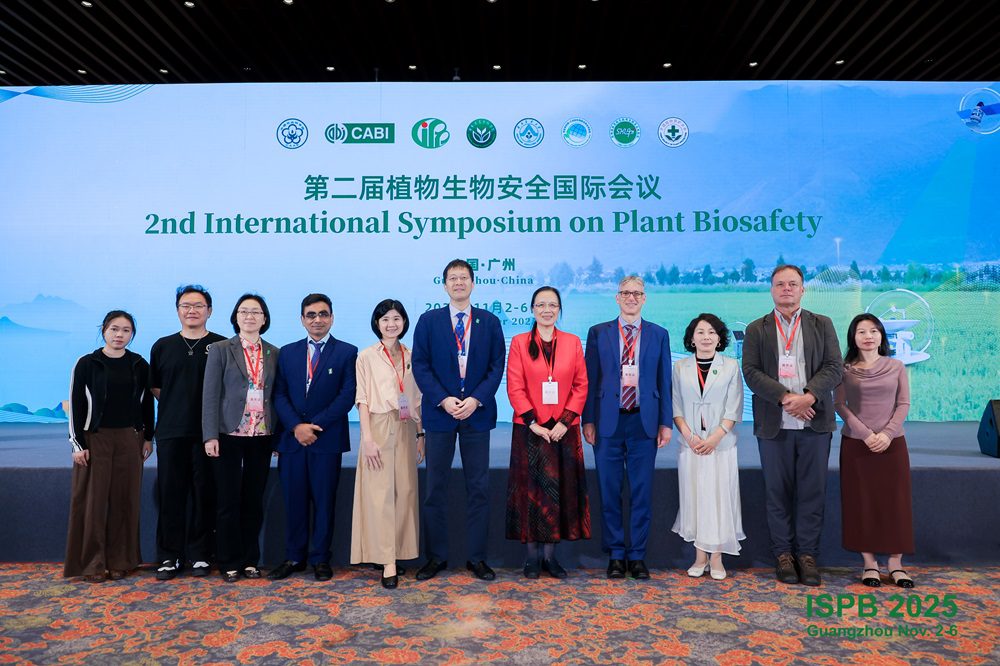 Three decades of China's membership of CABI celebrated at 2nd International Symposium on Plant Biosafety
 -
 CABI receives recognition from FAO for its work to support sustainable plant production and protection