

IPPCAAS Establishes High-Efficiency Multiplex Genome Editing System for Plants
Recently, the Innovation Team for Ecological Safety Assessment and Utilization of Pest-Resistant Crops at the IPPCAAS, published a research paper online entitled Optimized tRNA processing and TREX2-SpCas9 fusion enable high-efficiency multiplex genome editing in plants in Plant Communications, a leading international journal in plant science. Addressing core technical bottlenecks including low efficiency and unstable performance of plant multiplex genome editing, the study systematically optimized the CRISPR/SpCas9 editing platform and successfully developed a high-capacity, high-efficiency multiplex gene editing system applicable to plant species, providing a new technical tool for the improvement of complex agronomic traits and plant functional genomics research.
The CRISPR/Cas system has been widely applied in plant gene function research and molecular breeding. However, as the number of target editing sites increases, multiplex gene editing is often constrained by declined editing efficiency, complicated vector construction, and unbalanced editing across different sites. To tackle these challenges, the study first compared the performance of SpCas9 fused with three exonucleases: T5exo, TREX2, and 2×TREX2. The results demonstrated that the monomeric TREX2-SpCas9 fusion system achieved the optimal editing performance in rice, significantly elevating editing efficiency, increasing the proportion of large fragment deletions, and raising the frequency of biallelic mutations.
Building on this finding, the research team systematically screened 38 endogenous tRNA elements from the rice genome and successfully identified 13 high-efficiency tRNA elements. Among them, tRNALeu-1 and tRNAPro-1 reached 100% editing efficiency, markedly outperforming the widely adopted tRNAGly and tRNAMet. These novel high-efficiency tRNA elements not only enhance multiplex editing efficiency, but also reduce the recombination risk caused by repetitive sequences, providing new modular resources for the construction of large-scale multi-target editing vectors.
Subsequently, the team applied the optimized TREX2-SpCas9/tRNA system to conduct high-throughput multiplex gene editing on the entire OsCPK gene family in rice. The results showed that up to 29 OsCPK genes could be simultaneously edited in a single T0 rice plant, reflecting a robust capacity for large-scale multiplex editing. This finding indicates that the system can efficiently achieve synchronous mutagenesis of complex gene families, offering critical technical support for dissecting plant functional redundancy and complex signaling pathways.
In addition, to verify the cross-species applicability of the system, the team further performed transient expression assays in Nicotiana benthamiana, a dicotyledonous model plant. The results revealed that the high-efficiency tRNA elements derived from rice also exhibited sound processing capacity and editing activity in N. benthamiana, suggesting high conservation of tRNA processing mechanisms across plant species and broad application potential of the editing platform.
The high-efficiency TREX2-SpCas9/tRNA multiplex editing system established in this study not only significantly improves the efficiency and multi-site editing capability of plant genome editing, but also provides optimization strategies for multi-site manipulation based on other editing technologies such as CRISPR/Cas12, base editing, and prime editing. It offers a new technical route for the precision improvement of complex agronomic traits, gene pyramiding breeding, and large-scale plant functional genomics research in the future.
Xu Ziyan, a PhD graduate from the College of Agriculture and Biotechnology, Zhejiang University, is the first author of the paper. Researcher Zhou Huanbin and Professor Zhou Xueping are the co-corresponding authors. The research was supported by the Major Special Project for Agricultural Biological Breeding, the CAAS Nanfan Special Program, and the Agricultural Science and Technology Innovation Program (ASTIP) of CAAS, among other projects.
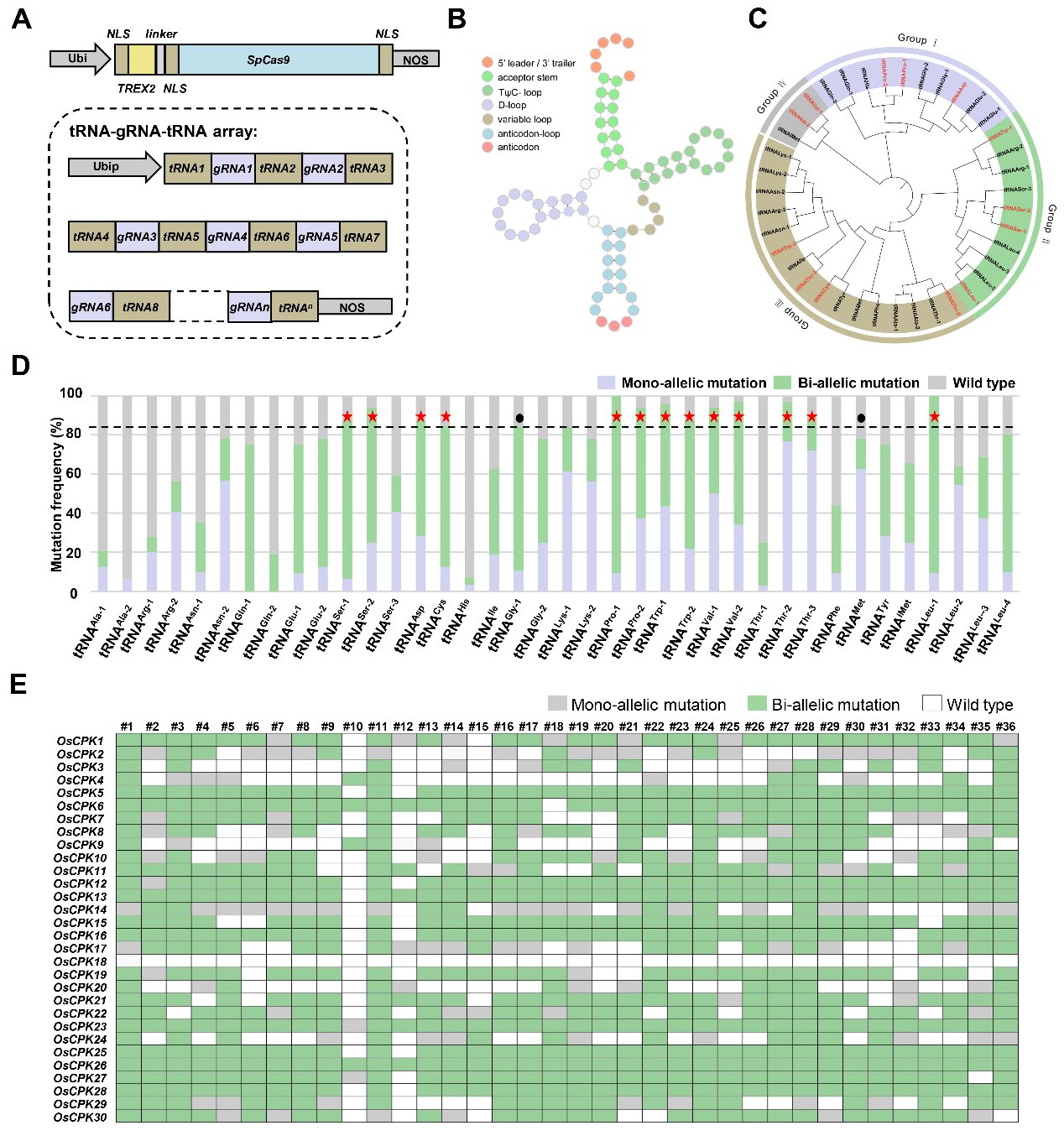 Figure 1 Application of multiplex genome editing in rice mediated by TREX2-SpCas9 fusion protein and diverse tRNA arrays
Link:https://www.cell.com/plant-communications/fulltext/S2590-3462(26)00229-4
-
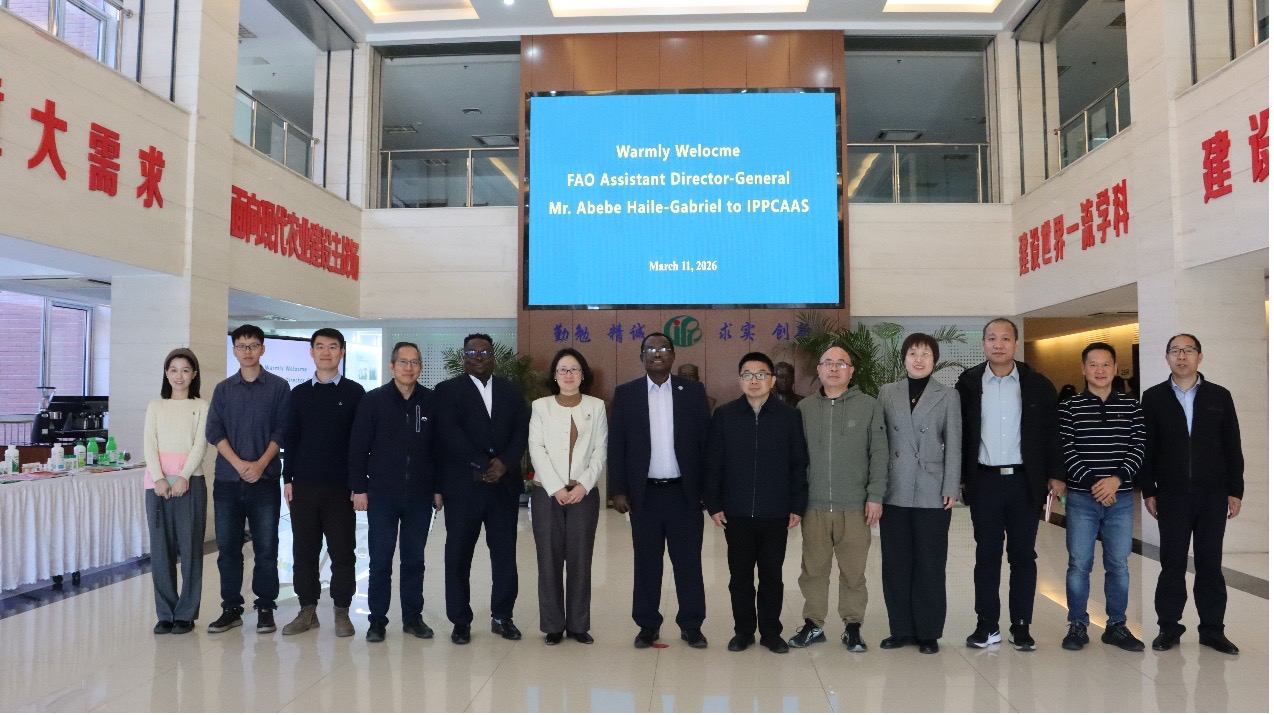 Assistant Director-General of the UN Food and Agriculture Organization Leads Delegation to Visit IPPCAAS
 -
 International Symposium on Plant Biosafety (ISPB 2025) Convenes in Guangzhou — Science-led plant health governance to secure food systems and advance the SDGs
 -
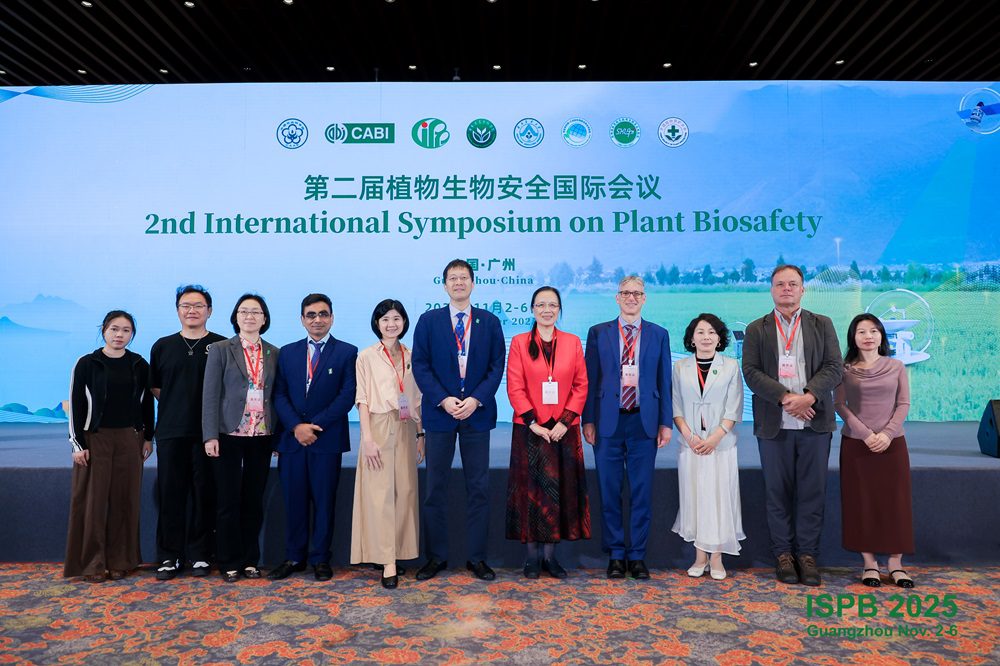 Three decades of China's membership of CABI celebrated at 2nd International Symposium on Plant Biosafety
 -
 CABI receives recognition from FAO for its work to support sustainable plant production and protection