
IPP Reveals Graphene Oxide Significantly Enhances Dual Role of Beauveria bassiana: Field Control of Asian Corn Borer and Maize Growth Promotion
Recently, the Maize Pest Innovation Task of the Innovation Team for Monitoring and Control of Grain Crop Pests from the Institute of Plant Protection (IPP) published a research paper titled “Graphene oxide enhances the dual role of Beauveria bassiana in biocontrol of the Asian corn borer and promotion of the maize seedling growth under field conditions” in Chemical Engineering Journal (IF=13.2). The study established a composite system combining graphene oxide (GO) and Beauveria bassiana (Bb). This system not only significantly improves the stability and persistence of Beauveria bassiana in the field, thereby enhancing the control effect against the Asian corn borer, but also synergistically activates maize’s own defense system and promotes plant growth. It provides a new idea for the efficient utilization of biocontrol fungi in managing maize pests.
The Asian corn borer is a major pest of maize and has been included in the “List of Category 1 Crop Pests and Diseases” by the Ministry of Agriculture and Rural Affairs. Developing efficient, environmentally friendly green control technologies is crucial for its sustainable management. As a broad-spectrum entomopathogenic fungus, Beauveria bassiana is one of the most extensively studied and widely applied biocontrol fungi worldwide. However, its field performance is prone to being affected by environmental stresses such as ultraviolet (UV) radiation and high temperatures, leading to unstable control efficacy. Therefore, improving the field effectiveness of biocontrol fungi is a core challenge for their efficient utilization.
Graphene oxide (GO) is a nanomaterial that can act as a synergist for chemical pesticides. The research team successfully constructed a GO-Beauveria bassiana composite system using GO as a nanocarrier. The study found that the introduction of GO brings multiple beneficial effects: Firstly, it significantly enhances the thermal stability and UV radiation tolerance of Beauveria bassiana conidia, greatly improving the fungus’s survival rate under adverse field conditions. Secondly, through seed soaking, it increases the colonization rate of Beauveria bassiana in maize roots, stems, and leaves—with the colonization rate in leaves reaching nearly 100% at 14 days after emergence. In terms of control efficacy, both laboratory bioassays and field trials demonstrated that within 28 days after seedling emergence, the control effect of the composite system was significantly superior to that of Beauveria bassiana alone, effectively reducing damage caused by the Asian corn borer. The study also revealed that the GO-Bb system can synergistically activate defense hormone signaling pathways such as jasmonic acid in maize, and enhance induced resistance regulated by benzoxazinoid insect-resistant substances. Additionally, maize seedlings treated with the system grew more robustly, with significantly increased leaf chlorophyll content and antioxidant enzyme activity, achieving the dual synergistic effects of “pest control” and “growth promotion”. Furthermore, the composite system is safe for natural enemies such as trichogramma wasps and harlequin ladybirds, and does not significantly affect the structure of the microbial community in maize rhizosphere soil.
This research not only provides an efficient, stable, and environmentally friendly new strategy for the green control of maize pests but also reveals the synergistic mechanism of graphene oxide and Beauveria bassiana from molecular, physiological, and biochemical perspectives. It offers important theoretical basis and technical support for the efficient utilization of Beauveria bassiana and the sustainable management of maize pests.
The Institute of Plant Protection, Chinese Academy of Agricultural Sciences (CAAS) is the first completing unit of the paper. Zhan Zhaofeng, a graduated visiting postgraduate from Hebei Normal University of Science and Technology, and Raufa Batool, a former postdoctoral fellow, are the co-first authors. Associate Researcher Guo Jingfei is the corresponding author. Professor Wang Xiuping from Hebei Normal University of Science and Technology, Associate Researcher Han Hailiang from the Institute of Maize and Specialty Dry Crops, Zhejiang Academy of Agricultural Sciences, and Dr. Yeeyee Myint from the Ministry of Agriculture, Livestock and Irrigation of Myanmar participated in related work. Researcher Wang Zhenying and Researcher Zhang Yongjun provided full-process guidance for the study; Researcher Tu Xiongbing and Researcher Cao Lidong offered important support in test material provision and manuscript writing. The research was funded by projects including the National Natural Science Foundation of China, the National Maize Industry Technology System, and the Science and Technology Innovation Project of the Chinese Academy of Agricultural Sciences.
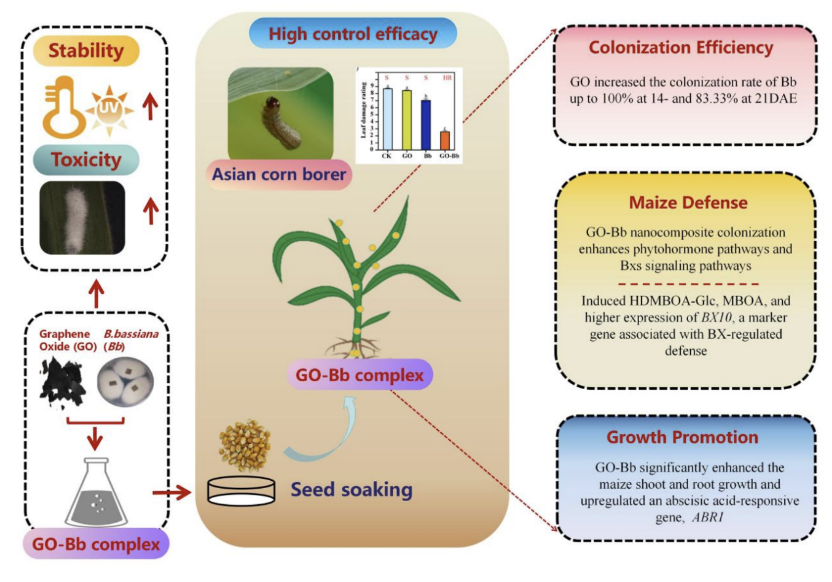
Figure. Graphene Oxide Significantly Improves Field Control Role of Beauveria bassiana Against Asian corn borer and Synergistically Enhances Maize’s Insect Resistance and Growth-Promoting Functions
-
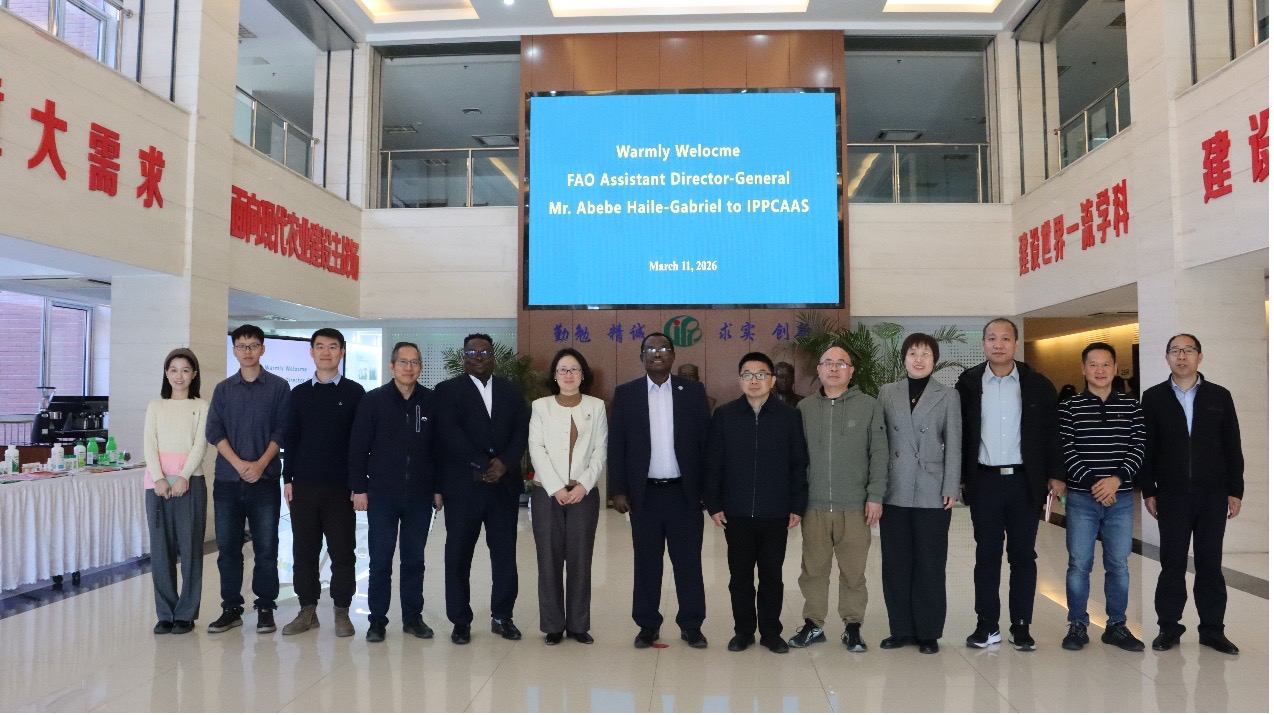 Assistant Director-General of the UN Food and Agriculture Organization Leads Delegation to Visit IPPCAAS
 -
 International Symposium on Plant Biosafety (ISPB 2025) Convenes in Guangzhou — Science-led plant health governance to secure food systems and advance the SDGs
 -
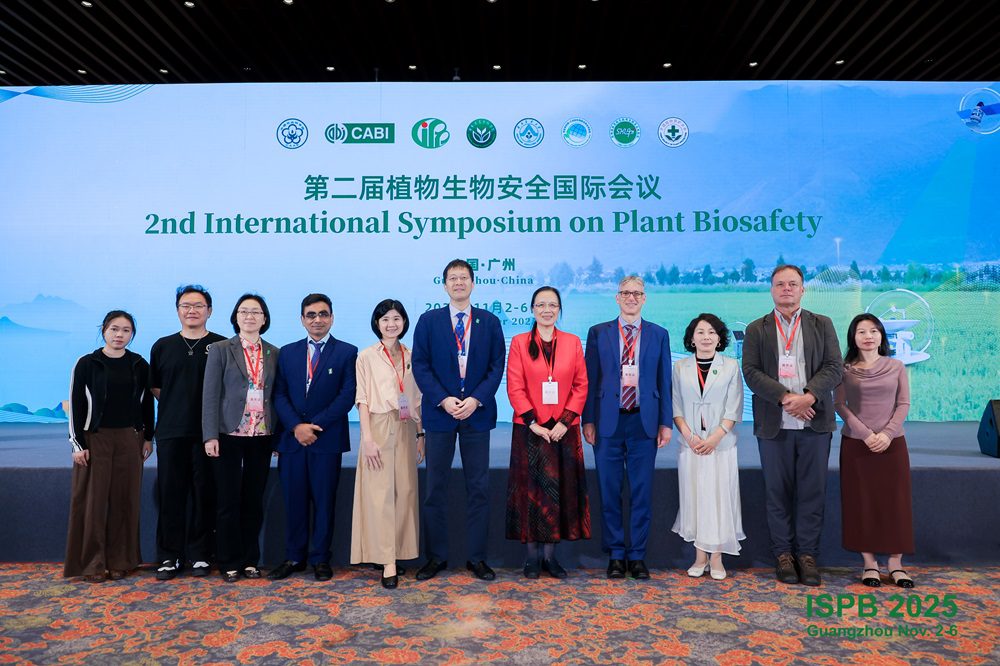 Three decades of China's membership of CABI celebrated at 2nd International Symposium on Plant Biosafety
 -
 CABI receives recognition from FAO for its work to support sustainable plant production and protection