

IPPCAAS and Hunan University Collaborate to Reveal New Mechanism of Rice Tolerance to Glyphosate: Glycosylation-Driven Low Pesticide Residue
Glyphosate is the most widely used herbicide globally, primarily acting by inhibiting 5-enolpyruvylshikimate-3-phosphate synthase (EPSPS), a key enzyme in the shikimate pathway. With the large-scale cultivation of transgenic glyphosate-resistant crops, reducing glyphosate residues in crops while maintaining herbicidal efficacy has become an urgent issue to address. Recently, Pesticide Application Risk Control Innovation Team at the IPPCAAS, in collaboration with Professor Yao Ruifeng’s team from the Longping College of Agriculture/College of Biology at Hunan University, published an online research paper in PNAS titled “Glycosylation of glyphosate drives residue reduction and herbicide tolerance in rice.” This study reveals a natural detoxification mechanism in the rice variety Kitaake through endogenous UDP-glycosyltransferase-mediated glycosylation of glyphosate, offering a new approach for developing low-residue, naturally glyphosate-tolerant crops.
The study identified a rice variety (Oryza sativa L.) named Kitaake that exhibits natural tolerance to glyphosate. Further analysis showed that glyphosate residues in Kitaake were reduced by 72% compared to the sensitive variety Nipponbare, while no significant change was observed in the known major glyphosate metabolite AMPA. , 11 metabolites were identified in Kitaake rice with HR mass spectrometry, among which two glycosylated derivatives, M329 and M345, accumulated significantly in Kitaake, indicating that Kitaake achieves herbicide detoxification by conjugating glyphosate with sugar moieties to form low-toxicity conjugates. Transcriptome sequencing, molecular docking, in vitro enzyme activity assays, and knockout in the Kitaake background identified the UDP-glycosyltransferase GRGT1 as the key enzyme responsible for glyphosate degradation. Sequence comparison of the GRGT1 gene between Kitaake and Nipponbare revealed a single-base deletion (A/-803) in the Kitaake promoter region, which leads to high GRGT1 expression in Kitaake. Introducing the GRGT1 gene from Kitaake into grgt1 mutants in the Nipponbare background restored the ability to metabolize glyphosate, demonstrating that this promoter variation is a key factor underlying Kitaake’s tolerance. Overexpression of the GRGT1-GFP fusion protein in the sensitive variety Nipponbare conferred significant glyphosate tolerance, with glyphosate residues in brown rice at harvest reduced by more than 60%, and no accumulation of glycosylated products was detected, indicating that GRGT1 can significantly reduce the risk of glyphosate residues in plants.
Yang Fulai, a 2020 Ph.D. student from the College of Biology at Hunan University, is the first author of this paper. Professor Pan Xinglu from the IPPCAAS, and Professor Yao Ruifeng from the College of Biology at Hunan University are the co-corresponding authors. Professor Zheng Yongquan and Dong Fengshou from IPPCAAS, and Professor Pan Lang from Hunan Agricultural University provided guidance for this study. The research was supported by the CAAS Science and Technology Innovation Program and other funding sources.
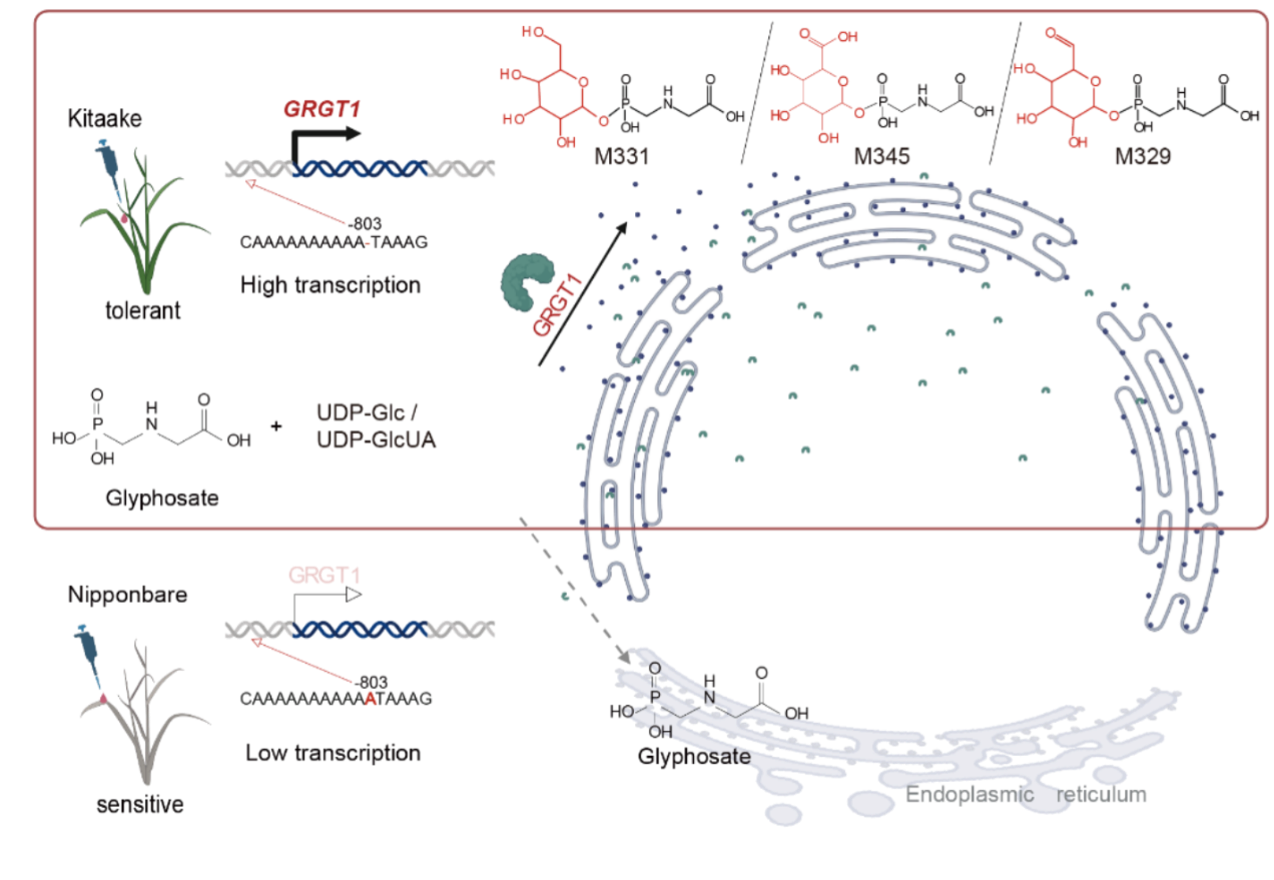
Figure: GRGT1-Mediated Glycosylation Confers Glyphosate Resistance in Rice Cultivar Kitaake and Transgenic Rice
-
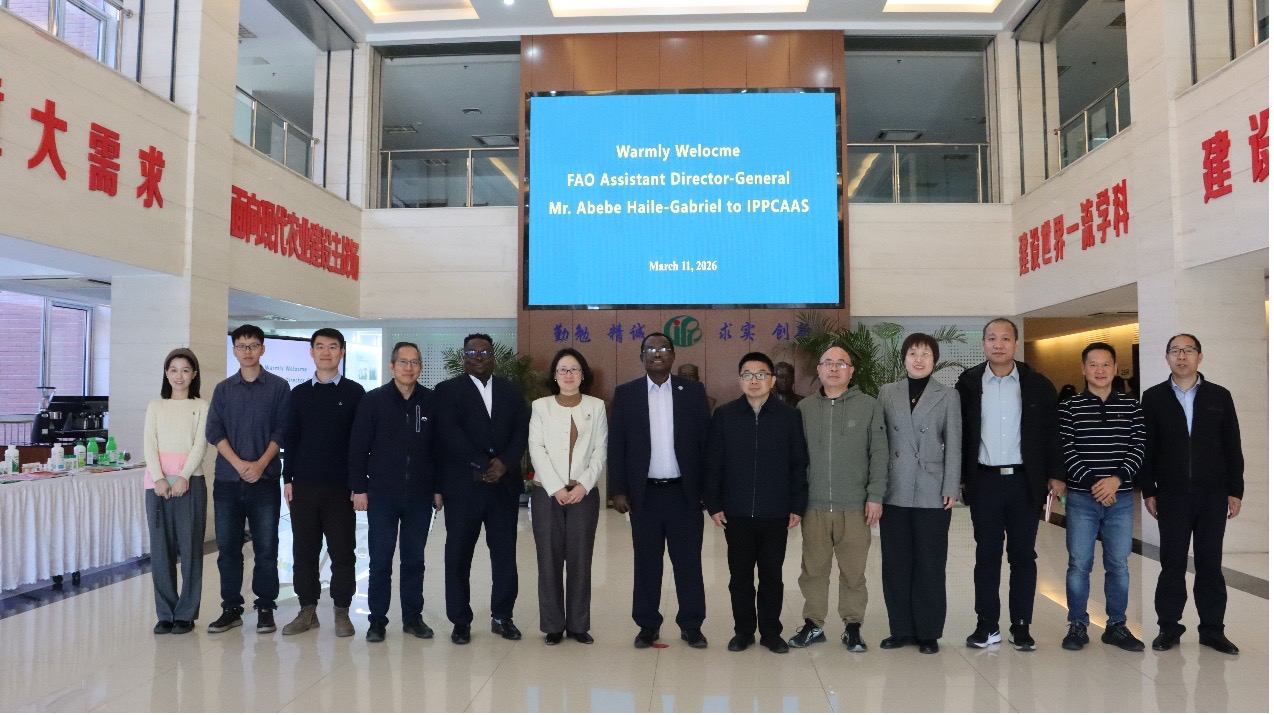 Assistant Director-General of the UN Food and Agriculture Organization Leads Delegation to Visit IPPCAAS
 -
 International Symposium on Plant Biosafety (ISPB 2025) Convenes in Guangzhou — Science-led plant health governance to secure food systems and advance the SDGs
 -
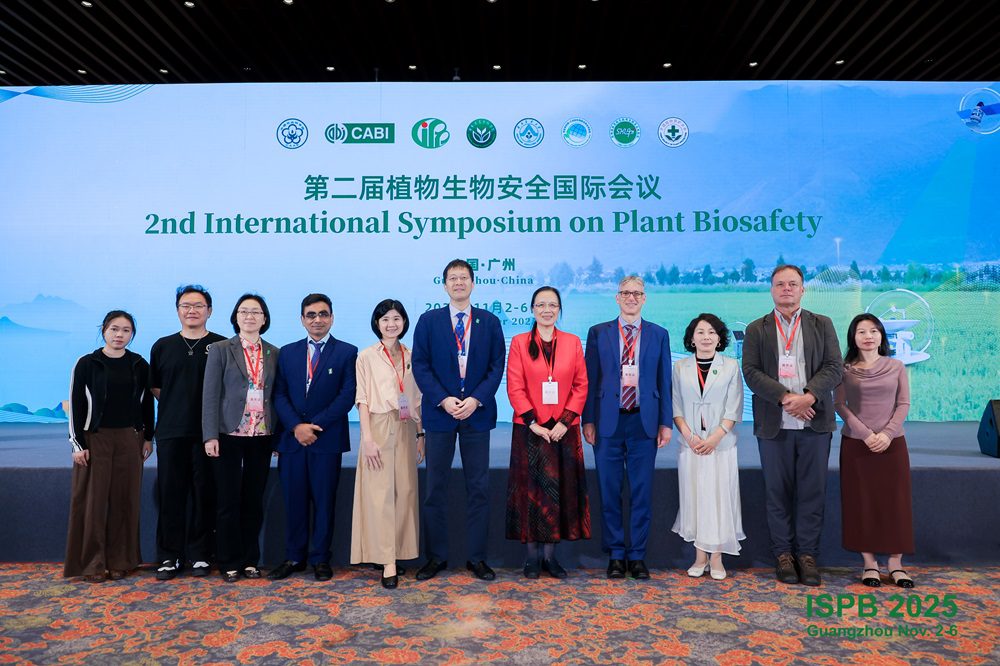 Three decades of China's membership of CABI celebrated at 2nd International Symposium on Plant Biosafety
 -
 CABI receives recognition from FAO for its work to support sustainable plant production and protection