
IPPCAAS Unlocks a Global Regulatory Mechanism in Streptomyces to Achieve Dual Breakthroughs in Efficiency and Yield of Natural Product Biosynthesis
Recently, the Microbial Natural Product Pesticide Innovation Task of the Institute of Plant Protection, Chinese Academy of Agricultural Sciences (IPPCAAS) published a research paper in the International Journal of Biological Macromolecules entitled “SbhR, a DeoR family regulator, modulates secondary metabolism via the atypical two-component system AtcK/R in Streptomyces bingchenggensis.”
Streptomyces species are important microbial cell factories for natural product biosynthesis, with more than two-thirds of antibiotics derived from them. However, their development and metabolism are tightly controlled by complex regulatory networks, and current understanding remains limited. Low efficiency and challenges in strain improvement constrain the industrial production of valuable compounds. Identifying key transcriptional regulators and reconstructing regulatory networks offer new strategies to overcome these bottlenecks and enable efficient biosynthesis.
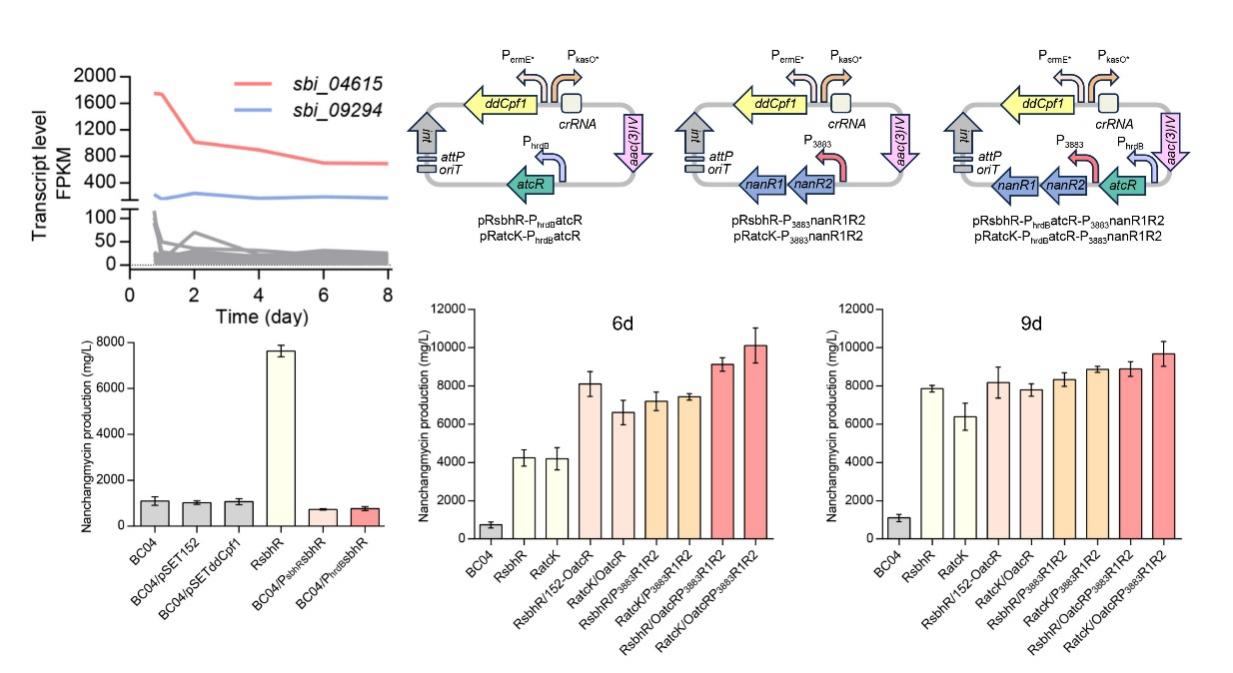
Streptomyces bingchenggensis is the industrial producer of the polyketide pesticide milbemycin and can also synthesize the polyether compound nanchangmycin, an alternative anticoccidial agent with high efficacy at low doses. Through time-course transcriptome analysis of strain BC04, the team identified a conserved global transcription factor, SbhR, that activates the AtcK/R two-component system and the KelR system, thereby positively regulating milbemycin production while repressing nanchangmycin biosynthesis. CRISPRi-mediated suppression of sbhR led to a marked decrease in milbemycin yield but boosted nanchangmycin production by nearly six-fold (from 1098.4 mg/L to 7635.5 mg/L). Interestingly, the AtcR regulator showed context-dependent dual roles: repressing nanchangmycin synthesis in the parental strain but promoting it when sbhRwas suppressed.
By combinatorial manipulation of multiple regulators, including sbhR, atcK, atcR, and the cluster activators nanR1/2, the researchers achieved synergistic improvement of nanchangmycin yield, raising titers to 8812 mg/L and 9675 mg/L, while shortening the fermentation period from nine to six days. This represents the highest reported production level to date, providing key technical support for industrial application. Moreover, SbhR was shown to affect natural product synthesis in diverse Streptomyces species, suggesting its potential as a universal genetic target for high-yield strain breeding.
Wang Jiabin, a joint PhD student of IPPCAAS and Northeast Agricultural University, is the first author. Dr. Zhang Yanyan (IPPCAAS), Prof. Xiang Wensheng, and Prof. Wang Xiangjing (Northeast Agricultural University) are the corresponding authors. The study was supported by the National Natural Science Foundation of China (32272635) and the CAAS Science and Technology Innovation Project (CAAS-CSCB-202401).
-
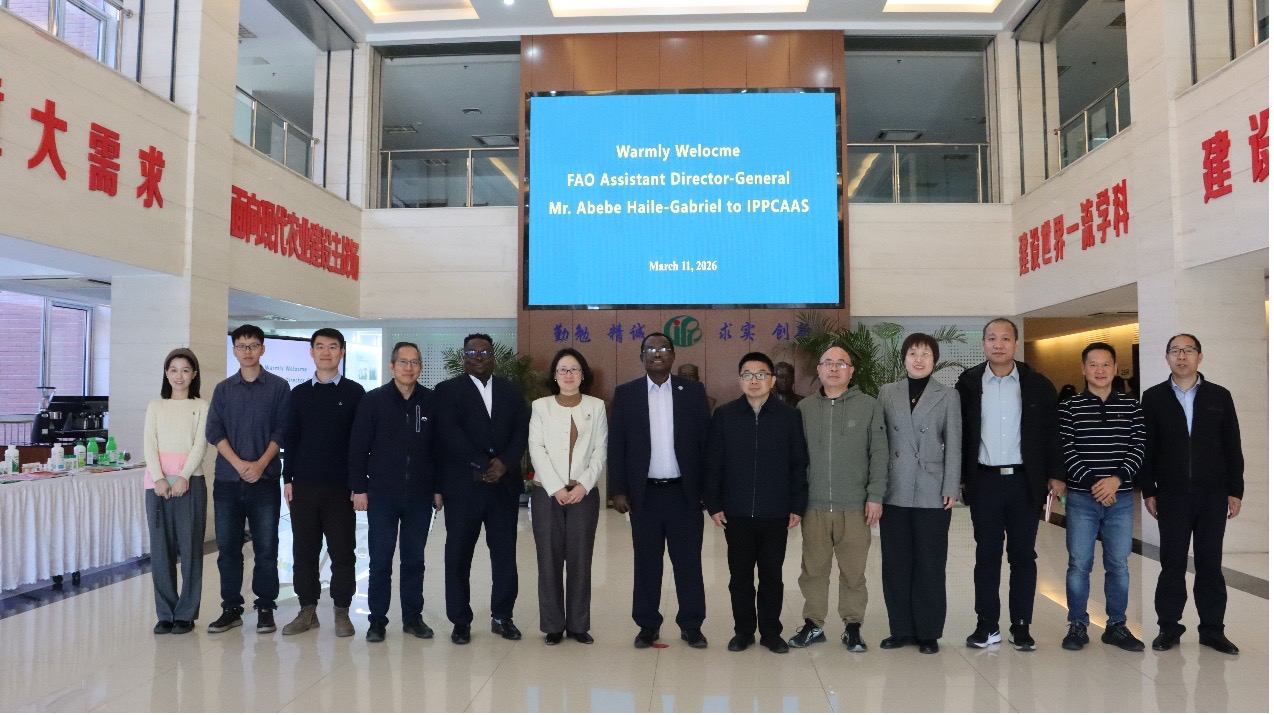 Assistant Director-General of the UN Food and Agriculture Organization Leads Delegation to Visit IPPCAAS
 -
 International Symposium on Plant Biosafety (ISPB 2025) Convenes in Guangzhou — Science-led plant health governance to secure food systems and advance the SDGs
 -
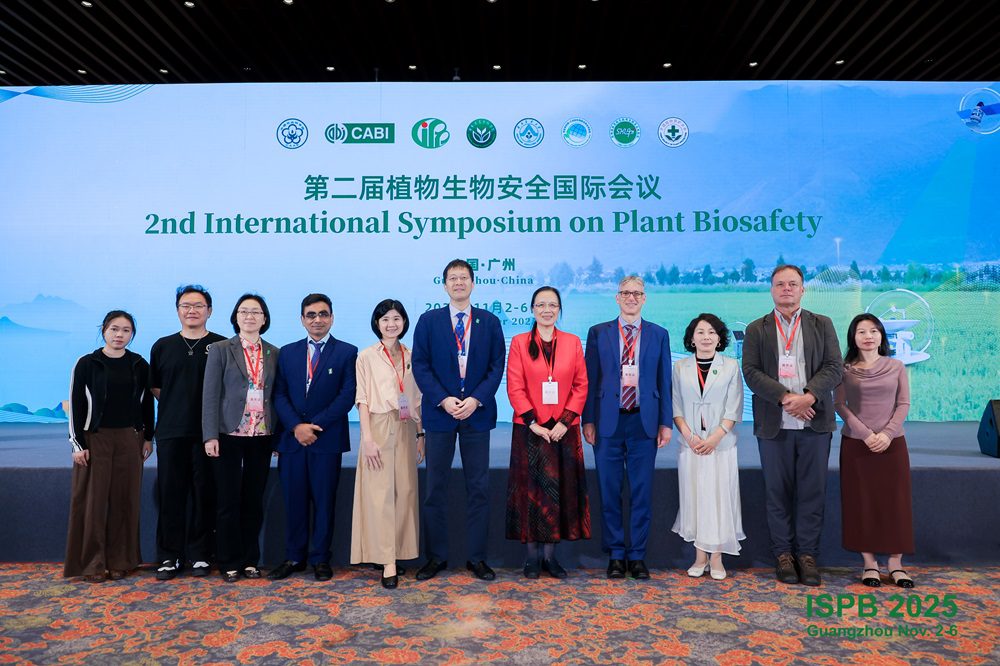 Three decades of China's membership of CABI celebrated at 2nd International Symposium on Plant Biosafety
 -
 CABI receives recognition from FAO for its work to support sustainable plant production and protection