

NPP Online Publication: Effect of Biofumigation with Different Green Manure on Soil Health and Active Ingredient Profiling
The reapplication of green manure in field production is one of the important measures to reconstruct soil ecology and improve soil quality. Green manure can also control soil-borne pests and pathogens such as root-knot nematodes and pathogenic bacteria through biofumigation. However, to date, no systematic evaluation has been conducted on the comprehensive effects of green manure on soil health, and the key active ingredients in the biofumigation process remain unclear, requiring further exploration.
Recently, the international journal NPP (New Plant Protection) published online a research paper titled “Effect of biofumigation with different green manure on soil health and active ingredient profiling” by the Innovation Team for Soil Pest and Pathogen Control from the Institute of Plant Protection (IPP), Chinese Academy of Agricultural Sciences (CAAS). By analyzing the control efficacy, soil quality indicators, microbial communities, and key chemical components after biofumigation with 11 types of green manures, the study screened out green manure varieties with practical application potential and successfully identified a novel active compound in the biofumigation process—isopropyl isothiocyanate (IPI).
Evaluation of the control effects of different green manure biofumigation on soil-borne pathogens showed that all green manures could effectively suppress soil-borne pathogens. Among them, the treatment with cabbage variety “Niuxin No.3” exhibited the best control effect against Fusarium spp., while rapeseed variety “Huayouza No.9” achieved the optimal control efficacy against root-knot nematodes and Phytophthora spp. Determination of soil quality indicators after biofumigation revealed that all green manures increased soil nutrient contents (including nitrogen, phosphorus, potassium, and organic matter) to a certain extent. Additionally, biofumigation with rapeseed “Huayouza No.9” significantly improved the stability of soil aggregates. Microbial community analysis indicated that green manure biofumigation significantly altered the soil microbial community structure, with more pronounced changes in the composition of bacterial communities. Furthermore, biofumigation with “Huayouza No.9” significantly increased the relative abundance of beneficial microbial genera such as Bacillus sp. and Scedosporium sp.—a key factor enabling green manure fumigation to control soil pathogens and improve soil quality. Through mass spectrometry analysis, researchers identified isopropyl isothiocyanate (IPI) as a key active compound in green manure biofumigation. This compound was widely present in the biofumigation process of various rapeseed varieties, and subsequent bioassays confirmed that IPI had a significant control effect on root-knot nematodes, with an LC₅₀ value of 1.92 mg/L.
This study is the first to systematically evaluate the control efficacy of multiple green manures as biofumigants and their impacts on soil health, while uncovering the key active compound in green manure biofumigation. The findings provide important theoretical basis and practical guidance for the subsequent promotion of green and efficient control technologies against soil-borne pathogens.
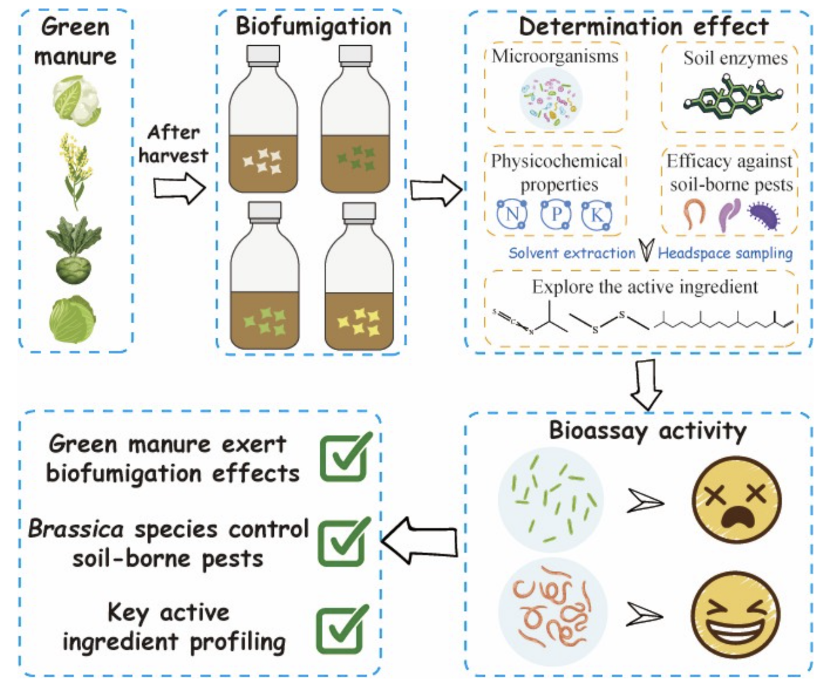
Researcher Wang Qiuxia from IPP, CAAS, is the corresponding author of the paper. Dr. Ji Yutong (graduated) from IPP, CAAS, is the first author. The study was supported by the National Key Research and Development Program of China (Grant No. 2023YFD1701200) and the project “Innovation and Application of Control Technologies for Cowpea Soil-Borne Diseases” (Grant No. YBXM2432).
-
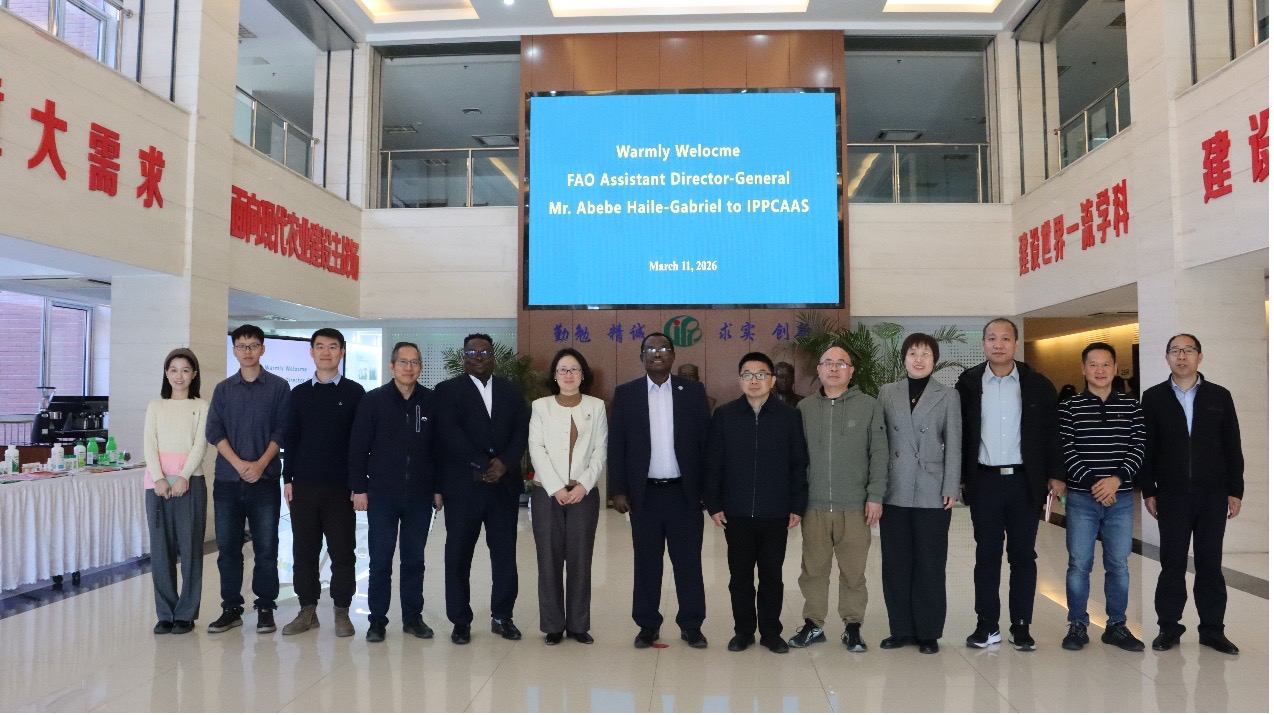 Assistant Director-General of the UN Food and Agriculture Organization Leads Delegation to Visit IPPCAAS
 -
 International Symposium on Plant Biosafety (ISPB 2025) Convenes in Guangzhou — Science-led plant health governance to secure food systems and advance the SDGs
 -
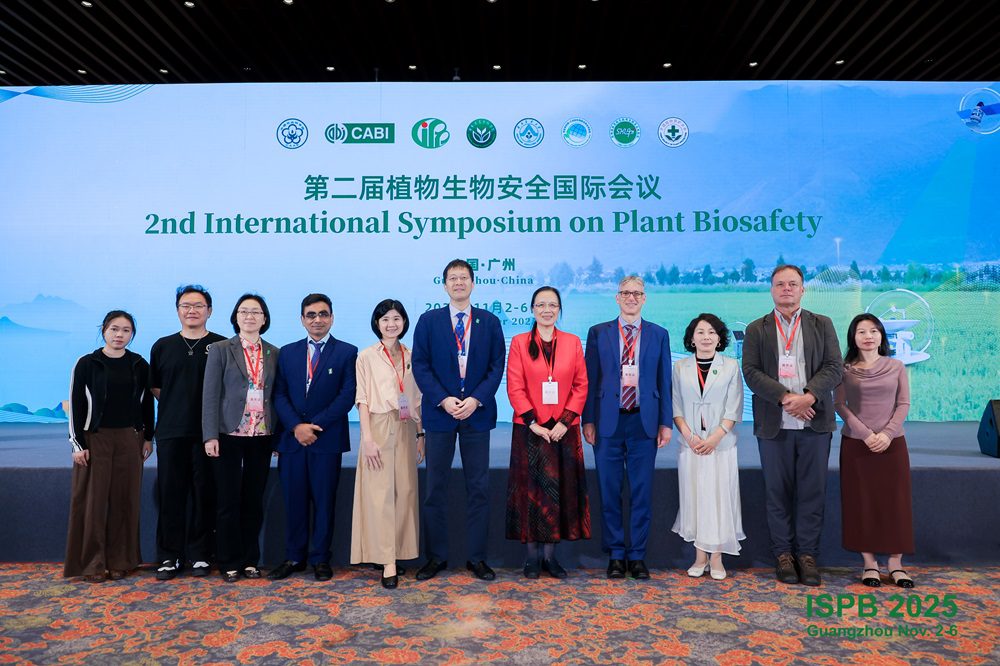 Three decades of China's membership of CABI celebrated at 2nd International Symposium on Plant Biosafety
 -
 CABI receives recognition from FAO for its work to support sustainable plant production and protection